






The new Enyaq RS Race

®
Çok Okunanlar

Şubat 2026’ya kadar dünya genelinde ev satışları

Küresel elektrikli araç pazarı, Şubat 2026'da önemli bir yavaşlama yaşadı. Benchmark Mineral Intelligence'a göre, dünya çapında 1,1 milyon saf...

Stellantis’in Yatırımcı İlişkileri Başkanlığına Charles Christman Atandı

Dünyanın en büyük mobilite şirketlerinden Stellantis N.V.,Yatırımcı İlişkileri Başkanı olarak Charles Christman’ın atandığını açıkladı. Ed Ditmire’ın yerini alan Charles...

Hyundai, Nürburgring’de hızlı şarj cihazını devreye aldı

Hyundai, Nürburgring'de iki adet "N Hızlı Şarj İstasyonu" hizmete açtı. Güney Koreli otomobil üreticisine göre, motor sporları pistindeki şarj...

OSD 2026’nın İlk 2 Aylık Dönem Verilerini Açıkladı

Otomotiv Sanayii Derneği (OSD) 2026 yılının ilk 2 aylık dönemine ilişkin verileri açıkladı. Geçen yılın aynı dönemine göre toplam...

Toyota patenti: Kazalarda hafifçe esneyecek şekilde tasarlanmış tahrik bataryası

Toyota, araçları daha büyük veya daha ağır hale getirmeden, bataryaları, motorları ve kabloları daha verimli bir şekilde entegre etmenin...

Karsan 2025’te 330 Milyon Euro Ciro Gerçekleştirdi

Yeni nesil toplu ulaşımda dünyanın teknoloji odaklı mobilite markası olan Karsan, 2025 yılında cirosunu yüzde 11 artırarak 330 milyon...

Stellantis Güvenlik Merkezi 50. yılını kutluyor

Stellantis Güvenlik Merkezi 50. yılını kutluyor ve Orbassano'da 24.000'den fazla çarpışma testi gerçekleştirdi... Orbassano'daki Stellantis Güvenlik Merkezi 50. yıl dönümünü...

The new Enyaq RS Race: A motorsport concept with sustainable ideas for production models

Škoda Motorsport is showcasing the latest version of its recently presented all-electric racing car concept: the new Enyaq RS Race. Rooted in the Czech brand’s racing DNA, this concept supports the development of innovative technologies and sustainable materials, serving as a pilot project for future production models. The lower and wider concept car incorporates innovative, sustainable biocomposite parts that provide the same rigidity and weight advantages as carbon fibre, contributing to an overall weight reduction of more than 300kg compared to the new Škoda Enyaq Coupé vRS on which it is based.
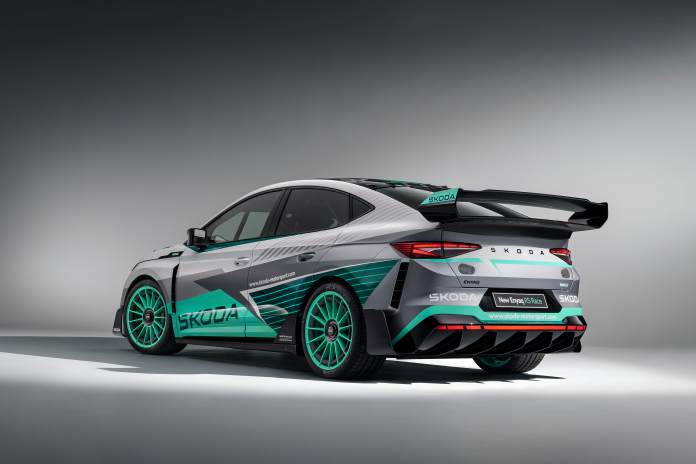
An all-electric race car defined by the motorsport DNA of the Škoda Fabia RS Rally2
Škoda Motorsport engineers have developed an all-electric race car that closely matches the handling of the successful Škoda Fabia RS Rally2. Škoda’s racing DNA and the rigorous demands of motorsport continue to push the boundaries of technical innovation. Development of the first Enyaq RS Race began in 2023, followed by its world premiere in October 2024. With the new Enyaq RS Race, the teams used the expertise gained in developing the first concept and took it to the next level with the recently introduced new Škoda Enyaq Coupé RS. The project showcases Škoda’s activities in the field of electrified motorsport, driving progress towards a more sustainable future. The latest version of the concept car uses the same electric powertrain but is 70 mm lower, 72 mm wider at the front, and 116 mm wider at the rear. Most importantly, it is significantly lighter than the production model. Additionally, the concept benefits from numerous visual and technical modifications, including an optimised chassis, redesigned bumpers, as well as modified shock absorbers and springs. A completely new high-performance braking system, racing seats, and a roll cage ensure the highest possible active and passive safety. The vehicle’s front is now defined by the sleek, high-gloss black Tech-Deck Face, with Škoda lettering replacing the logo on the bonnet. The car is also equipped with new segmented LED rear lights.
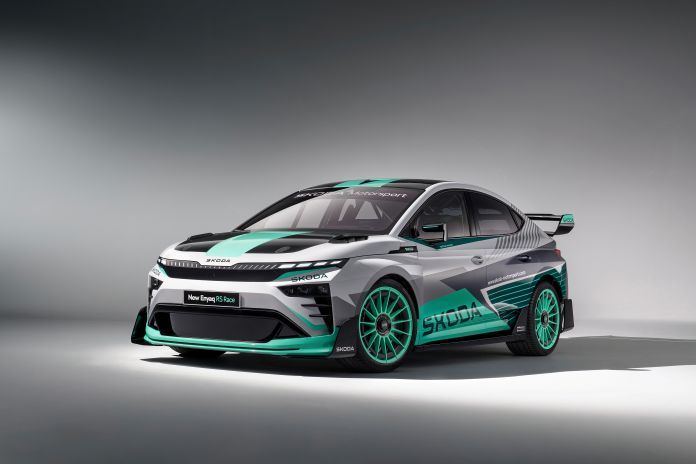

Biocomposite parts: reducing weight and enhancing sustainability
To reduce the weight compared to the production model, Škoda Motorsport engineers employed innovative and sustainable materials and removed all components not needed for the car’s intended use. Additionally, they incorporated side and rear windows made of lightweight polycarbonate. These measures together resulted in total weight savings of 316kg. The introduction of sustainable biocomposite parts incorporating flax fibres, developed in collaboration with Škoda’s motorsport partner Bcomp, serves as a pilot for future production models. Replacing carbon, these lightweight parts are used in both the interior and the body, including the bumpers, fenders, roof, roof vent, and rear wing. Applications in the interior include the dashboard, door panels, and footrests for the driver and passenger. Additionally, the standard model’s panoramic glass roof has been replaced with a biocomposite panel.
Sustainable flax fibre components: a carbon alternative
A total of 16 vehicle components are made from sustainable materials, with natural flax fibres replacing carbon in both the interior and the exterior. These are tested under the most challenging racing conditions, for instance in the Škoda Fabia RS Rally2, alongside sustainable lubricants for engines, motors, transmissions and dampers. One example is AmpliTex, a technical reinforcement fabric made from renewable flax fibres grown in Europe. These woven fibres not only reduce vibrations in the interior and contribute to weight reduction but also serve as a visually appealing design element. Moreover, flax cultivation has a significantly lower impact on the soil compared to other crops.
Bcomp’s PowerRibs™ technology utilises extremely lightweight, high-performance natural fibres also made from flax. PowerRibs™ combine maximum stiffness and minimum weight by creating a 3D structure to reinforce the thin-walled panels of the car body. The benefits include raw material savings, weight reduction, and lower production costs due to using fewer consumables. The material offers comparable rigidity and weight advantages to carbon fibre while reducing CO2 emissions by approximately 85%. In the original Enyaq RS Race, Škoda Auto has used this material for the first time for large, complex components such as the front wings, side panel and bumpers. The engineers also made extensive use of 3D printing in preparing and producing the prototype, using recycled materials such as nylon and CO2-neutral biodegradable biopolymer filaments.

Diğer Haberler

Karsan 2025’te 330 Milyon Euro Ciro Gerçekleştirdi

Yeni nesil toplu ulaşımda dünyanın teknoloji odaklı mobilite markası olan Karsan, 2025 yılında cirosunu yüzde 11 artırarak 330 milyon Euro’ya çıkardı. Cironun 220 milyon...

Opel 10 Yıl Aranın Ardından Paris Otomobil Fuarı’na Geri Dönüyor

Üstün sürüş keyfini Alman kalitesi ve mühendisliğiyle bir araya getiren Opel, on yıllık bir aranın ardından otomotiv dünyasının en köklü etkinliklerinden biri olan Paris...

Nazan Zorlu Fransa’da Elektrikli Ralli Kupası’nda Start alacak

İtalya Ulusal Asfalt Ralli Şampiyonası’nda kadın pilotlar şampiyonu olan ilk Türk Kadın Pilot Nazan Zorlu, şimdi de Türkiye adına bir başka ilki gerçekleştirmeye hazırlanıyor....

BMW, yeni elektrikli ve termal modellerle ürün atağına başlıyor

BMW Grubu CEO'su Oliver Zipse, 2025 yılı yıllık sonuçlar konferansında (ve gelecek Mayıs ayındaki emekliliğinden önce), amiral gemisi olan Yeni Nesil (Neue Klasse) operasyonunun...

Birçok elektrikli otomobilin çalışma-şarj süreçleri hâlâ güvenilir değil

Münih merkezli B2B şarj altyapısı teknoloji şirketi EcoG, elektrikli araç şarj yönetimi için düşündürücü sonuçlar içeren "Şarj Güvenilirlik Endeksi"ni (CRI) ikinci kez yayınladı. 2023'teki...

Nissan Leaf yüksek voltajlı bataryalarına ikinci bir hayat

Nissan Leaf yüksek voltajlı bataryalarına ikinci bir hayat: İspanya'nın kuzeybatısındaki Vigo limanında, Japon otomobil üreticisi, kompakt otomobilinden çıkan kullanılmış bataryaların yeni bir hızlı şarj...

Şubat 2026’ya kadar dünya genelinde ev satışları

Küresel elektrikli araç pazarı, Şubat 2026'da önemli bir yavaşlama yaşadı. Benchmark Mineral Intelligence'a göre, dünya çapında 1,1 milyon saf elektrikli araç ve şarj edilebilir...