




That Mercedes could be the point of reference at the beginning of 2026 was a rumor that had been going around for months, but it was difficult to imagine that in the first qualifying it would inflict 8 tenths on the entire competition. The goodness of Brixworth’s power unit is there for all to see, though the gap inflicted on McLaren with the same engine disorientates the opponentsinviting us to look elsewhere for the sources of the Silver Arrows’ advantage. Meanwhile, Red Bull celebrates a technical and sporting miracle, while Ferrari pays for energy management that is not yet under control.
Mercedes’ excessive power
That’s a very heavy 8 tenths of a second that Mercedes gives to the first of its pursuers, an advantage that manifests itself above all on the straight. The power of Brixworth’s engine is feltparticularly on a fast track like the Australian one, which enhances a power unit concept focused on efficiency rather than push at low speeds. The benefits have repercussions on energy availability, since it is the petrol engine that carries out most of the work of recharging the battery. Adrian Newey also explained it in relation to Honda’s tragic situation, stating that an underperforming thermal forces it to use the hybrid to make up for the lack of power, quickly finding itself running out of energy.
The powerful Mercedes unit ensures an abundance of horsepower and energy, but on closer inspection it is not enough to explain the excessive power of the W17. With the same engine, McLaren’s delay was almost 9 tenths of a secondwhile Williams and Alpine are ahead only of Aston Martin and Cadillac. The good news for the opponents therefore, if you want to call it that, is that the Brackley team’s advantage does not arise solely from the power unit. There are possibilities to recover, but at the same time it is a disorienting observation, without a clear and unique explanation regarding the superiority of Mercedes.
Beyond the engine
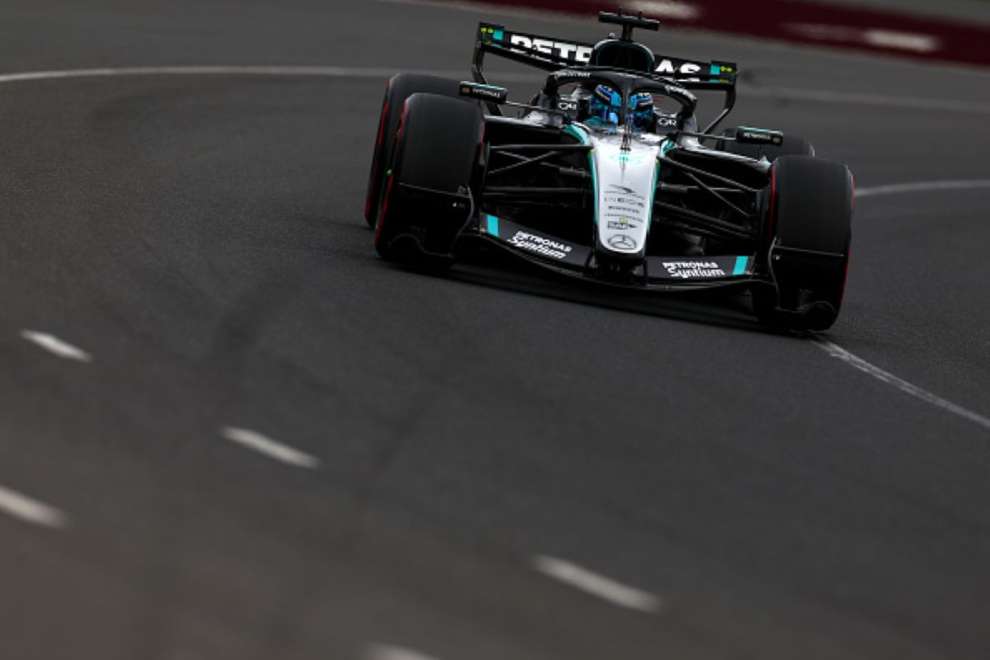
The body language of the W17 tells of a well-balanced car, with good mechanical and aerodynamic qualities. The use of the tires was also excellent, in which, according to George Russell, Mercedes benefited from a track that was about ten degrees colder than the previous day. These are all qualities that will come in handy in the racea scenario in which the team showed a good pace in Friday’s simulations.
In this Formula 1, however, the game is played above all on energy management strategieswhich can make a difference even with the same engine. If the Silver Arrows reach the highest speeds on the straight of the second sector, this is also due to the great energy availability of the battery, the result of a better charging strategy than their opponents. It cannot be ruled out, however, that reduced consumption could also play a role, raising attention to the effectiveness of the mobile wings and the aerodynamic compromise chosen between cornering load and straight-line resistance.
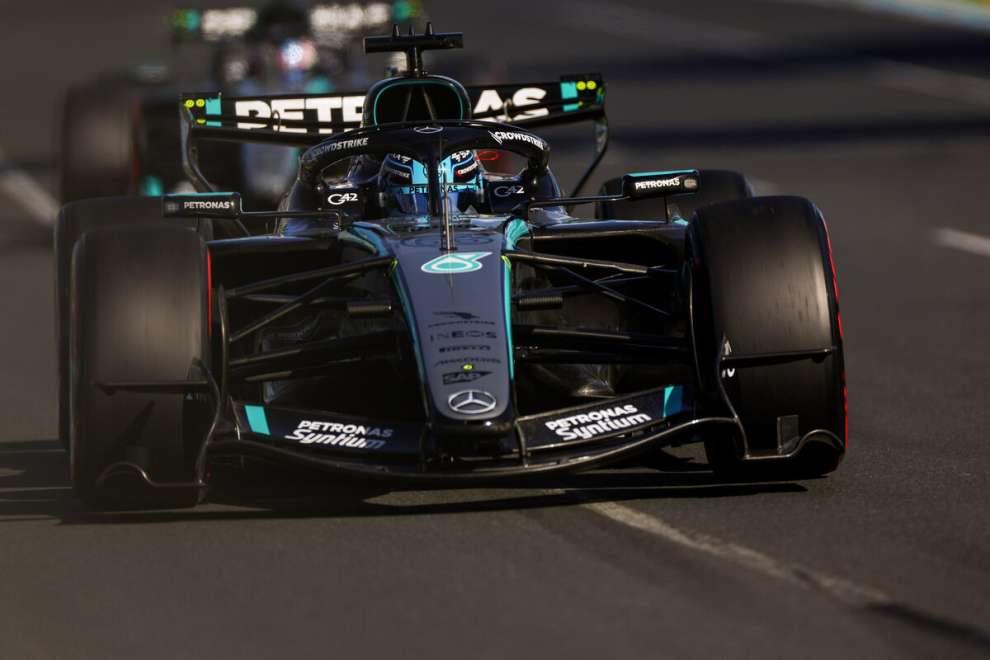
In any case, in the overflowing pole in Melbourne, there is also a lot of George Russell, who already demonstrated last year that he has what it takes to aspire to the title. Antonelli, affected by the time lost due to his own mistake in Q3, fulfills his task, completing an all-silver front row. Mercedes sends a strong message to the competition, but its first opponent could be reliabilityhaving already had to replace a battery and ECU on Russell’s car.
Red Bull feat
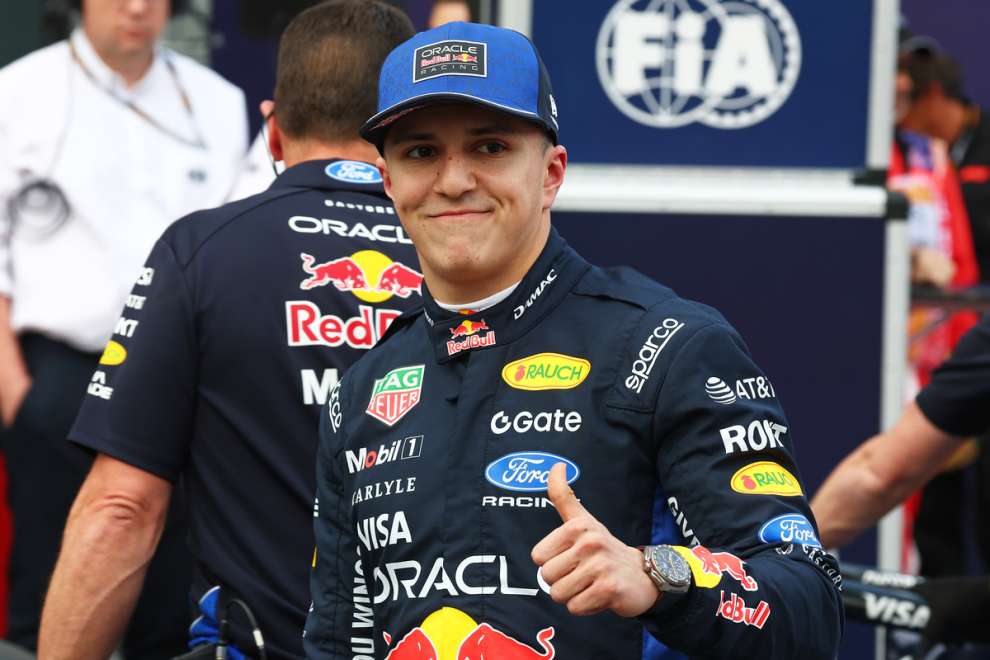
Max Verstappen did not appear in the fight for pole position, excluded in Q1 due to an accident apparently triggered by a technical problem. The RB22 ends up locking the rear axle in turn 1, on a weekend in which we continue to observe many errors or anomalies when braking, a sign of the collective difficulty in integrating the regenerative braking with the hydraulic system. Taking charge of the Red Bull, however, was Isack Hadjar, who achieved an incredible third position.
Red Bull Powertrains-Ford, making its debut as an engine manufacturer, rediscovered itself ahead of its pursuers behind Mercedes, even ahead of Ferrari. The result is even more extraordinary if you look at the double access to Q3 by the Racing Bullsalso thanks to the excellent work of the Italian team. The engine engineers from Milton Keynes make what in reality is not at all seem easy: to set up an engine program in the most technically complex Formula 1 ever in just a few years and be competitive. Speaking of rookies, another notable result is that of Audi, immediately in Q3 with the team that 12 months ago was the last team on the grid by a distance.
Ferrari messes up
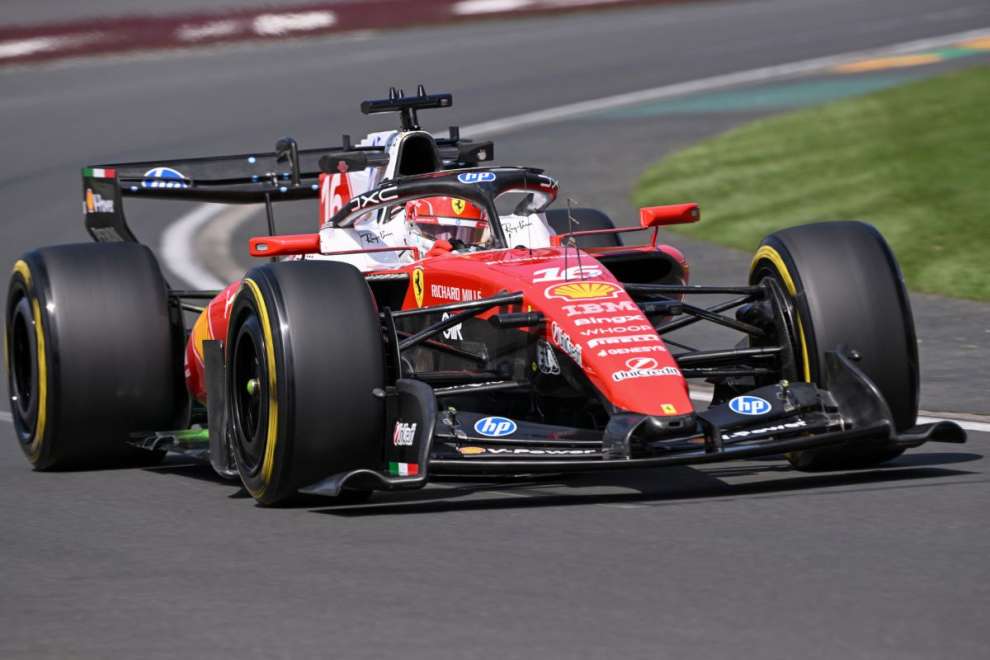
Ferrari takes note of a delay from Mercedes that is greater than expected. The gap is too wide to attribute it solely to the trackwhich does not reward Maranello’s less powerful and more reactive power unit. The significant technical deficit, however, does not hide the flaws in the weekend’s execution, starting from the set-up changes tried in the second free practice session, which proved to be too aggressive.
The Scuderia then failed to make much progress during qualifying, almost without improving between Q2 and Q3, instead improving the team’s best time in Q1 by half a second, which was however achieved on medium tyres. By the drivers’ and Team Principal’s own admission, Ferrari is lacking in putting it all togethera chronic gap in recent years and partly justifiable now with the new regulations. Both Leclerc and Hamilton at times complain of a lack of battery charge, a sign of problems in energy management, while Vasseur admits some difficulties in getting the tires into the correct window of use.
The Ferrari drivers are now betting everything on the starting point to maximize the result, with the awareness however that hardly anyone will be able to worry Russell and Antonelli. The greatest curiosity concerns the possibilities of overtaking in the race, on a track full of straights, but with the logic of the hybrid to take into account. The race will give the first major feedback on the new regulations, after qualifying has already given its verdict: Mercedes starts in front of everyone.