





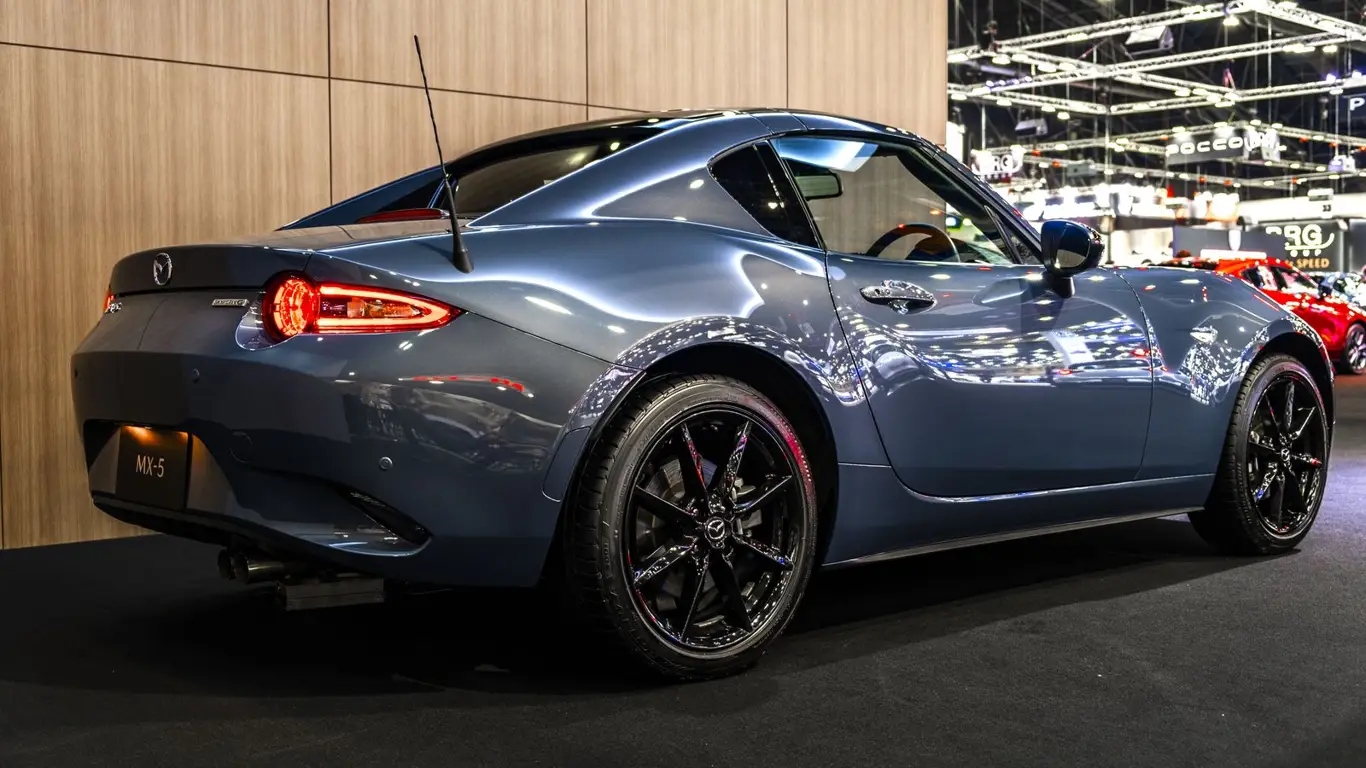
Mazda’s next MX-5 Miata development focuses on preserving lightweight fun. Enthusiast feedback ensures the roadster evolves without losing its iconic feel.
Mazda is already working on the next-generation MX-5 Miata, though its launch is still several years off. The promise is straightforward: the roadster will evolve, but it won’t lose the qualities that make it beloved.Roberto Pietrantonio, managing director of Mazda Italia, says Japanese engineers recently visited Italy to meet with MX-5 owner clubs. Similar gatherings take place outside Europe as well—feedback is being collected from customers in the U.S., Australia, and other markets. The consistent message, Mazda reports, is to preserve the model’s DNA.Pietrantonio summed it up by saying that even when cars can fly, the MX-5 will still bring a smile to the driver.This isn’t just a catchy slogan. The MX-5’s appeal doesn’t rest on outright power or size; it’s built on driving sensations—a lightweight body, a direct connection to the road, and intuitive handling. So the new roadster is unlikely to chase sports car numbers. Instead, Mazda will aim to integrate modern regulations, safety requirements, and possibly some form of electrification, all while ensuring the car doesn’t become a heavy-wheeled gadget.Italy, too, plays a part. Pietrantonio notes that Europe—especially Italy, Germany, and the UK—remains a key market for the MX-5. So local enthusiasts’ opinions aren’t just politely noted; they’re fed back to engineers in a structured way.The same philosophy applies to other Mazda models. The CX-60, for instance, is already getting its third wave of updates by 2026, following its 2022 debut: suspension, steering, sound insulation, and safety systems have all been refined. The company calls this Kaizen—continuous improvement driven by real-world customer feedback.With the new MX-5, the stakes are even higher. A crossover can be improved with an update, but fans won’t forgive a roadster that loses its character. So Mazda isn’t just gathering wish lists; it’s mapping out the boundaries of what can change—and what must stay untouched.
Automobile Magazine – USA