

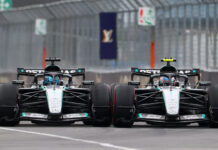
The rules do not give much room for maneuver. Oliver Bearman’s accident during the Japanese GP at Suzuka essentially confirmed what the drivers had already made clear for some time, namely that the difference in speed that can be created between a car in the charging phase and another in the boost phase can create potentially very dangerous situations such as the one which saw the Haas driver forced to throw himself into the escape route to ‘dribble’ the ‘wall’ created by Franco Colapinto’s Alpine which was 80 km/h slower. The FIA released an official statement in which it underlined that “it has been agreed between the parties that, although the events held so far have offered exciting racing, there is a commitment to make changes to some aspects of the regulations in the area of energy management”. The safety of the pilots is a topic that – and the opposite would be very serious – is definitely close to Liberty Media’s heart given that we are talking about the main actors of the show, the famous ‘gladiators’ ready to take to the arena. As highlighted in the latest issue of Autosprint, however, the margin for maneuver is very limited because these power units put the Circus ‘in a trap’. The timing for all the corrective measures that revolve around a new distribution of the power division that is not 50/50 between the thermal component and the electrical component are estimated at two years, even the hypothesis of increasing the fuel flow would force a whole series of changes – capacity of the tanks, cooling system and their locations – which cannot be implemented overnight. “A second path seems more feasible – we read in the article by Alessandro Gargantini – which is to limit the power of the electric component to reduce charging times and limit the difference in speed. This path also does not offer an ideal solution given that the cars would become slower and the safety issue would not be completely resolved. It is very likely that, for now, small corrective measures will be adopted and new and more visible rear wing warning lights will be introduced.” In the end, therefore, the drivers will have to save themselves by adding to the already extensive list of things to keep under control also the possibility that the car in front could suddenly slow down noticeably at any moment.

Countermeasures to the Bearman crash: Little can be done beyond larger marker lights on the rear wings
İLGİ ÇEKENLER


De Telegraaf: sensational Mercedes, Russell risks his seat if Antonelli beats him. And Wolff thinks back to Verstappen
Indiscretions from Holland...
Vasseur: “Leclerc is the right horse, he made a bet on Ferrari”
Leclerc, a Ferrari...
Red Bull rises again in Monaco, Verstappen: “Positive day, but Ferrari is really strong”
Max smiles (finally)...
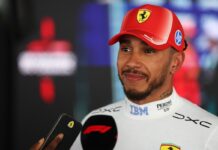
Hamilton: “I have moved many pieces and repositioned myself in the team. Santi is my Italian ‘Bono'”
Hamilton-Santi, will it...
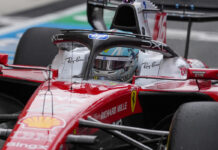
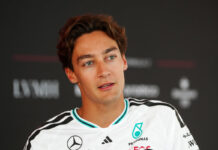
Russell: “Duels with Kimi? Wolff trusts us. Bad luck will also befall Antonelli”
Desire for redemption...
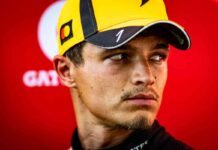
Norris: “I usually don’t like statistics, but being the driver with the most starts for McLaren is a source of pride”
The words of Lando Norris in the Munich press conference
Automobile Magazine – F1 English...

The least of the problems
Because in the...
Always Red
Leclerc has renewed...
Vasseur: “Leclerc’s renewal? Of course, we know how much this project means to him”
Leclerc-Ferrari, here is...
Leclerc renews with Ferrari: “I couldn’t be happier, it’s more than a team”
Eternal love Charles...