

Of the three tracks that opened the season, Formula 1 immediately experienced two of the worst scenarios of the year. Melbourne and Suzuka have proven to be particularly critical tracks for energy management, but the calendar includes other even more difficult tracks from this point of view. However, there will be no shortage of circuits at the opposite extreme, even if the classification of the best and worst tracks will also depend on the decisions that the FIA will make from time to time. The most critical appointments The severity of an energy management circuit depends on many parameters, of which two in particular stand out. The first is the time spent with the accelerator flat, directly linked to the length of the phases in which it is necessary to cut the electrical power, having exhausted the available energy. The other is the time of use of the braking system, an indicator of the energy that can be recovered when braking. The lower this is, the more the battery needs to be recharged in other ways, for example with the electric motor which absorbs power from the thermal in a straight line, further aggravating clipping. FULL GAS TIME (2025)THEORETICAL CHARGE WHEN BREAKING (BRAKING TIMES 2025)Spa66 s4.2 MJMonza60 s3.3 MJSilverstone58 s3.9 MJQatar55 s3.2 MJMelbourne53 s2.9 MJBarcelona50 s3.0 MJAustria42 s2.9 MJ At the moment, the only data in the public domain are those for 2025. The energy recoverable when braking on the various tracks can be calculated starting from the braking times provided by Brembo last season, approximately 1% higher than the new cars, but still useful for having a reference. It turns out that Spa and Monza will be the worst tracks for energy management, with a time with the accelerator on the floor of 66 and 60 seconds respectively and a limited charge under braking, especially for the Italian event. Also pay attention to Qatar and Barcelona, respectively with just 3.2 and 3.0 MJ theoretically recoverable under braking, despite prolonged full throttle times. The negative record of rechargeable energy in braking, however, belongs to Austria, which is at similar levels to those of Melbourne, with the difference that at the Red Bull Ring the full throttle distance is not particularly long. The best slopes Fortunately, the calendar also includes appointments that are far less critical for energy management. It is certainly no surprise to discover that Monaco will be the best track, with a theoretical braking charge of 5.9 MJ and just 30 seconds spent with the accelerator fully floored. Singapore also defends itself well, with 42 seconds full throttle in 2025 and a potential recovery of 6.0 MJ in braking. In general, the easiest circuits for energy management will be the most guided ones, such as Mexico City, Zandvoort, Budapest and Interlagos. Photo Mark Sutton/Formula 1 via Getty Images FULL GAS TIME (2025)THEORETICAL CHARGING WHEN BREAKING (BRAKING TIMES 2025)Monaco30 s5.9 MJSingapore42 s6.0 MJMexico32 s5.5 MJZandvoort39 s4.4 MJBudapest40 s5.3 MJInterlagos41 s5.5 MJShanghai50 s5.7 MJBaku61 s7.1 MJLas Vegas62 s5.2 MJ Finally, there are the cases of Baku and Las Vegas. Both city tracks have the handicap of an accelerator use time of more than 60 seconds, partially compensated however by a high use of the brakes. In particular, in Azerbaijan it will be possible to recover more energy during braking than in any other circuit, around 7.0 MJ, drastically reducing the charging phases on the straight. In general, however, the classification of the best and worst tracks will also depend on the decisions that the FIA will make from time to time, in particular regarding the Megajoules recoverable on each lap.

Monza, Spa, but not Baku: which will be the worst tracks for energy
İLGİ ÇEKENLER


Lewis ‘Luigi’ Hamilton: what a laugh post-race for Vasseur live on Sky UK
The broadcaster got...
Hamilton: “Santi? I like working with him, Vasseur moved mountains for me”
Hamilton-Ferrari, has the...
Vasseur: “Leclerc? It’s already good that we brought home the car and the points”
Difficult weekend for...

Hamilton: “The simulator? I won’t use it to prepare for races anymore, I’m old school”
Lewis flies without...
Leclerc: “I’m not worried about Monaco, the feeling will return and Ferrari will be strong”
The Monegasque wants...
Russell: “Only Antonelli can lose this world championship”
A frantic chase...
Montreal 2026, the other podium
F1 Canada, the...
Bearman: “I don’t know if we deserved points, but I gladly accept them”
The comeback to...
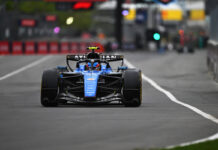
Another 9th place for Sainz: “We are gaining good momentum race after race”
Other points Two...
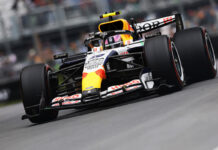
Lawson: “Gasly didn’t make my life easy. I’m happy to have defended 7th place”
The overtaking on...
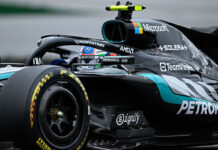
Mercedes scares: “Penalized by the cold, the potential of the package was not seen”
Mercedes has shaken...


Antonelli on the derby with Russell: “We don’t want an internal war or a 2016 encore”
The Canadian Grand...