No gray areas
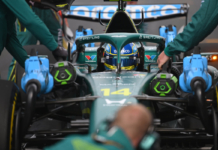
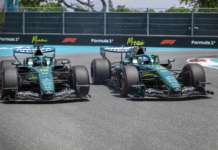
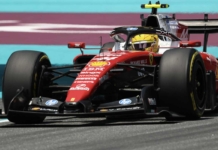
Following the Chinese Grand Prix, some images began to make the rounds on the web. The Mercedes front wing, when closing at the braking point of turn 14, carried out the movement in a clearly slow manner, even appearing to be in two stages. An anomalous behavior compared to the competition, which showed a clear movement. In the last days before the Japanese Grand Prix the rumor that some teams had asked the Federation for clarification regarding this movement of the wing. On the web, comments began to chase each other with even imaginative theories on how Mercedes managed to exploit, once again, a certain gray area of the regulation. The reality, however, is that, in this case, the regulation does not present any gray area, and is in fact very clear. The wings can only have two defined positions, for straights and for curves, and can move from one to the other at a constant speed and with a movement that ends within 400ms of when it began. Crystal clear and uninterpretable. The reason for such clarity is easy to understand: in the drafting, the Federation tried to absolutely avoid that the active aerodynamics, designed to reduce the resistance to forward movement in a straight line and therefore reduce the energy consumption of the battery, were then used by the teams in another way, varying the incidence of the wings depending on the sections of the track (something which in reality would also be interesting to experiment with, but which has nothing to do with the current regulatory concept).
Failure as the only non-sanctionable case
The only “loophole” left by the federation is for breakdowns, i.e. there must necessarily be only two positions unless the system malfunctions (remember that the movement is verified by the control units of the Federation itself). It is easy to understand that such malfunctions can only be occasional (not repeated every weekend for example) and must be demonstrated to the Federation, but right from the start the most likely hypothesis for the behavior of the wing of Antonelli and Russell’s cars in Shanghai was indeed a malfunction. In fact, since qualifying, the front wing itself had given the team led by Toto Wolff considerable problems, and we saw it replaced in a hurry on Russell’s car number 63, with Kimi also reporting problems with the closure. The “failure” theme mainly demonstrated two things: why Mercedes had not been subjected to a more in-depth investigation into the matter after the race and, above all, the “timidity” of the competition which limited itself to asking the Federation for clarification instead of protesting directly against the team leading the classification.
A “miscalculation”
However, there is some news that emerged this morning and reported by The Race website: it would appear that the explanation provided by Mercedes was that of a technical problem (and up to this point it falls within the scope of a failure) but due to a calculation error by the Brackley engineers, who apparently underestimated the hydraulic pressure to be set in the system. This meant that at very high speeds, such as at the end of the straight before the hairpin, the aerodynamic load was too high and the hydraulic pressure of the actuator was not sufficient to close the wing in the times and in the manner required by the regulations. In these lines we do not want to make a petty controversy or launch “conspiracy” themes, but if this explanation is actually the real one, we believe that the fact that a calculation error is willingly accepted as a “failure” is at least questionable.
They are always calculation errors
Aside from some specific situations, all the single-seaters that are found to be irregular at the checks are so due to calculation errors by the engineers: when the necessary quantity of petrol is missing at the end of the race it is because the engineers have underestimated consumption, if the car is underweight (see Russell in Belgium two years ago for example) it is because the engineers have miscalculated the weight loss due to tire consumption, if the cars have the plank too worn by even a tenth of a millimeter it is because the engineers have made a mistake in the calculations relating to its consumption, as happened in McLaren, Ferrari and even Mercedes in recent seasons. There is a substantial difference in responsibility between a failure, which can occur for a thousand reasons, including contacts on the track or a random collision with debris, and a calculation error which is clearly the responsibility of a team. We are not here to praise who knows what sanctions (even if a car that does not comply with the technical regulations should in theory be disqualified without too many beatings of words), and certainly the Mercedes “joker” is to be able to use the card of the new regulation and therefore requiring calibration work to optimize the parameters, but we believe that in this delicate moment for Formula 1 (we are also on the eve of a Grand Prix which could exacerbate the critical issues of the new regulation immediately before five weeks of pause) talking about a simple calculation error passed off as a failure, with a shrug of the shoulders and the promise that it will never happen again is not an intellectually honest path.