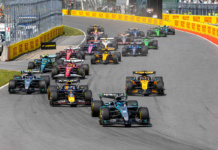
The 2026 Chinese Grand Prix contributed to clarifying much of what we had tried to understand during the tests and “glimpsed” in Melbourne on a technical level, both in terms of the competitiveness of each team and for some further insights into these new regulations. We cannot help but start from splendid victory for Andrea Kimi Antonelliwho finally puts it all together and is able to capitalize on George Russell’s only brief difficulty in Saturday’s qualifying, taking home pole position and the first victory of his career. If from the outside Antonelli’s might have seemed little more than a catwalk, it should be underlined that the credit for this goes to the very young Italian, who first of all did all the right things at the right time: he remained calm at the start even when Hamilton passed him and closed the door on Leclerc perfectly. He then took the lead again at the first opportunity, but without exaggerating. Then he imposed his pace on the race, repelling the ranged attacks that Russell tried to launch on him without too many problems once he got rid of the Ferraris. The Englishman had certainly suffered more in terms of tires in the numerous overtakings he was forced to do after the Safety Car, but once free he gave the impression of wanting to try to make a comeback on his teammate too, while Antonelli was able to close the door in his face with fast laps, including the fastest ever, which Russell tried to beat on the last lap in a clear attempt to send a message to the team and his teammate, but without success. Well done Antonelli then, and from now on it will be very interesting to understand if this victory represents a pivotal point of its growtheliminating some mistakes due to the enormous pressure on him and giving him the chance to fight for the title already this year.
Mercedes engine advantage: this materializes above all in the derating phase
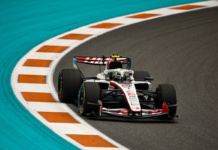
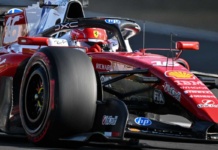
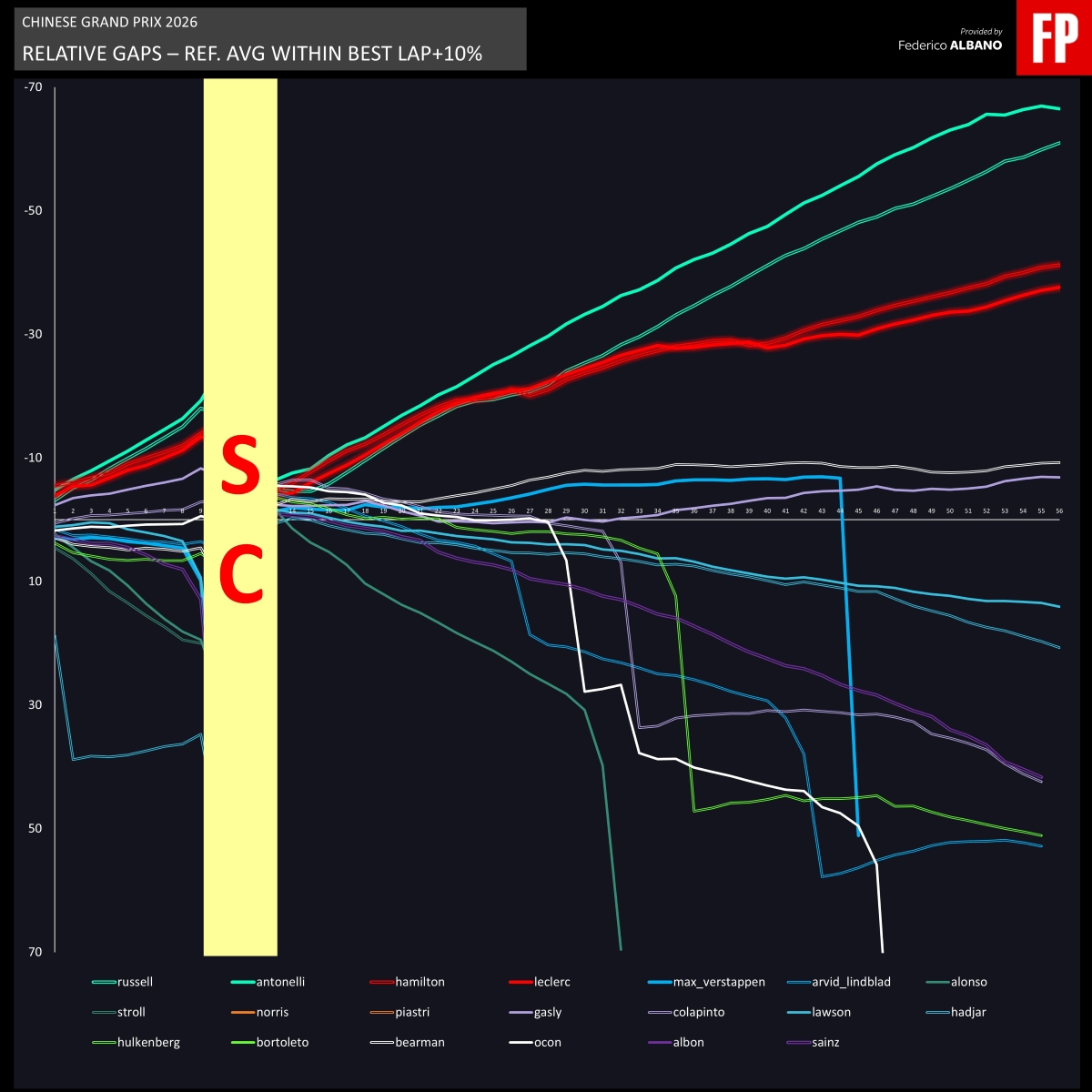
The Shanghai track then allowed us to make some further assessments of the advantage Mercedes has over its pursuers and especially over Ferrari, clearly the second force in the championship at the moment. Red Bull appears decidedly too far behind from all points of view, with a chassis that, surprisingly, seems to be less competitive than the new Power Unit and which expresses so little load that it shows very high numbers in a straight line, mixing the perception of the real strength of the drive unit. McLaren for its part appears to be the third forcecapable of challenging Ferrari in qualifying thanks to the Mercedes power unit, but not so much in the race due to tire management that was not particularly brilliant, with an average load that was insufficient. Furthermore, if the two papayas don’t even take part in the competition, there is little left to comment about them. Ferrari showed what appears to be the best chassiswith the greatest aerodynamic load and a suspension package that is decidedly effective in both slow and fast corners. Mercedes has a chassis package that still appears very close to that of the red car, with a very gentle setting of the car on the tyres, so much so that once the hard compound was fitted for a few laps Antonelli and Russell clearly had difficulty trying to bring the tire to the ideal temperature. What makes a huge difference at the moment is clearly the Power Unit. Unfortunately, the quality of the data transmitted by the Federation during the Chinese weekend was terrible to say the least and a lot of work was deductive, but the impression we had was that the Mercedes unit certainly has pure horsepower in abundance, but that it expresses a great advantage when all the cars enter the so-called “phase”derating” (i.e. clipping, super clipping etc.). In practice during the power cutting phases due to the progressive discharge of the battery, the Mercedes engine has the ability to stabilize at a higher level of power output than the competitioncreating a decidedly large differential in that specific phase. If normally the differences seen are of a few kilometers per hour and generate a few hundredths of chronometric difference, this gap in the derating ensures that in the most critical points of energy management (in Shanghai the long straight up to the 15th) the differences become very large, generating entire tenths of gaps in a very short time. We spoke to an engineer from one team and he confirmed this impression, also adding that it is not particularly easy from the outside to understand how Brixworth managed to create such an efficient system. On the flying lap Mercedes gained practically all of its advantage in these sections, with Ferrari decidedly better in the corners, while in the race the situation became more homogeneous, with an average gain for Antonelli and Russell over Hamilton and Leclerc of at least 1 tenth even in the first two sectors of the track. However, we must not forget that the long and exhilarating duel between the two Ferrari standard-bearers certainly left an important mark on their tyres, making them less fast even in the sections most favorable to them. This also shows that the chassis advantage of the SF-26 is present at the moment, but with very small margins in any case and that the enormous margins for development will in any case heavily determine the progress of the season in this sense.
Hamilton found himself in a calm and respectful battle with Leclerc
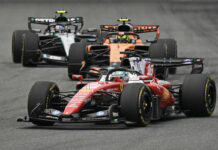
The Chinese trip to Maranello brings two good news and one bad news. The negative one is clearly the gap from Mercedes, at times almost a second per lap at the end of the race (where the gap opens up more due to the characteristics of the Power Unit). A gap that is not easy to mend this season, even if, from the information collected, in the GeS corridors there is still a certain air of confidencewith the awareness that the season should present a series of important opportunities. The good news, however, is the aforementioned good chassis of the car, and, above all, a Lewis Hamilton definitely rediscovered and combativeboth on the track and politically, with a series of interviews where he certainly didn’t mince words on the Mercedes Power Unit issue. Beyond words, however, Hamilton demonstrated that he has returned to a high level directly with deeds, with a good race on one of his favorite tracks, in which he got behind his teammate who, however, never digested the Chinese track. The battle between the two horse standard bearers was the best entertainment of the race, and a true lesson in “racecraft”, with a very tight fight but always respectful and correct, without ever exceeding. Very rightit doesn’t even need to be said, the choice of the wall to leave them free to runbeing only the second race of the season and with positions practically defined, between the Mercedes too far in front and the rest of the group too far behind. Any team order would only have created more discontent than positivity. Leclerc himself, however smiling and who declared himself sincerely happy with Hamilton’s first podium, testifies to a certain serenity, even if, from the next race in Japan, the challenge will probably begin to become more serious in an attempt to (re)establish a certain hierarchy in the team.
A correct regulation in terms of chassis, but hungry for corrections on the engine side
To conclude, the Chinese race also showed a certain improvement of the quality of duels on the track. The reality seems to be that of a chassis-aerodynamics package which in reality is particularly centered: smaller and lighter cars, with less load and with smaller tyres, which leave room for the drivers to work on the limit and to chase each other even closely for more laps. The problems obviously arise under the hood. The electrical part is indeed 50% of the total power, but given the reduced availability it translates into a bottleneck of the entire performance, with a total specific weight that takes on much higher percentages. Leclerc’s statement after qualifying deserves a separate study but the flying lap discipline really seems to be the one put in the most difficulty by the new rules. The changes to be discussed to be introduced already in Japan have been postponed to April, taking advantage of the cancellation of the races in the Middle East to delve deeper into the discussion, a choice that appears absolutely reasonable. In the meantime, we’ll see what will happen at Suzuka, with a first part of the track where chassis quality will be fundamental, but also with the very long stretch from Spoon to the triangle chicane which will present quite a few problems on the energy front.