In Japan, Formula 1 is preparing for another critical weekend in terms of energy management. On paper, the Suzuka track should have been less problematic than the Melbourne one, but the rules on the use of active aerodynamics call everything into question. Guided by safety, the FIA has set up only two zones for the opening of the wings, a decision that will increase consumption, stress on the tires and wear on the floor.
The FIA’s decision
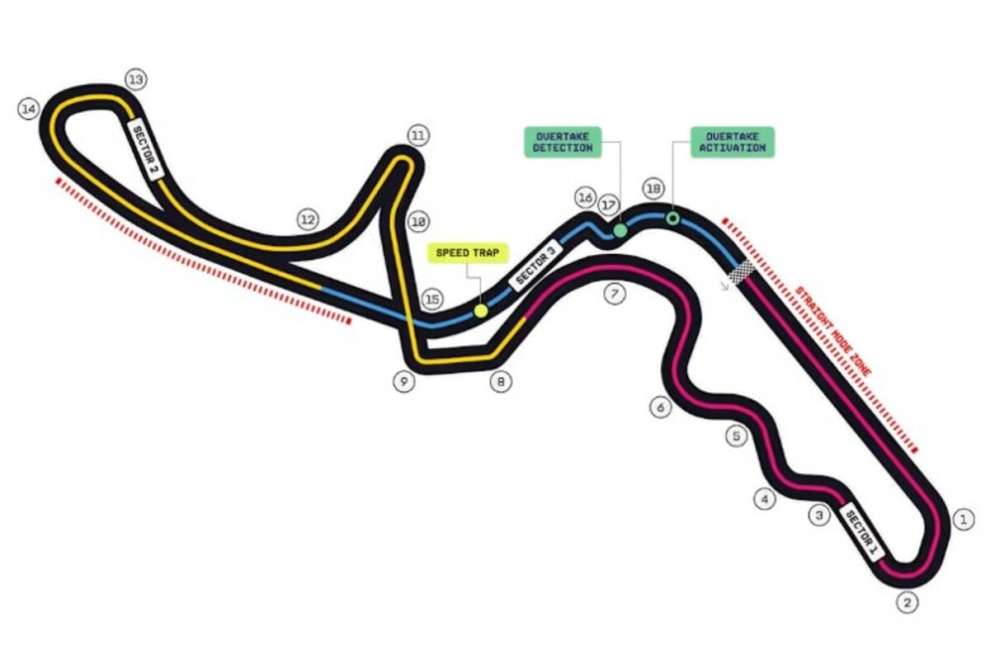
The Australian Grand Prix was the more energetically critical of the two that opened the season, but the next race in Japan could be no different. The Suzuka track, in fact, is 5807 meters long, 529 more than Melbourne’s Albert Park, a difference that will increase consumption per lap, also due to the many differences in height. Furthermore, like the Australian one, the Japanese track has two straights in succession interspersed with mild braking, a deadly combination for drums. This is the extension of the second sector that precedes the spoon curve and the subsequent straight up to the 130R, on which in 2025 you would remain on the gas for 11 and 15 seconds respectively and where this year there will be evident clipping.
Added to all this is another complication. The FIA, in fact, has restricted the use of active aerodynamics to only the finishing straight and the first part of the extension of the third sectorwith the obligation to close the wings a few tens of meters before the 130R. The cars will travel with closed wings from turn 1 to turn 14, including the stretch that goes from the hairpin to the spoon. The reason is safety, as there is evidently a concern that, by opening up the active aerodynamics, the cars would not be stable enough to tackle Turn 12 at high speed.
The repercussions
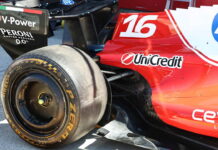
At Suzuka we will spend most of the time with the wings closed, which will have various repercussions. One will be the increased wear of the floor, since when the active aerodynamics are deactivated the cars crush to the ground under the pressure of the maximum aerodynamic load, especially when tackling Turn 12 and 130R at high speeds. The teams will have to be careful to adapt the setup to avoid incurring a disqualification, even if the new regulation has increased the consumption allowed for the plank table from 1 to 2 mm. Sustaining maximum downforce for extended periods, however, will also subject the tires to high stress, generating more heat and potentially accelerating tire degradation.
| GROUND EFFECT ERA STATISTICS | ||||
| Australia | China | Japan | Seasonal average | |
| Runway length [m] | 5278 | 5451 | 5807 | 5183 |
| Full throttle time [s] | 53 | 50 | 52 | 50 |
| Full throttle distance [m] | 4116 | 3706 | 3949 | 3724 |
| Average speed in qualifying [km/h] | 253 | 216 | 240 | 227 |
| Time on the brakes (Brembo 2025 estimates) [s] | 8.3 | 16.3 | 10.4 | 13.0 |
Last, but not least, the decision to open the wings only in two places will increase consumption due to the greater aerodynamic resistance in the other sections. Battery management proves to be critical again, despite the average lap speed being around 10 km/h lower than in Melbourne, where, moreover, even less energy was recovered when braking. In absolute terms, however, Suzuka will be one of the worst tracks from an energy point of viewoffering if nothing else valuable ideas to think about in the month of April to decide whether and how to change the regulation.