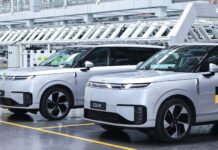
Grab has detailed plans to expand its electric vehicle (EV) charging network in Vietnam by 15-fold, from around 400 ports today to over 6,000 by 2028, positioning itself as a brand-neutral alternative to VinFast’s dominant proprietary charging system. Almost half of the new ports will be located in Hanoi, where authorities are gradually restricting internal combustion engine (ICE) vehicles. The expansion will not require direct ownership, but will instead come through Grab’s investment in local operator Eboost and partnerships with Charge+, EV One and ChargeLink. These will all be made accessible through a single EV Utility feature in the Grab Driver app, which will allow partners to find, pay for and use charging regardless of which company actually owns and operates the station. According to Grab Vietnam General Manager Ma Tuan Trong, more than seven out of ten drivers who tried the feature returned within a week. Rollout plans have already been formalized through a memorandum of understanding signed with Hanoi officials on June 30, and Grab has said it plans to expand the same connected charging approach to two-wheelers (Vietnam’s overwhelmingly most popular mode of transportation) once the car-focused network matures. This support builds on Grab’s other support for electrification in 2026. This includes the March announcement of a weekly fuel cost bonus of up to 7% of income for ICE vehicle drivers in Hanoi and Ho Chi Minh City. Separate incentive programs encouraging drivers to switch to electric vehicles have also been implemented previously. Grab’s platform-agnostic approach to charging infrastructure is in direct contrast to the model that makes up the ubiquitous Vingroup: its VinFast EV brand is Vietnam’s best-selling automaker, and its charging arm V-Green operates more than 150,000 ports in all 63 provinces, including 99 highway ultra-fast hubs supporting a US$400 million commitment. This network is, unsurprisingly, exclusive to VinFast vehicles, and Vingroup further strengthens it through Green Smart Mobility, a fleet of electric taxis that guarantee VinFast wholesale orders and keep V-Green chargers operational at high usage; it’s a playbook the group is now exporting to Indonesia, the Philippines and beyond. Grab’s neutral network strategy therefore makes sound business sense: Without it, drivers of D, Hyundai or other EV brands are left to navigate a patchwork of third-party chargers, while VinFast owners get a single, seamless experience. Grab’s own platform already covers VinFast and D EVs, as well as ICE-powered Toyota and Hyundai models, and is increasingly centralizing its shared charging infrastructure to keep drivers of each brand on its app. The urgency stems in part from Hanoi’s changing policy towards electrification. The city has softened the original plan to completely ban combustion engine-powered two-wheelers from its historic center, opting instead for a phased low-emission zone that began on July 1 with a six-month awareness pilot on 11 streets around Hoan Kiem Lake. The zone will be expanded to include the French Quarter and the Old Quarter in 2027, and in 2028 to cover the 26 square kilometer Ring Road 1 perimeter, where only Euro 3 compliant two-wheelers will be allowed. Needless to say, VinFast was the main beneficiary of the original ban announcement, selling 406,498 electric two-wheelers in 2025; this was an increase of almost sixfold, largely in anticipation of restrictions that would later be significantly eased. With Hanoi’s nearly eight million registered two-wheelers and limited public transportation still constraining the city’s pace of adoption, Grab’s charging expansion appears designed to ensure that its app remains drivers’ way to find power, no matter which brand’s EVs eventually fill the gap.
Automobile Magazine – English News
Source link 2026-07-11 05:43:00