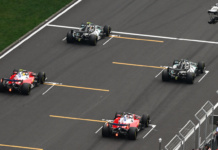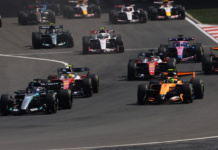
Recognized as one of the most technical and fascinating slopes in the world, Suzuka now also positions itself as a test bed for energy management. Mercedes is smiling, ready to capitalize on their great technical advantage before the April break gives their pursuers the chance to get closer. Ferrari, on the other hand, wants to make the most of the chassis qualities of the SF-26, which however with the limitations on active aerodynamics could also prove to be a handicap.
The strength of Mercedes
The underdogs in Japan are all for Mercedes. In Shanghai the Brackley team demonstrated that they have the best package and Suzuka will enhance it even more. The Japanese track highlights the strengths of the Silver Arrowsabove all the maximum power in a straight line and the excellent management of the battery, partly due to the overabundance of horsepower of the combustion engine. The track is one of the most critical in terms of energy strategies, even more so after the FIA’s decision to limit the opening of the mobile wings to the finishing straight and the stretch preceding the 130R for safety reasons.
The Silver Arrows’ main adversary could be reliability. In China a technical problem hindered George Russell in Q3, while the two McLarens were unable to start the race due to a problem that arose within the perimeter of the Brixworth power unit. However, it shouldn’t be a drama if the Ferraris were to take the lead again at the start. The long guided section of the first sector will make it difficult to react to any overtaking on the finishing straight, while, even before that, the strong clipping expected at the spoon and on the 130R will facilitate position exchanges.
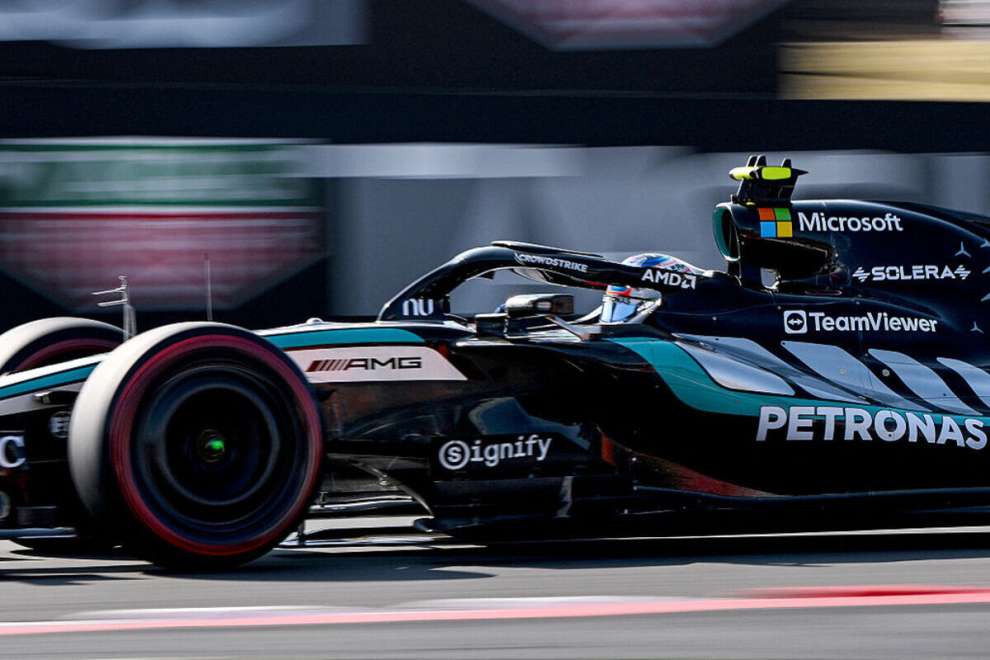
Inside the box, Russell starts ahead of Antonelli. It is the Italian himself who still recognizes a certain superiority of his teammate, especially in terms of energy management, which comes more naturally to the Brit. On the other hand, the first victory achieved in China renewed Kimi’s confidence in his own means, with the possibility in Japan also of leveraging his sensitivity in tire management.
Ferrari’s double-edged sword
Ferrari starts a step behind the Silver Arrows, on a track, moreover, that does not reward the greater reactivity in traction of the Italian power unit and its smaller turbo. On the contrary, in China the SF-26 proved to have the advantage in fast corners where downforce countsdecidedly abundant in Suzuka, between the large snake in the first sector, the Degner and the spoon curve. The chassis skills will also be useful for tire management in the race. Pirelli offers the hardest compounds in the range, C1, C2 and C3, and expect graining on the front axle again. Its severity will depend on the evolution of the new asphalt deposited on the eve of the last edition, while temperatures will dictate the level of thermal degradation.
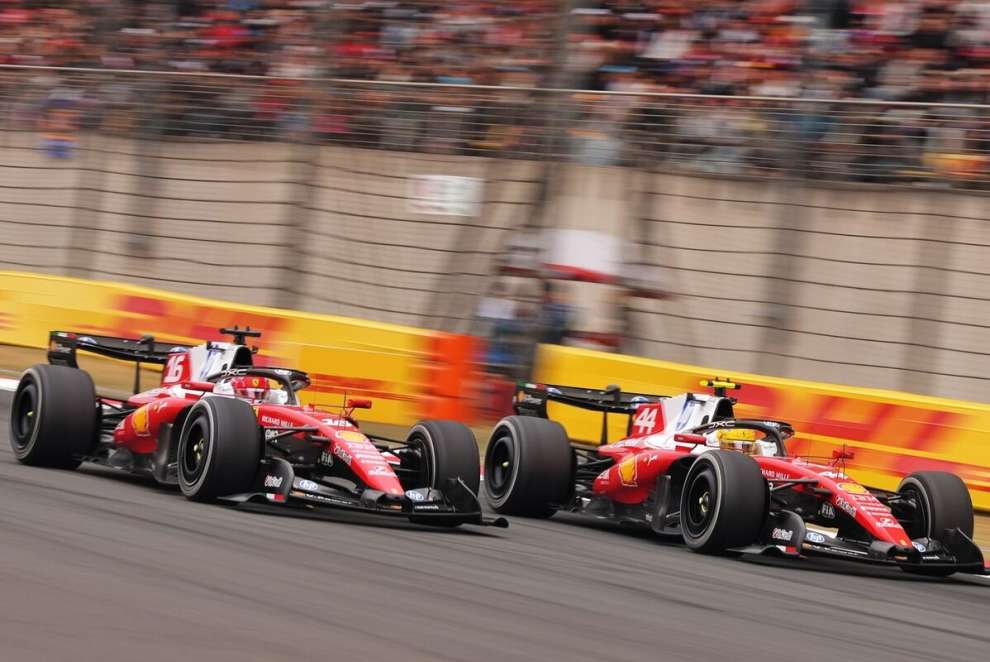
In any case, despite Ferrari having an advantage in terms of downforce, it is not clear how profitable this will actually be. Energy management will be king, forcing you to exploit part of the power of the combustion engine to recharge the battery, which is why we will have to see in which corners we will actually travel at the limit of adhesion. Having more downforce also often equates to greater straight-line drag, impacting energy management, especially with active aerodynamics limited to just two zones. Ferrari’s downforce could therefore prove to be a double-edged swordunless the SF-26 demonstrates good efficiency with closed wings. Speaking of ailerons, in Japan the Scuderia should propose the inverted mobile wing again, for friends the Macarena, with three free practice sessions to fine-tune its response in the closing phase.
Hopes for McLaren and Red Bull
The most important update for everyone, however, will be the weather. After China the teams had two weeks to process the data collected in the inaugural doubleee to understand both how to extract the most from the chassis through the set-up and how to optimize energy management strategies. Furthermore, unlike Shanghai, this time there will be three rounds of testing to work directly on the track, to benefit preparation.
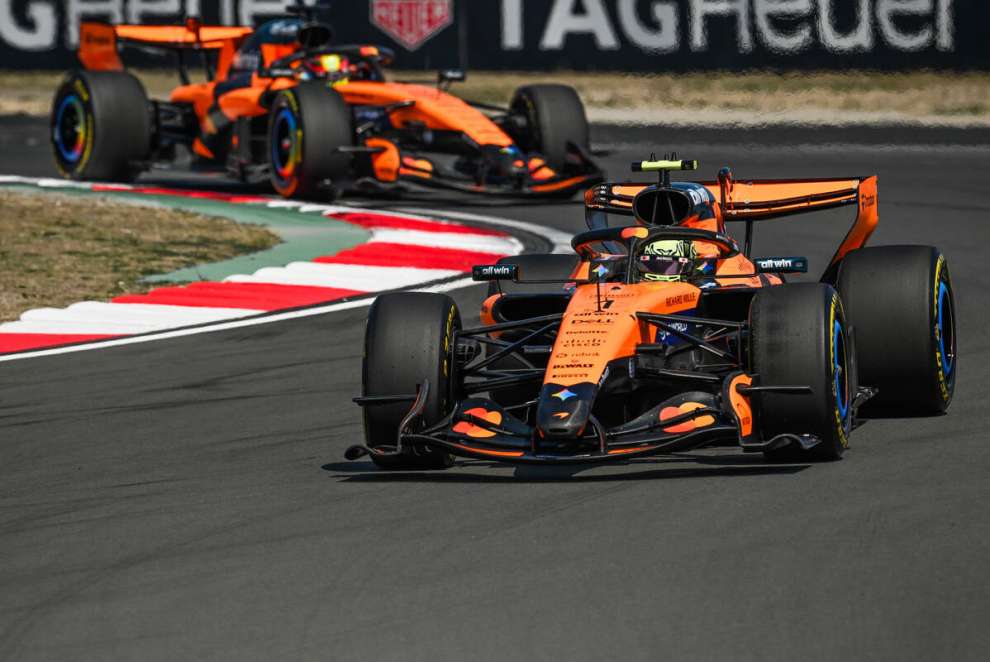
All eyes, therefore, on McLaren. Despite not having taken part in the race, in China the papaya team made progress in exploiting the power unit, getting closer to Mercedes, which however continues to suffer from an aerodynamic gap. Red Bull is also working on the cornering behavior of the RB22which Verstappen defined as undriveable in Shanghai, attributing only a small part of the blame to the power unit. Furthermore, Suzuka is one of the circuits where the lap time is most sensitive to weight, penalizing the teams furthest from the regulatory minimum.
Finally, there will be a further theme to pay attention to. The limitations on the opening of the mobile wings will lead the cars to crush against the ground for a long time under the pressure of the maximum aerodynamic load, accelerating the wear of the floor. The risk is to exceed the 2 mm allowed by the regulation and to incur a disqualificationinviting you to take the right countermeasures in time. The objective for everyone, moreover, is to maximize the points haul on the eve of the long break in April, after which the development could change the balance of power seen so far.