





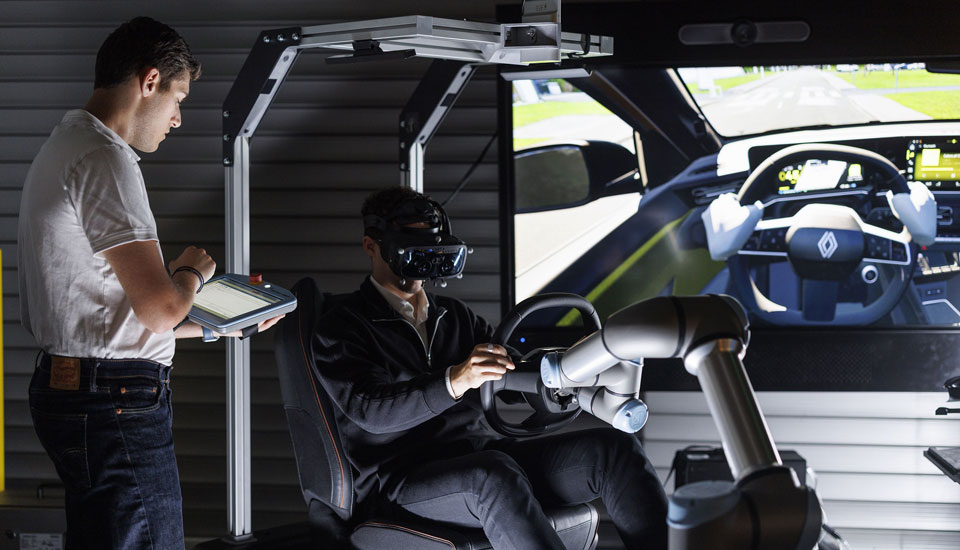
With futuREady, Renault Group puts forward an approach based on four pillars: growth ready, technology ready, excellence ready and trust ready. This structure, which extends from product strategy to technology investments, from operational transformation to employee development, defines how the Group will move forward in the new period. The Group also plans to increase its competitive advantage by using its platforms, develop products closer to customer expectations, and expand with a targeted approach in growth centers such as India, South America and South Korea, while maintaining its strong base in Europe.
Renault Group CEO François Provost: “After nine months of work, I am very proud of the progress we have made within the scope of the futuREady vision. Our plan is based on four basic pillars. First, we focus on our growth and product strategy. Second, we are accelerating our technological roadmaps for all critical technologies. We are setting ambitious targets that will move our operational performance forward with the wider use of artificial intelligence. We will implement this plan with a collective understanding, as we have for more than 127 years. At the center of this approach are our dealers, business partners and suppliers, as well as our employees. “With futuREady, we aim to become the reference point of the European automotive industry on a global scale, while proving once again that Renault Group is a long-term player.”
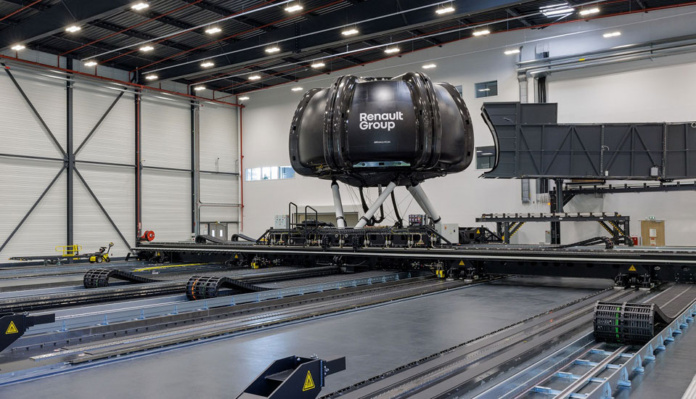
Transformation vision shaped by four pillars
The growth ready leg of the futuREady plan includes continuing the product offensive and focusing on customer experience. In this context, it is aimed to launch a total of 22 new models, 16 of which are electric, in Europe, and to complete the second product offensive with 14 models in international markets. Within the scope of this strategy, Renault Group also aims to be present in 55 percent of the global automotive market of approximately 50 million units, excluding the USA, Canada and China. The group also aims to complete its second product cycle, covering 36 launches in five years, and sell more than 2 million vehicles annually by 2030. Half of these sales are planned to come from outside Europe.
The tech ready dimension of the plan focuses on making technology the driving force of growth and technical-economic superiority. Electrification, software, digital technologies and platforms are positioned as key areas that will increase the Group’s competitiveness. In this context, Renault Group plans to reduce electric vehicle costs by 40 percent and launch the new RGEV Medium 2.0 platform, which offers a range of up to 750 kilometers in the EV version and up to 1,400 kilometers with a range extender, for the electric vehicle attack in the C segment. In addition, the Group aims to continue its E-Tech hybrid technology after 2030 and expand it with versions below 150 hp in international markets. This technology focus also supports Renault Group’s aim to become the first European manufacturer to offer a Software Defined Vehicle in Europe by 2026.
The Excellence ready approach aims to increase resilience and strengthen operational excellence in an increasingly volatile global market. In this regard, Renault Group focuses on establishing a more competitive structure in terms of innovation, cost management and speed. Reducing the development time of a vehicle to two years stands out as one of the main goals of this approach. The group also plans to reduce quality-related problems by 50 percent, reduce variable costs per vehicle by approximately 400 euros per year on average, and reduce initial investments by up to 40 percent. These goals are among the important parts of Renault Group’s strategy to create a faster, more efficient and more competitive structure in production processes.
The title Trust ready focuses on strengthening the commitment towards stakeholders. Renault Group has decided to invest long-term in competencies and support mechanisms that will strengthen employability in an ever-changing world for its approximately 100,000 employees. This approach aims to further strengthen human resources and increase the resilience of the organization during the transformation process. The group also aims to strengthen its global collaborations and produce more than 300,000 vehicles per year for manufacturers such as Nissan, Mitsubishi Motors, Volvo Trucks, Geely and Ford by 2030.
Growing production ecosystem with global collaborations
While the group’s 9,000 managers will be among the cornerstones of this transformation, suppliers will also be included in the process from the beginning of the projects for innovation and cost optimization. The retail network, which has 9,000 sales points worldwide and carries out more than 30 million transactions annually, will continue to be at the center of customer experience.
Renault Group also plans to open its production capacity to other manufacturers, maintaining full industrial and technological independence in Europe, while continuing to strengthen its strategic alliance with Nissan and Mitsubishi Motors. In international markets, the aim is to make India a global production and supply center and to strengthen the partnership with Geely in South Korea and South America. Overall, Renault Group plans to produce more than 300,000 vehicles per year by 2030 for Nissan, Mitsubishi Motors, Volvo Trucks, Geely and Ford on three continents. This approach will enable the Group to use its production capacity more efficiently while strengthening its global collaborations.
A new era in production with the industrial metaverse
On the production side, the industrial metaverse system, which includes the digital twin of all factories, will be activated. In this way, production processes can be monitored in real time around the world. It is planned to reduce the number of parts per vehicle by an average of 30 percent and to use 350 new generation humanoid robots for heavy work. Thanks to artificial intelligence-supported production, it is aimed to halve factory downtime, reduce energy consumption by 25 percent and reduce production costs by 20 percent.
Automobile Magazine – English