

Energy management has upended qualifying as it was known, debasing the drivers’ ability to push the car to the limit. The FIA and the teams will discuss what to do, starting from the analysis of what was observed on the track. The first three Grands Prix have shown that the problem arises from a completely different use of the brake and accelerator than in the past, which is why, in addition to clipping on the straight, attention must be paid above all to the cornering dynamics. We brake less and less An excellent summary of the qualifying situation was offered by Lando Norris on the eve of the Chinese Grand Prix, reflecting on the differences with the past: “We drove as we have always done all our lives: brake and accelerator. In general, using the accelerator more and more and the brake less and less, that kind of thing. [Adesso]for the first time in our lives, we drive in a completely different way”. The world champion placed emphasis on two crucial phases of driving: acceleration and braking. Starting from the second, Formula 1 experiences a paradoxical scenario in which less braking is performed despite the cars going slower through corners than before, having less grip. Brembo’s estimates suggest that in the first three Grands Prix the average time of use of the braking system has fallen from 13.7% in 2025 at 12.7% currently. The worst case is Suzuka, where the reduction was 2%, going from 10.4 to 8.9 seconds per lap. Marcel van Dorst/EYE4IMAGES/NurPhoto via Getty Images The drivers no longer have the same opportunities to make a difference in braking. 350 kW, slowing down the problem, it would be necessary to regulate the charging of the battery differently, by intervening on the energy and/or power. A possible solution would be to limit the energy that can be accumulated at each lap, so as to discourage people from stepping off the gas to recover energy too tied to the accelerator The other big problem of qualifying is corner exit. Leclerc has repeatedly underlined that taking risks no longer pays off, as pushing to the limit and playing with the accelerator confuses the energy management software, even if you go faster in the corner, you lose more time than you gain on the next straight, as the management of the electric power is now messed up second as soon as the driver hits the accelerator at 100%. Marcel van Dorst/EYE4IMAGES/NurPhoto via Getty Images From time to time, however, the FIA can grant an exemption in some corners and in Suzuka the advantages were felt. “In the first part of the lap you are at the limit, but then from turn 6 you can’t push anymore because you have to manage the battery,” commented Hamilton after the Japanese qualifying. The reference to turn 6, at the end of the serpentine, is not random, since the pre-event notes excluded the stretches between turns 3-6, 8-9 and 13-14 from those in which it was mandatory to activate the electric motor when returning to the throttle. The cure could be to untie the first moments of use of the accelerator from the use of the battery, but there would be contraindications. Watch out for the side effects. Going down this path, we could reach the extreme case in which the hybrid would be reduced to providing a simple additional thrust. straight or even in some predefined activation zones, as with the old DRS. By doing so, however, Ferrari engines would benefit more than the competition, enjoying a smaller turbo that guarantees more torque and reactivity in the traction phases. Conversely, other engine manufacturers have designed their power unit by conceiving the electric motor as a power buffer, i.e. as an assistance tool at low speeds to compensate for the lack of thrust from the thermal part due to turbo lag Furthermore, the hybrid would distort the basic concept of the new power units and introduce a further problem. In the more driven sections, without the electric boost one would accelerate less, arriving at the corners with less speed and further reducing the use of the brake. Photo by Mark Thompson/Getty Images Finding a solution will not be simple and above all it will be a question of compromise, having to accept the lesser evil, however, is a must given that, in addition to keeping the drivers from expressing themselves at their best, it also makes it difficult to judge the chassis qualities of the various cars. After Australia, Norris even refused to comment on the harmony with the MCL40, having not yet had the opportunity to evaluate it: “To be honest, it is still very early to say and it is [una situazione] quite different, because you no longer drive the car at the limit, but you drive the power unit.” The cancellation of the races in Bahrain and Saudi Arabia has made precious time available to work on them and it will be appropriate to make the most of it.

Bringing soul back to qualifications: changes are needed on charging and accelerator
İLGİ ÇEKENLER


Constructors’ World Championship 2026: the ranking after the Monaco GP
Aston Martin is...

Russell’s surrender: “Everything seems against me. Title? It’s gone now”
Russell, what a...
Monaco GP Roll of Honor
The Formula 1...
De Telegraaf: sensational Mercedes, Russell risks his seat if Antonelli beats him. And Wolff thinks back to Verstappen
Indiscretions from Holland...
Vasseur: “Leclerc is the right horse, he made a bet on Ferrari”
Leclerc, a Ferrari...
Red Bull rises again in Monaco, Verstappen: “Positive day, but Ferrari is really strong”
Max smiles (finally)...

Hamilton: “I have moved many pieces and repositioned myself in the team. Santi is my Italian ‘Bono'”
Hamilton-Santi, will it...


Russell: “Duels with Kimi? Wolff trusts us. Bad luck will also befall Antonelli”
Desire for redemption...
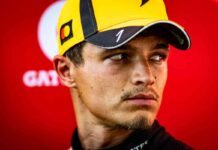
Norris: “I usually don’t like statistics, but being the driver with the most starts for McLaren is a source of pride”
The words of Lando Norris in the Munich press conference
Automobile Magazine – F1 English...