The best power unit on the grid is not enough for Mercedes customers to fight for victory. McLaren, Williams and Alpine pay a delay in aerodynamics and energy management, but the latter does not depend on the failure to provide the latest version of the software. The reasons for the different use of the engine can be attributed rather to the slow discovery of the package, which Mercedes, however, developed itself.
Mercedes’ advantage
On the eve of the season, the hope was that at least the Mercedes customer teams could leverage the Brixworth power unit to keep up with the Silver Arrows and deliver some hard-fought races. This is not the case at the moment and the reason is not just the chassis superiority of the W17s. McLaren, for example, believes it is also falling behind in energy managementwhilst using the same software developed in Brixworth. The reason is that the system does not work autonomously, but it is the responsibility of the individual teams to use it as best as possible.
Similar to artificial intelligence, the effectiveness of energy management software depends on the tasks it is asked to do and the information available to it. For example, it is essential to know all the sensitivities of the power uniti.e. how it behaves in various operating conditions, what the optimal regimes are and how to manage the battery’s discharge and charge cycles to maximize its efficiency. In this, Mercedes has an advantage over its customer teams, having developed the power unit itself and therefore knowing it like the back of its hand.
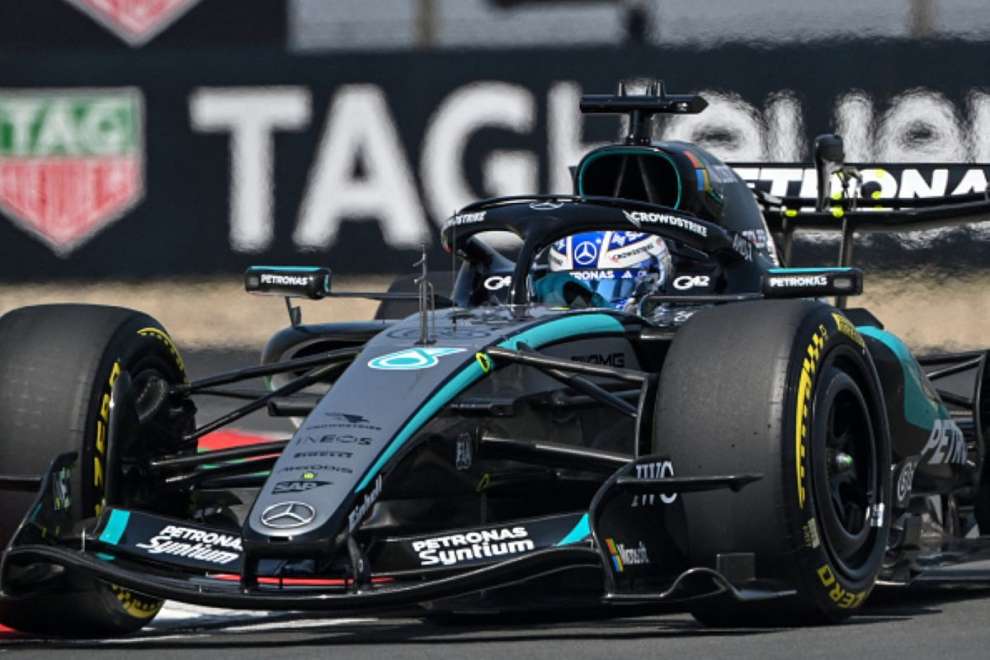
The situation is different for customer teams, who are discovering the Brixworth engine directly on the track, as Andrea Stella explains: “In every single session, we learned a little more about the way the power unit works, which is very complicated.The complexity lies mainly in the sensitivity to the smallest variationswhich then results in big differences in terms of speed and lap time. If you look at the GPS tracks, you can see very different speed profiles between two drivers of the same team or from one lap to another for the same driver. We need to understand what these sensitivities lead to and in doing so you also need to understand which tools to use.”
The importance of simulation
Mercedes’ superiority arises from its profound knowledge of the package. Having more information available, the software is able to better plan the energy management strategy, taking into consideration all the variables that customers are slowly discovering. Much, then, depends on the simulation techniques and tools. It goes without saying that greater knowledge of the power unit helps to simulate it more accurately, being able to develop energy strategies that are more relevant to reality. Furthermore, client teams can dedicate themselves to all this only with internal resources, redeploying staff who previously worked on other tasks and with the obligation to respect the budget cap. The same goes for Mercedes, which however, as an engine manufacturer, can also draw on the people in the engine area counted towards the cost cap relating to the power unit.
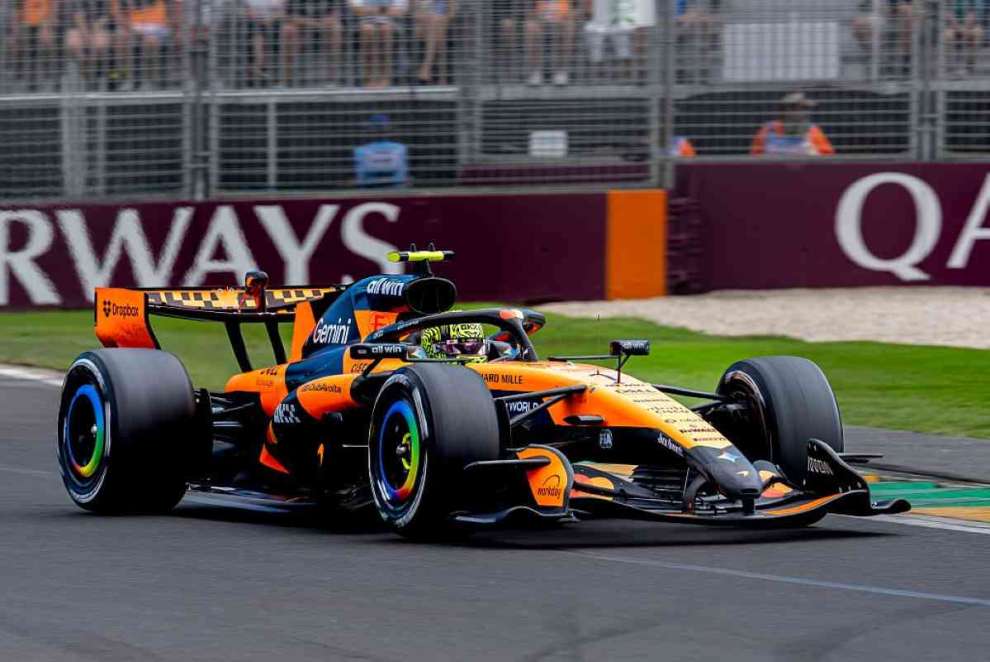
Client teams now find themselves filling a gap in knowledge and preparation, a task that inevitably takes time. At McLaren we have already seen the first progress between Melbourne and Shanghai, as Andrea Stella observed: “We learned with every session and every event. We are in a better position than we were in Australia. […] PI think we are now able to extract more performance from the power unit”.
The other differences
Mercedes’ better energy management compared to customer teams, however, also arises from some technical choices. Toto Wolff, for example, noted that McLaren uses different gear ratioswhich leads the combustion engine to work at other speeds, spending and recovering electrical energy in a different way. Many times, however, the most important aspects are the ones you choose to overlook in your statements. Nobody, for example, talked about braking systems, which however influence how effectively the battery can be recharged during braking. Behind the scenes there are already those who are running for cover to replicate the solutions of their adversaries, even if suppliers urge caution and not to make hasty changes.