The Australian Grand Prix opens the season with a technical framework which, despite all the typical cautions of the first race, is already starting to outline some fairly clear hierarchies, at least for this start of the season. The Mercedes one-two confirms the expectations of the day before, despite an initial part of the race that saw Ferrari in battle. Overall the gaps between the teams appear decidedly large, but there is also a clear impression of a very steep and still early learning curve for practically everyone, so great evolutions in all aspects can be expected very quickly in the next races.
Mercedes isn’t done hiding yet. Russell is ready, Antonelli needs to grow quickly
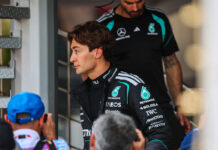
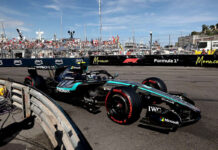
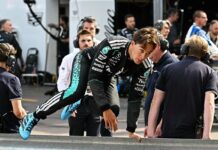
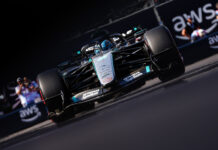
George Russell’s victory certainly doesn’t come as a surprise, taking advantage of a Mercedes that is undoubtedly the best car on the grid. The advantage seen in the exploitation of the drive unit in qualifying was clear, but also in the race, once they had taken the lead, the two standard bearers of Toto Wolff’s team gave the impression of being in total control of the advantage, limiting themselves to practically following the times of the Ferraris of Leclerc and Hamilton behind them at will. The half-chance of the early stop saw both Russell and Antonelli struggle with a certain amount of graining on the front, but (curiously) without the lap times being particularly affected, a sign of a great race management approach. Between the two drivers, George Russell certainly seems ready to climb the world ladder, while Antonelli gives the impression of having to grow quickly this season if he wants to fight with his teammate, given that a fight for the title within the team also requires a certain amount of psychological warfare, which Russell has already started to do by not naming the young Italian among his main rivals for the championship and thanking the team for allowing his teammate to participate in the qualifying, in perfect “master of the team and his wingman” style. It has always been part of the Formula 1 game.
Ferrari: good chassis and tire management. The small turbo helps with full tanks. Hamilton is back
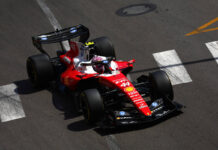
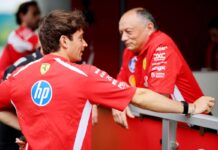
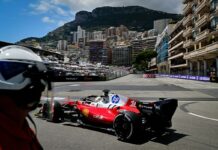
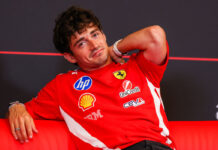
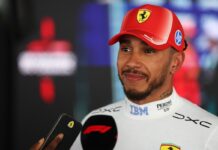
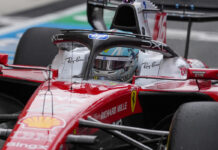
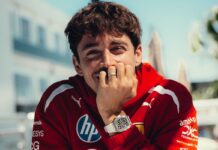
Ferrari greets Melbourne with a decidedly more positive race compared to qualifying, but also with some shadows compared to the overall picture. The red was undoubtedly the second force in the race, but if the ambition is the title, the gap seen by the Mercedes pacesetters still appeared significant. Vasseur rated him at about half a second in the race, and that’s probably a fair assessment. At the start and in the first part of the race Leclerc and Hamilton still held their own against their Anglo-German rivals, confirming the rumors from the day before which spoke of a particularly competitive SF26 with a completely full tank. The smaller turbo used on the Italian single-seater could be one of the factors in this perspective, being more effective “low down” and guaranteeing better traction at the start, as we have seen, and when exiting corners with a heavy car. The situation towards the end of the race is different, with a lighter car that uses less torque at the bottom and instead sees the need for the “up” power provided by a larger turbocharger unit like the Mercedes one. Chassis-wise, however, the Maranello car proved to be excellent, perhaps (limited to what was seen in Australia) one of the best of recent times, with an excellent level of aerodynamic load, good balance and tire management not inferior to the Mercedes. The problems seem to arise when it comes to squeezing the drive unit towards its limit both in terms of horsepower and, above all, on the subject of energy management and with qualification mapping. We’ll see if anything will change in China from this point of view. On the drivers front, Leclerc did not disappoint expectations with a solid race and a first part that was a lesson in “racecraft” with Russell, despite the infinite difficulties of managing the new single-seaters. On the pace, however, the Monegasque did not appear exceptional, with a set-up that was not entirely centered as he himself stated after the race and a car that was not always in the ideal window. On the contrary, Lewis Hamilton had one of his best races with Ferrari and the impression is that of seeing a totally different Hamilton compared to last season. The Englishman was particularly quick in the second stint, able to eliminate the gap of over 7 seconds he had from Leclerc after the pit stop and to even recover about 3 seconds from Russell’s Mercedes. A version of Hamiltonhammer time” also appeared lively in his statements and certainly has as his first objective that of keeping his teammate on his toes, which can only be of help for Ferrari in this season where growth is important and the comparison between the drivers could also significantly help in terms of development choices.
Qualification: Party mode is back
One of the points where Ferrari appeared lacking is precisely the exploitation of the Power Unit in qualifying and it is important to underline that the “single mapping” rule between qualifying and race, in force since 2020, has always been limited to the mapping of the internal combustion engine, while the output map of the hybrid has always been modifiable between sessions. With the electric part so fundamental in the overall performance, the relevant mapping becomes crucial and the differences between qualifying and the race in this respect that were seen were notable, with Mercedes the absolute queen of the qualifying mapping, approached only by RedBull, which appears particularly effective in terms of delivery on the flying lap. The famous “Party Mode” from a few years ago seems to be back on track, but in an electric version. In Australia, this particular phase was the one that most of all put Ferrari in difficulty among the four top teams. Obviously we will have to re-evaluate everything starting from China next Sunday.
McLaren is far behind on race pace, lacks load and the weight is not yet right
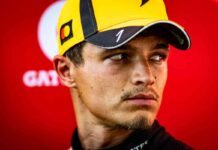
Among the top teams, McLaren confirms the difficulties already glimpsed in the tests. Beyond Piastri’s incredible accident at less than 170 mph on the opening lap, the race pace shown by Norris, and above all the tire management, appeared to be significantly deficient compared not only to Mercedes, but also to Ferrari. The speed with which the front graining occurred on the reigning World Champion’s car makes us think back to the typical problems of past seasons, combined with an aerodynamic load that is not yet sufficient and a car weight that has evidently not yet reached the limit. On a track like Melbourne they are very limiting factors, but it is clear that in Woking the starting point is not that of last season and there is a need to work to bring a significant step also from the point of view of aerodynamics and balance, as well as to study in detail the use of the Mercedes drive unit, after having collected the data on how it is exploited by the parent company team.
Verstappen excellent comeback, super Lindblad and Bearman, good Audi
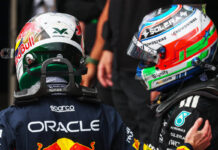
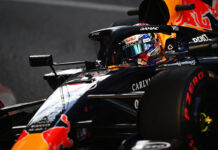
It is also worth highlighting the comeback of Max Verstappen, who easily reached Lando Norris, confirming the very interesting potential of Red Bull, probably the third force in Australia. It should also be added that the large gaps between the teams seen at the beginning of the season mean that the fastest can pass the slowest like skittles and this has evidently facilitated the comeback of the four-time world champion. Lindblad’s debut was extraordinary in terms of speed, sporting arrogance but also maturity and race management, a phenomenal weekend which will be very interesting to see if the only “rookie” of season 26 can repeat it in the next stages too. Bearman also did well, capitalizing on the good initial feeling from Haas, as did Bortoleto, who brought the first points to the debuting Audi.
Ferrari strategy too cautious, but without real regrets
On the strategic front, Ferrari chose a conservative line on the occasion of the first Virtual Safety Car and the natural doubt is how much of the race was lost in that circumstance. Hamilton himself complained on the radio asking that at least one of the two cars stop to take advantage of the opportunity. The judgment in this case is twofold. From the point of view of the final result, nothing would have changed, with a Mercedes increasingly competitive in the pace of the laps and in total control of the race in every phase. The only warning light concerns the management of the Hamilton-Leclerc duo, in which one often has the impression that from the wall they are choosing not to do anything so as not to end up penalizing one of the two drivers. In general, however, it must be said that the very early stop would have posed more than one concern regarding the tires and that it is normal in these initial phases not yet to have certain data on degradation in the various conditions, so a conservative choice is also understandable, without the need to persist in futile controversies.
Are overtaking like Mario Kart exciting or not?
The first part of the race was characterized by a series of overtaking and counter-overtaking even at the head of the race, and this certainly pleased some of the public. The writer does not experience that type of overtaking as particularly exciting, as it is dictated by the level and use of the battery, rather than by a driving risk taken by the driver, also generating a certain confusion. The race with these new cars, in any case, was decidedly less anomalous than the qualifying, for which some regulatory intervention is needed, given that much of the charm in that type of session (so beautiful and enjoyable for enthusiasts and non-enthusiasts) appeared to have vanished into thin air on the Australian Saturday. However, it should be remembered that Melbourne is one of the most challenging tracks from an energy point of view and not all circuits will present similar conditions. To really understand the balance of the championship we will therefore have to wait at least for the next races, starting with Shanghai.