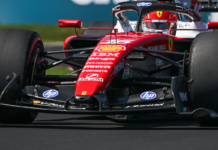
The first changes to the technical regulations aim to improve driving in qualifying and safety in the race, both with regards to overtaking and starting. At the same time, we wonder whether the new rules will benefit or disadvantage some engine manufacturers, however unintentionally, in particular Ferrari and Mercedes. Federico Albano and Carlo Platella try to give an answer in the new episode of “Engineers of Thursday”. Who loses and who gains Overall, the package of changes will have the effect of increasing the relevance of the internal combustion engine compared to the electric part, which could influence the balance of power. Ferrari should not take advantage of this, since it will still be possible to use the electric motor at full power during acceleration, while a reduction would have made the most of the smaller turbo of the Maranello power unit. Instead, the fact that the combustion engine will be used for longer could reward the power of the Mercedes units even more. Furthermore, the engine will be subjected to even more stress, which could lead to requests from some engine engineers to be able to intervene on the power unit for reliability reasons, even without enjoying the ADUO. Another big theme is that of departures. The new system will be tested in Miami which will activate the electric motor in the event of a slow start, to prevent anyone from remaining stationary on the grid. Since this is an emergency procedure, the solution should not affect the advantage of the Ferrari-powered drivers at the start. However, the ploy used by Mercedes and Red Bull in qualifying is a reminder of how all teams are very skilled at interpreting the rules to their advantage. What changes on the track While waiting to evaluate the possible consequences for the hierarchies, the updated regulations promise to improve the show on the track, especially in qualifying, even without solving all the problems. Furthermore, the new ways of using the power unit could increase the importance of the braking system, with the feeling that riders will spend more time on the brakes, where much will depend on the effects of the enhanced superclipping. Despite the changes, in fact, the cars will still lose speed in a straight line and will continue to do so until the power units change more radically, probably in the next few seasons.
The rules change: what it means for Ferrari and Mercedes – VIDEO

İLGİ ÇEKENLER

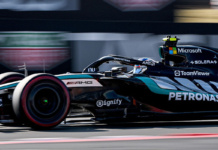
Steiner: “Antonelli is Wolff’s revenge for not having taken Verstappen”
Mercedes, how to...

Russell: “Suzuka was difficult, but the season is very long. In Miami with confidence”
Russell towards Miami...

Cadillac power unit in 2029, Dan Towriss confirms: “Ahead of schedule”
The Cadillac project...


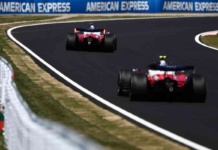
Ferrari, comforting results on filming day: the Macarena wing will debut in Miami
An ingenious winger...

Is Verstappen leaving? Patrese: “He’ll make his choice by the end of the year, he’s certainly fed up!”
Max Verstappen leaving...

Jos Verstappen attacks, Ralf Schumacher defends himself: “He’s always a little too aggressive”
Ralf Schumacher teases...
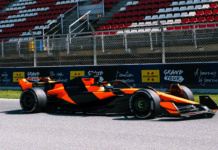
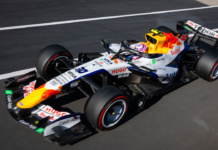

Tombazis: “These changes are an evolution, not a revolution”
Tombazis and the...

Vettel joins critics: “Don’t lose the soul of F1”
Vettel also among...


Sebastian Vettel is “Knight of the Environment”: the special award from a school in Gothenburg
Sebastian Vettel and...
Ala Macarena Ferrari: estimated gains between 8 and 10 km/h
Crucial day in...