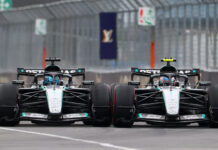
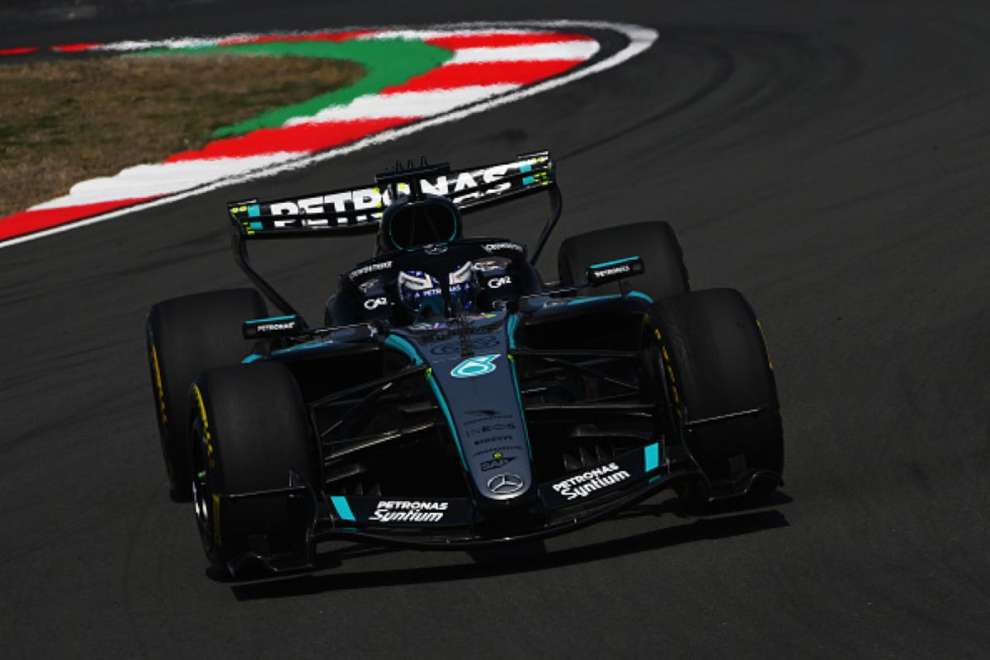
It’s a simply stratospheric Mercedes, which confirms its overwhelming superiority on the flying lap. Tracing everything back to the engine and software would be an understatement, given that the excessive power of the W17 arises from a 360° competitive package, with which George Russell also immediately shows excellent harmony. The sprint qualifying in Shanghai revealed abysmal gaps between all the participants, a depressing spectacle to say the least, but which on the other hand shows what is needed to be successful in this new Formula 1.
The driver makes the difference
Despite a decidedly less severe track than in Australia, energy management continues to reign supreme in China too. Being the best in this field is not just a question of engine and software, but also of the way you approach cornersof trajectories and how to get back on the gas. These are all aspects with a great impact on consumption and which change quite a bit between qualifying and the race, partly explaining Mercedes’ great strength on the flying lap, capable of understanding on the simulator how to adapt management strategies to the circumstances.
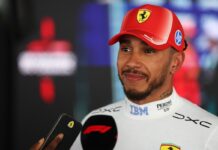
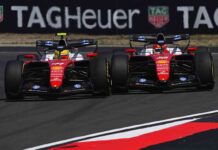
In a Formula 1 where the approach to the corners makes even more of a difference, the driving style of the drivers becomes of absolute importance. It is no coincidence that the sprint qualification resulted in large gaps between all the teammateswith the emblematic case of Leclerc and Hamilton, taking turns in front of each other at various moments of the session. The gaps for everyone become maximum in the third sector, whose long straight requires a progressive cut in power to preserve the battery, leading to the differences in terms of energy accumulated in the rest of the lap emerging.
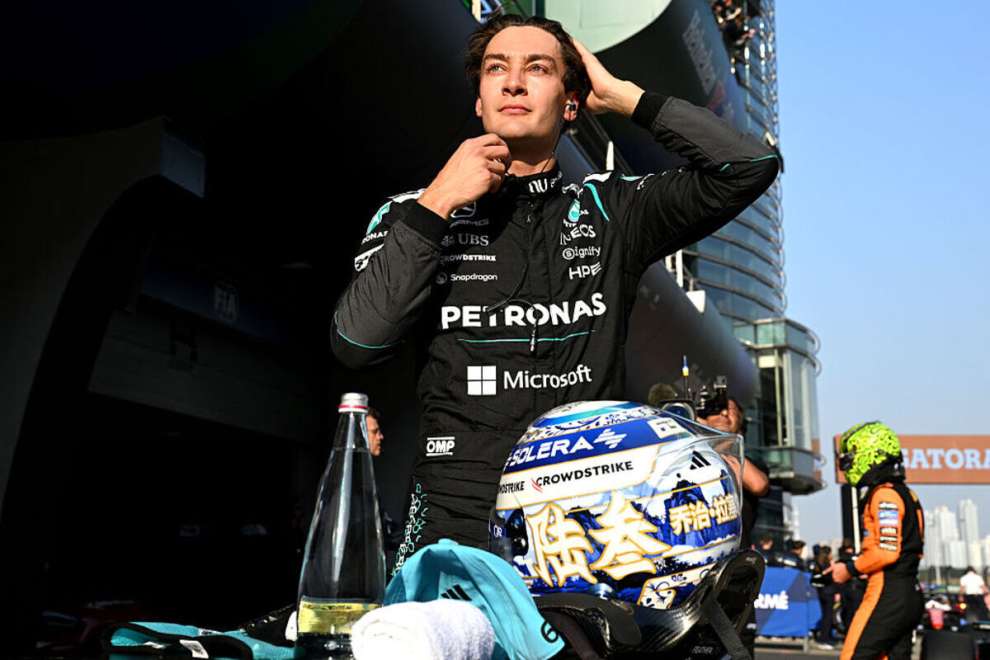
The key with these cars is to be clean and repetitive in your drivingso as not to ‘disorientate’ the battery management software. “It is very important that the pilot’s inputs are constant and precise, because this makes the difference.” explained Antonelli. All it takes is one mistake or a curve approached in a slightly different way for the control unit to find itself without references, altering the charging strategy for the rest of the lap. So credit to Russell, who is emerging as one of the best performers in qualifying even with this new generation of cars.
W17, chassis also promoted
The Englishman from Mercedes can dream big, at the wheel of a car with the best power unit on the grid, but also with equally competitive aerodynamics. Until last year we talked about how a good balance benefits the performance of the tires, helping to keep them in the correct operating window. Now the benevolent influence is also on energy, as a predictable machine does not force too many corrections, allowing you to tackle curves in the same way and facilitating the task of the management software. The goodness of the Mercedes in terms of balance shines through in the body language of the W17but also by the ease with which the riders manage to set the time at the start of the session right from the first free practices. Another important sign is the tranquility visible in the garage half an hour before qualifying, with the silver cars ready on stands, while in the opponents’ garages they were struggling to put everything back together.
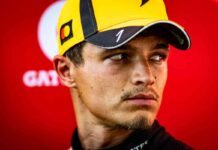
This time the first of the pursuers is McLaren. Lando Norris claws third position thanks also to the better evolution of the track, involuntarily exploited thanks to the choice to carry out two preparation laps, considered the optimal compromise between bringing the tires up to temperature and energy consumption. The MCL40, however, appears to be behind on a chassis-aerodynamic level, as well as in the exploitation of the power unit. It is not a question of the software version, but rather of how it is used, of the data fed to it and of knowing which are the greatest sensitivities for consumption. In all of this McLaren is still behind Mercedeswhose deep knowledge of the dynamics at play becomes a decidedly valuable advantage on Sprint weekends, when time to prepare is scarce.
Ferrari doesn’t come close
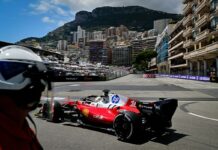
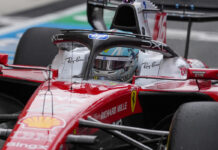
Ferrari takes a double step backwards on Friday in Shanghai. The first concerns the inverted mobile wing, abandoned after the only free practice session. The team, however, would not have rejected the systemhaving brought the ‘Macarena’ to China with the priority of collecting data and verifying its correct functioning. In fact, there would still seem to be some critical issues for a solution that was planned for later, as suggested by the radio instructions given to Leclerc to bring the closure of the wing forward by a few moments with respect to the braking point.
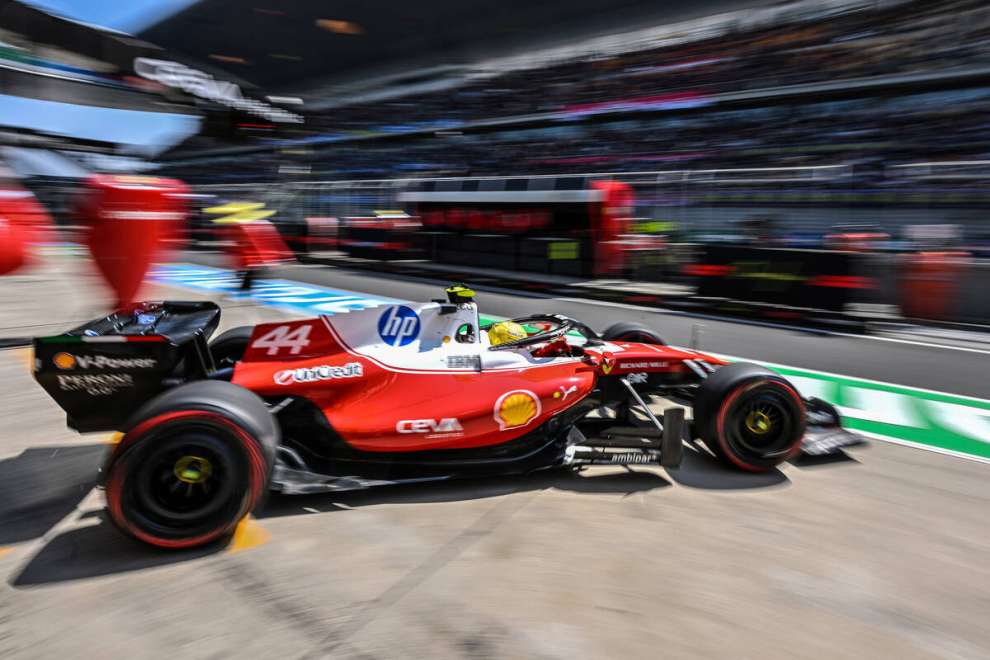
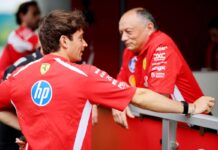
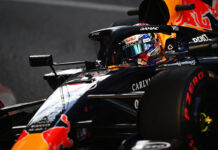
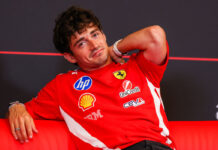
In any case, the absence of the rotary wing is certainly not enough to explain the large gap made up by the Mercedes, as well as the temporary step back in the comparison with McLaren. One of the problems at Ferrari is that Leclerc and Hamilton are unable to express themselves with continuity. In particular, the Monegasque suffers from a sudden loss of speed on the home straight, a sign that the team and riders have not yet fully mastered the energy strategies. It’s even worse for Red Bull, who are in more difficulty than in Melbourne on a track that exposes the weaknesses of the RB22 in slow corners. Verstappen also does not hesitate to define the driveability of the power unit as horrendous, evidently afflicted by a sudden delivery of power, forcing the drivers to make many corrections which in turn penalize energy management.
Towards the Sprint
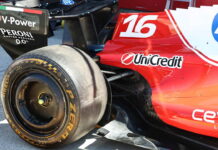
All attention is now turned to the Sprint race, where front tire graining could be the main issue. McLaren certainly isn’t happy about it, giving the Ferraris the opportunity to fight for positions immediately behind Russell and Antonelli. Much will also depend on the start, which will be a dress rehearsal ahead of Sunday. Teams and drivers will have the opportunity to evaluate the pace to maintain on the formation lap to warm up the tires without draining the battery, as happened in Melbourne. However, the biggest curiosity is what Mercedes’ advantage will be over the long distanceafter demonstrating to everyone what he is capable of in qualifying.