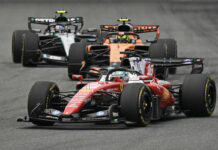
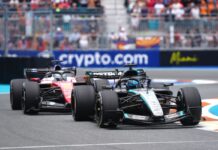
The World Championship is ‘shrinking’ Formula 1 recently announced the cancellation of the Bahrain and Saudi Arabia Grands Prix – although formally the two races in Sakhir and Jeddah have not yet been definitively excluded from the calendar but ‘only’ removed from their place in the month of April – thus bringing the number of GPs scheduled for 2026 to 22, against the 24 originally planned. Furthermore, worrying rumors are emerging about the possibility that other races are in the balance and that therefore the program of this championship could undergo further shocks. Fixed limit for teams and motorists There is one thing that however will certainly not change, regardless of the number of GPs that will actually be contested this year, be it 24, 22 or even less: the Budget Cap limit. In fact, the regulation specifically states that the 215 million dollars foreseen as the spending limit for the teams applies if “24 GPs or less” are held. The only change would be if events are added – not removed – to the 24 rounds originally planned. In that case the maximum spending ceiling would be increased by 1.8 million dollars for each additional race. The same goes for the spending limit imposed on power unit manufacturers, which remains fixed at 130 million dollars. Having fewer races scheduled will therefore allow teams and engineers to be able to exploit their budget with greater flexibility. This – theoretically – could help the teams and engine manufacturers most in crisis to close the gap that separates them from their adversaries. Abstractly imagining that all teams use their Budget Cap in full over the course of a season, each team will ‘save’ on average almost a million dollars for each race that is cancelled. A compensation that could become crucial during the year in the race for developments.

Fewer GPs, but the Budget Cap remains the same: let’s find out why
İLGİ ÇEKENLER


In Miami technical checks on Sainz’s Williams: the active aerodynamics of the front wing checked
What the Commissioners...
In Miami technical checks on Sainz’s Williams: the active aerodynamics of the front wing checked
What the Commissioners...
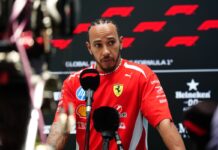
Hamilton: “It took time, but now I’m in tune with Ferrari”
Hamilton, year 2...

Monopoly goes full throttle with an edition dedicated to F1
An F1-branded Monopoly...
Red Bull, Waché: “A clear step forward in Miami, Montreal another test for the package”
Red Bull optimistic...
Vasseur: “Montreal is never easy. The low temperatures will be an extra challenge”
The words of Frederic Vasseur ahead of the Canadian GP, the fifth round of the...

Gasly: “In Miami I wasn’t comfortable in the car, but I think we understood why”
Two consecutive Sprints...

Binotto: “Huge gap on power units, but we expected it”
Binotto and Audi's...