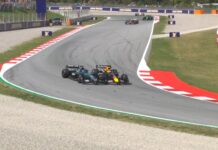
The first changes to the technical regulations promise to have tangible effects on the track, even without solving all the problems. The corrections to the maximum charging power could restore relevance to braking, while the reduction in electric thrust should not give an advantage to Ferrari, equipped with a smaller turbo than the competition. The big unknowns will instead be the overtaking dynamics and the possibility for the drivers to push in qualifying, where much will depend on the decisions that the race direction will make from time to time. The effects on qualification The first significant change is the reduction from 8 to 7 MJ of the energy recoverable in qualifying, with the possibility of further limiting it to 5 MJ for up to a maximum of 12 seasonal events, compared to the previous 8. In this way, teams and drivers will have less need to recharge the battery outside of braking, a practice that will remain, albeit to a lesser extent. On the other hand, having less energy, the electric motor will be usable for shorter intervals than in the first three races. In addition to increasing the times on the stopwatch, the modification will increase the relevance of the thermal part, giving a small advantage to those with a more powerful engine. The other big change is the increase in maximum charging power with full throttle to 350 kW, compared to the 200 kW allowed up to Suzuka and the 100 kW originally set for the 2026 regulations, then adjusted last summer. By increasing charging to 350 kW, the electric motor will absorb even more power from the thermal part, reducing the power useful for pushing the car. However, this way the energy will be recovered faster, shortening the superclipping phase. Mark Thompson/Getty Images Until Japan, charging to 350kW in a straight line was only possible by fully releasing the accelerator, which encouraged lift-and-coast techniques, causing the car to slow further before the braking point. Now, however, also thanks to the reduction in rechargeable energy at each lap, charging strategies should be less invasive. Depending on the situation, the cars could reach the end of the straight at higher speeds, in that case lengthening the braking distance and the time the brakes are used. No advantage for Ferrari Another of the proposals launched concerned cutting the maximum electric power during acceleration, in order to reduce consumption and lengthen the use times of the hybrid. The modification could have proved to be an advantage for Ferrari, which, having a smaller turbo and therefore a more reactive engine in traction, could have better compensated for a possible reduction in electric thrust. In the end, however, a compromise choice was opted for, maintaining the 350 kW of maximum power for the traction phases, limiting it to 250 kW for the other areas. Clive Mason/Getty Images At least for now, however, there are no changes to the methods of delivery of electric power, which are among the causes of the impossibility for the drivers to push hard in qualifying. The hope was that the obligation to use the MGU-K at at least 200 kW in the second following the return to the throttle would be abolished, which would have separated the accelerator dosage from the battery consumption. However, you can intervene on this from time to time through the notes from the race direction, which specify in which corners of the circuit you are exempt from the normal dispensing rules. Changes for the race Finally coming to the race, the changes aim above all to reduce the speed differences between the cars on the straight after Bearman’s accident at Suzuka. To achieve this goal, we chose to limit the power of the Boost button, while the Overtaking mode remains unchanged. We will have to see what the consequences will be on the possibility of overtaking, but in any case the changes will not prevent involuntary overtaking, given that energy management will remain the responsibility of the control unit and not the driver. Clive Rose – Formula 1/Formula 1 via Getty Images Last, but not least, there is the intervention on departures. For safety reasons, the electric motor will now be able to intervene even before the 50 km/h required by the regulation, but apparently only if the system detects a risk of stalling, to prevent a car from starting too slowly or even remaining stationary in the stand. Since this is an emergency scenario, the modification should preserve the advantage of the Ferrari engines, capable of better acceleration thanks to the smaller turbo. Overall, the amendments to the regulation should improve the situation, without however radically changing it. In any case, these are the first countermeasures of a broader package, destined to be introduced in subsequent races.

Changes to the regulation: what will the consequences be?
İLGİ ÇEKENLER



The least of the problems
Because in the...

Always Red
Leclerc has renewed...

Vasseur: “Leclerc’s renewal? Of course, we know how much this project means to him”
Leclerc-Ferrari, here is...

Leclerc renews with Ferrari: “I couldn’t be happier, it’s more than a team”
Eternal love Charles...

Official: Leclerc extends the contract that binds him to Ferrari
The official press...
Patrese: “Ferrari car to beat in Monaco, Leclerc wins ahead of Hamilton”
Will it really...
F1 Commission, interventions for 2027: the testing days will be 4
F1 Commission, what...
Schumacher, 30 years ago the first magic in red: what a triumph at Montmeló
Ferrari, 30 years...

Cadillac doesn’t stop: more updates in Monaco. And Perez can’t wait: “We learn race after race”
The Cadillac towards...

Hülkenberg: “Munich may hold surprises, but there is no margin for error”
The Montreal mistake...

Liuzzi: “This F1 is exciting but artificial. Mine was wilder”
Between past and...