On the eve of Suzuka the Federation announced a reduction in the energy recoverable in qualifying compared to Shanghai, a decision, however, which only addresses half of the problems that emerged in China. Limiting battery charging will reduce clipping and lift and coast phenomena, without eliminating them completely, while much more important is the increase in the points where it will not be compulsory to use the electric motor The change could reward drivers capable of daring in the curves in question without fearing repercussions on energy management, a phenomenon that some had denounced in Shanghai.
Limits on energy: a partial cure
For Japan the Federation has communicated that it has the energy that can be recovered in a single qualifying lap has been reduced to 8 MJ, compared to 9 MJ in Shanghai. This is not, however, a drastic decisiongiven that in Australia the limit was even lower, precisely 7 MJ, and above all not enough to solve the problem of clipping and lift and coast. According to Brembo’s simulations, in Suzuka the braking system will be used for approximately 10% of the time, so that just over 3 MJ of energy will be able to be regenerated during braking. There remain almost 5 MJ which the teams will try to recover on the straight through lift and coast and clipping techniques, i.e. when the electric motor absorbs power from the thermal one to recharge the battery.
Of course, if the FIA had not increased the recoverable energy in qualifying from 9 to 8 MJ, the power cuts would have been even longer and more invasive. However, even if one day it were possible to satisfy the entire braking energy requirement on some tracks, clipping would not disappear. The battery has a physical capacity limited to 4 MJ, which is why on long straights it would inevitably end up running down, without being able to power the electric motor. Overall, the reduction of MJ will dampen the clipping and lift and coast phases, without however curing the other problem that emerged in Shanghaia partial solution to which could be the other decision that the FIA has taken for Japan.
The problem of engine confusion
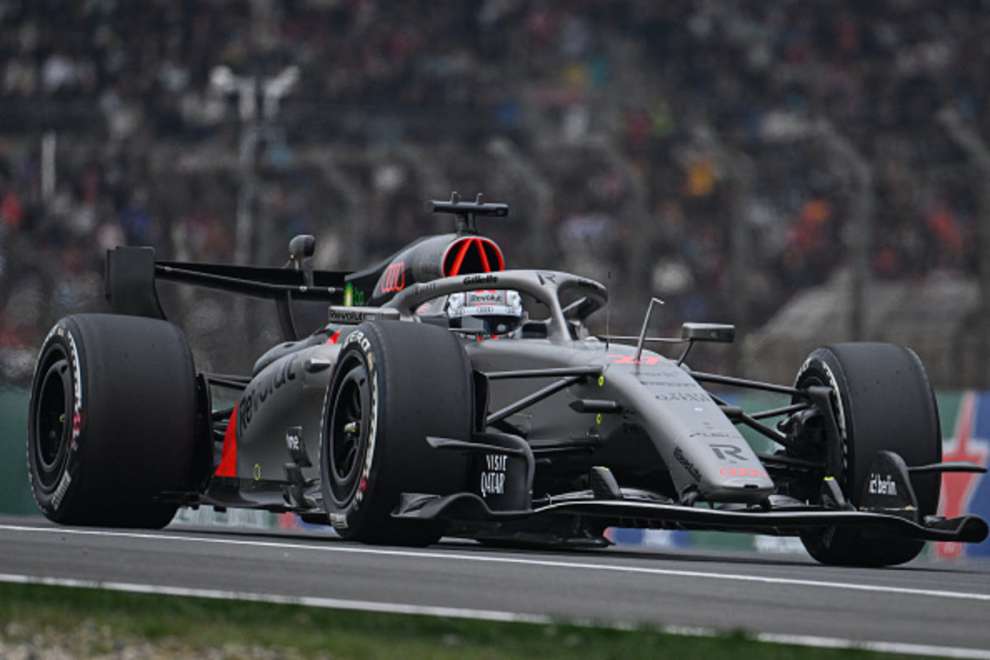
In China some drivers, primarily Charles Leclerc, underlined that the new regulations no longer reward the courage to dare in Q3, instead requiring precise and constant driving throughout the session. Pushing harder at the decisive moment leads to taking corners at higher speeds and using the accelerator differently, confusing the energy management software, which instead learns from previous laps. The regulation, in fact, requires that in the sections tackled in full, the electric motor works for 1 second at at least 200 kWafter which its power can reduce at a rate of 50 or 100 kW every second, depending on the slopes.
Therefore, if a driver makes a correction and lifts his foot slightly from the accelerator, even just 3%, the throttle returns to 100% later than in the previous laps, postponing the start of the phase in which the electric motor is forced to work at 200 kW. Depending on the location and the scenarios, the effects can be very different. In some cases, the driving error can paradoxically improve the lap time, as the energy saved by returning late to the accelerator is then released at the end of the straight. Other times, however, lifting the throttle for an instant turns out to be very penalizingas it postpones the moment after which it is possible to cut the electrical power and recharge the battery, messing up the energy management strategy.
The other FIA decision for Suzuka
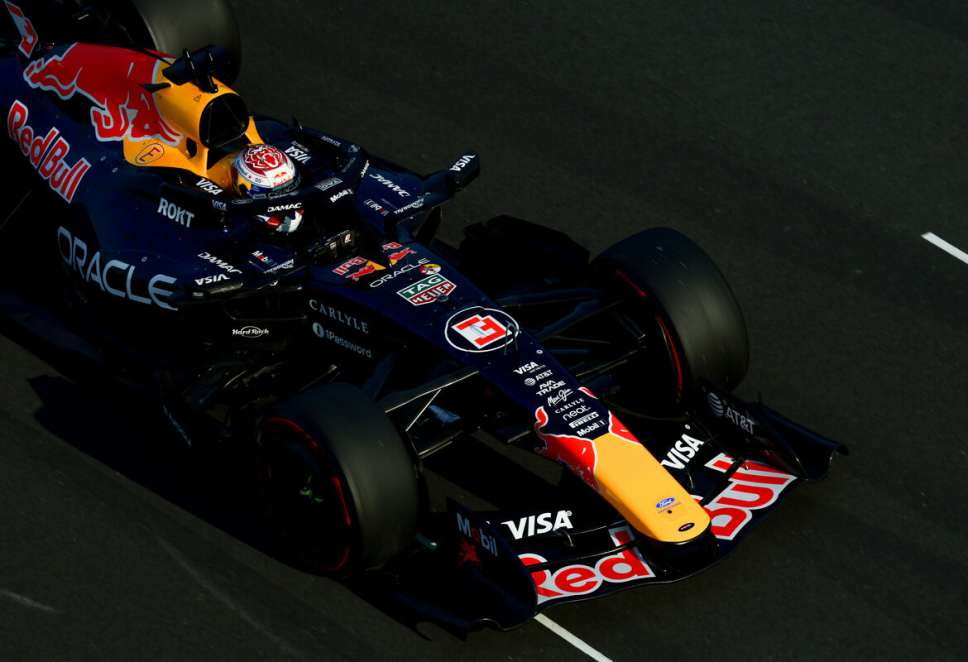
All this has so far prevented us from witnessing the classic crazy qualifying lap. In Q3, pushing to go faster in the corners requires using the throttle differently from previous sessions, sometimes leading to losing more on the straight than what was gained in driving. To overcome the problem, it would be necessary that the return to the accelerator does not immediately impact the delivery of electric power and energy consumption. The regulation contemplates the possibility that, from time to time, the FIA establishes points on the track where the electric motor is not forced to sustain at least 200 kW of power for one second, but where it is instead possible to proceed with the internal combustion engine alone, without therefore draining the battery. In Australia this exemption was valid for the section of the third sector between turns 11 and 13, while in China it concerned the section from turn 7 to turn 9 and the chicane 11-12.
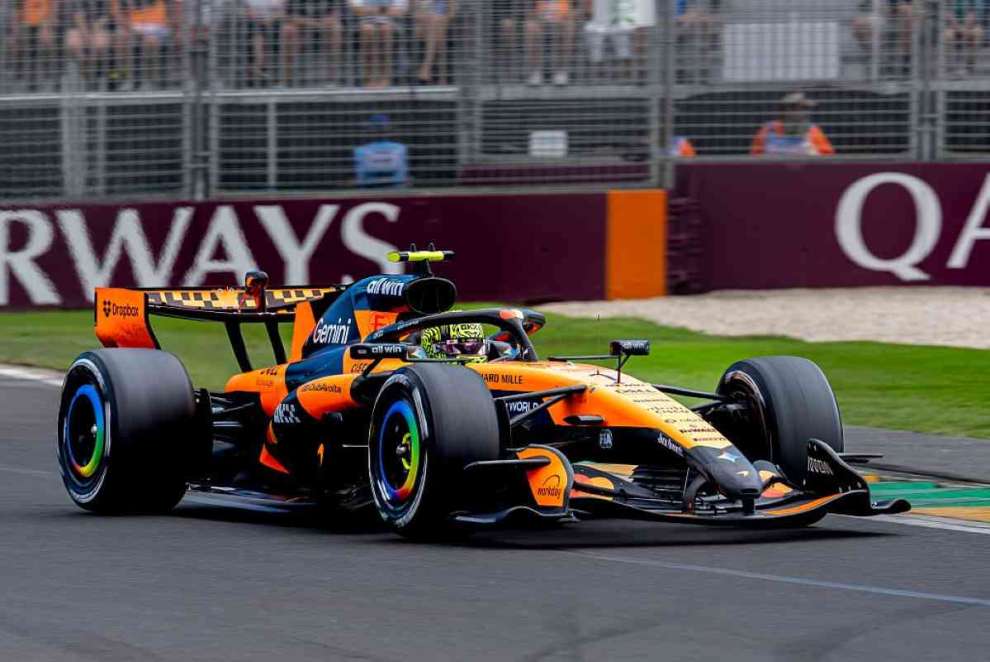
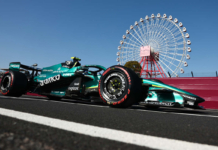
In Japan there will be three points where this will be allowedi.e. the large snake, the Degner and the spoon, corresponding to curves 3-6, 8-9 and 13-14. The hope is that this decision will allow drivers to dare in the driven sections without resorting to the electric motor, avoiding thinking too much about the repercussions of their driving on energy management. Unfortunately, in many other corners the problem will still arise, but this could still be the way to go, together with the dosage of energy, to restore the right emphasis to qualifying.