





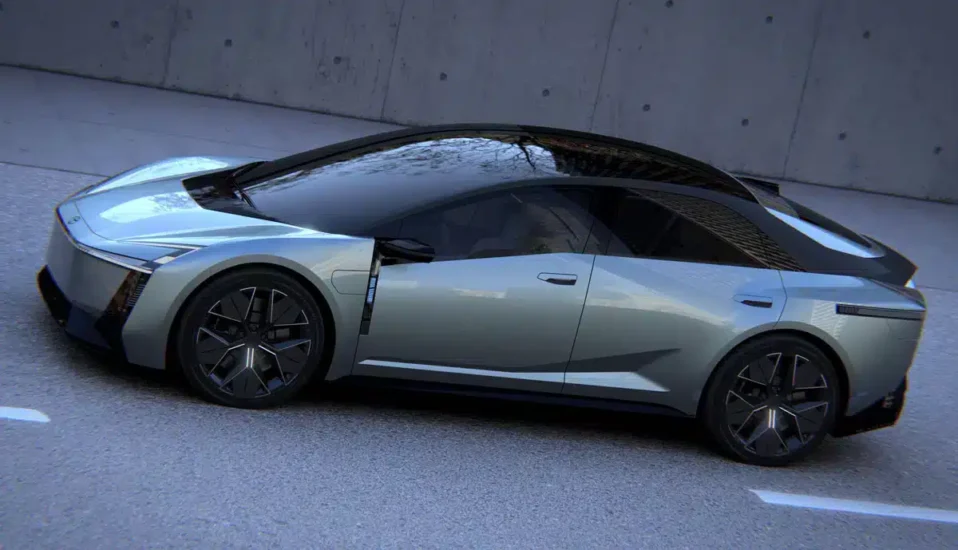
Toyota is exploring new ways to integrate batteries, motors and wiring more efficiently without making vehicles larger or heavier. According to Autoblog, a recently published patent also shows that the Japanese automaker is focusing more on battery safety in the event of an accident.
The patent, filed in August 2025, defines a new strategy to protect high-voltage batteries. Toyota is exploring the possibility of allowing the battery pack to move a small amount in the event of a crash, rather than strapping it tightly to the vehicle structure.
In this concept, the battery pack is located at the bottom of the vehicle but is not bolted rigidly like a structural support. Instead, it is located within the chassis and surrounded by chassis components and reinforced structural members. These are designed to deform first in the event of an impact, thus absorbing the forces.
For example, in the event of a side collision, surrounding components are designed to absorb and redirect energy before it reaches the battery. Minimum movement of the energy storage unit is allowed; This aims to reduce overvoltage peaks that could damage the chassis or individual cells. Principle,
It is reminiscent of crush zones or engine mounts with predetermined breaking points in conventional vehicles: during normal operation everything remains fixed, but in a serious accident the structure deforms in a controlled manner. Toyota considers this design to be particularly advantageous for side collisions, as there is little room for protective structures between the door and the battery pack in electric vehicles.
Automobile Magazine – English