





Mercedes is the great protagonist of Friday in Melbourne, despite the fact that McLaren with Oscar Piastri took the best time. The Silver Arrows, great favorites on the eve, are striking for the ease with which they manage to find the time, being able to dedicate themselves before the others to race pace simulations, where they demonstrate good tire management. Ferrari confirms itself in the leading groupbut he will have to put everything together if he wants to worry his rivals.
Mercedes’ work
Left in the shade in the first session, the Mercedes-powered teams made an important leap forward in the second round. The official team improved by 1.4 seconds with Antonelli, while McLaren lowered its time by as much as 1.6 s with Piastri. Behind the leap lies greater aggressiveness in exploiting the engine, but also an optimization of energy management, which is decidedly complex in Melbourne. In the second sector, the most critical on the energy front, there are few differences, which instead become more marked in the other intermediate periods. Piastri, for example, took the best time thanks to an excellent first stretchthen holding their own against the Silver Arrows in the last sector.
Mercedes dedicates itself less than the others to qualifying simulations to focus first on race pacewhich explains its absence from the top of the rankings. Both Russell and Antonelli, however, give the impression of finding time with ease, a sign of a good balance with the set-up after the apparent difficulties of the morning. Furthermore, the W17s are the only leading cars to complete a race simulation of more than 10 laps, ensuring a precious information advantage over the competition, hampered by the Virtual Safety Car at the end triggered by Sergio Perez. The importance of the data does not only concern the tyres, but also the thermal management of the hybrid and the battery charging strategies, which during the race can recover 1 MJ more energy than during qualifying, as established by the FIA.
Race pace simulations
Unfortunately, a representative comparison between the Mercedes and its rivals is missing, and not just in terms of rpm. Verstappen, for example, was forced to return after a violent excursion on the gravel, while McLaren preferred to work on the soft tires with Piastri. The Ferrari drivers are the only ones with the same compound as the Mercedes drivers, compared to whom however they are using tires that are approximately 5 laps older. Net of all this, the Silver Arrows express excellent attack times, then quickly improving as the laps go by. Above all, George Russell is impressive, highlighting his differences from Andrea Kimi Antonelli how much the driver can make a difference with the same carespecially with energy.
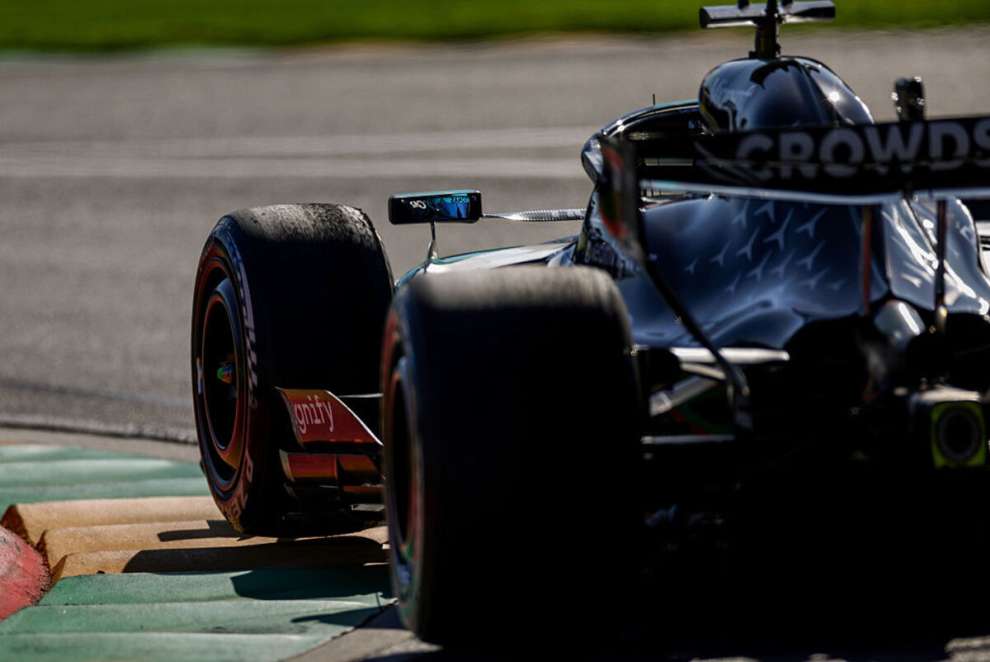
The impression is of a Mercedes with good tire managementquality to add to the power unit package, but also generally low wear in Melbourne, making for a one-stop race. Furthermore, the times are just 2 seconds higher than the Friday simulations from a year ago, despite the track being slightly slower. The gap from ground effect Formula 1 doesn’t seem huge, at least in terms of race performance, with still plenty of room for growth ahead.
| Russell | Antonelli | Leclerc | Hamilton | Plates |
| Hard, +5 laps | Hard, +7 laps | Hard, +10 laps | Hard, +13 laps | Soft, +4 laps |
| 1’24”4 | 1’24”7 | 1’24”4 | 1’24”8 | 1’24”9 |
| 1’24”3 | 1’24”2 | High | 1’24”5 | 1’25”2 |
| 1’23”5 | 1’24”1 | 1’24”4 | 1’24”6 | |
| 1’23”3 | 1’24”0 | 1’24”9 | ||
| 1’23”5 | 1’24”1 | |||
| 1’23”5 | 1’24”0 | |||
| 1’23”2 | 1’23”8 | |||
| 1’23”1 | 1’23”7 | |||
| 1’23”8 | 1’23”7 | |||
| 1’24”4 | 1’24”6 | |||
| 1’23”8 | High | |||
| 1’24”4 | ||||
| 1’24”9 |
Ferrari is there
Maranello is the leading team that turns the most overall, with 125 passes compared to 109 for Mercedes, 98 for Red Bull and 83 for McLaren. Ferrari confirms good basic reliability, which also helps with performancebeing able to work continuously on the track. The Italian team started well and monopolized the top of the standings in the first session, during which it experimented with different energy management strategies, with Leclerc more aggressive than Hamilton in the first sector. In the afternoon, however, Lewis improved by 7 tenths, while Charles actually worsened by 2 hundredths compared to the previous round.
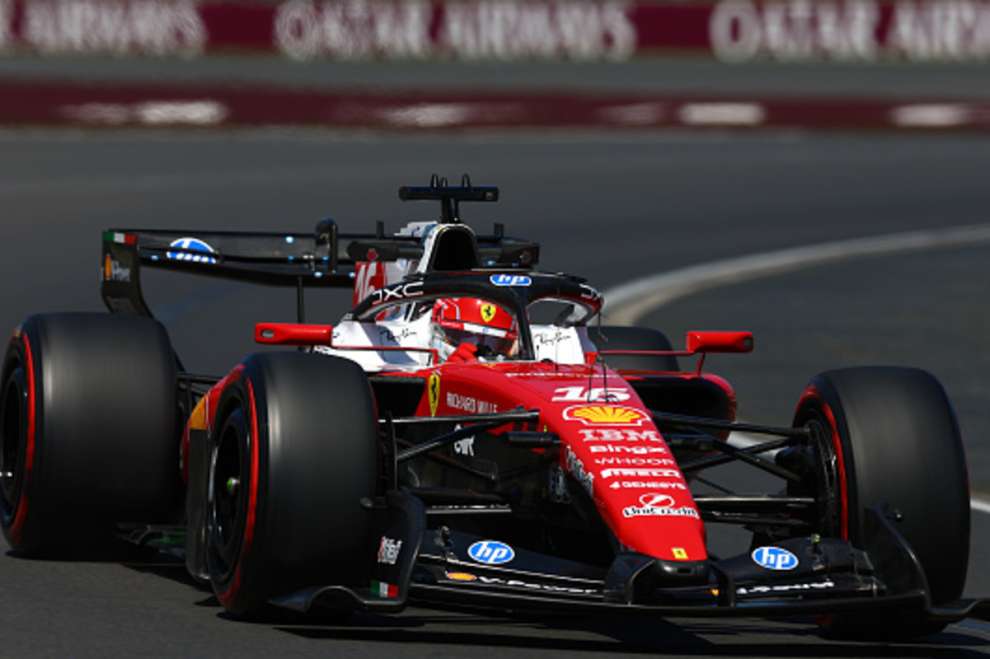
The Ferrari drivers don’t appear in the same great shape as in the morning, but they also have the misfortune of encountering traffic, which will be crucial in qualifying already on the preparation lap. Like last season, having a clear track will be important to warm up the tires freely, even more so since this year the task is even more difficult due to the need to manage the pace to recharge the battery. Also for this reason the Cavallino has created a virtual rear-view mirrora system that uses the steering wheel to communicate in real time the separation from other cars.
Overall, Ferrari focuses more on the flying lap. In comparison with the Mercedes, the SF-26s show a delay especially in the third sector, to understand how much is attributable to the energy management, the tires or the aerodynamic package. In any case, the Scuderia from Maranello confirms itself in the leading group, with the possibility on Sunday of possibly exploiting the good starting point, reviewed in the starting tests. The advantage in sprinting from a standing start comes from a smaller turbo and an engine optimized for thrust at low speeds, quality, however, little valorised by the smooth Australian track.
Pay attention to reliability
McLaren is also aiming to be part of the game. Piastri’s best time arises above all from the partial record in the first sectordemonstrating the importance of going for the lap with the tires already up to temperature. We will have to see Norris’ potential, hampered in both sessions by reliability problems, decidedly annoying in a Formula 1 where drivers need to experiment a lot to understand the most effective method for managing energy. Similar story for Red Bull and Max Verstappen, constantly among the leaders in the morning, but limited to just 13 laps in total in the afternoon.
| First sector [s] | Second sector [s] | Third sector [s] | |
| Plates | 27,803 | 17,538 | 34,388 |
| Antonelli | 38,049 | 17,531 | 34,345 |
| Russell | 38,037 | 17,555 | 34,457 |
| Hamilton | 27,902 | 17,535 | 34,555 |
| Leclerc | 28,182 | 17,462 | 34,592 |
| Verstappen | 28,149 | 17,570 | 34,647 |
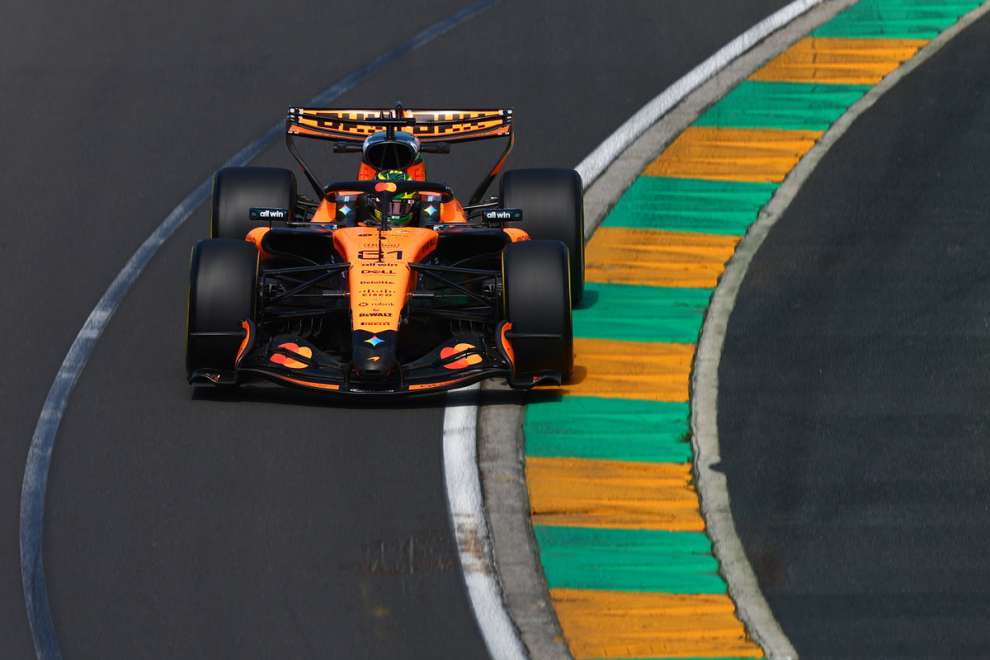
The inevitable youth problems of the new machines could offer tempting opportunities to the pursuers. At the moment, Racing Bulls, Haas and Audi lead the pack behind the leaderswith Williams and Alpine in tow. However, Aston Martin’s nightmare continues, plagued by vibration problems almost to the point of not being able to run on the track, without collecting the data that would help identify the causes of the AMR26’s problems. Adrian Newey states that only two batteries remain available, which also raises the issue of costs and the impact of precarious reliability on the budget cap, reducing the resources to invest in the development of the power unit. In theory, the FIA has prepared exemptions from the cost cap to be granted in these scenarios, but there are those in the paddock who are not convinced that this is enough.