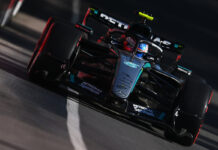
F1 changes immediately The new direction of Formula 1 is struggling to get going. The regulations approved for 2026 present problems not only of “youth”, but also of concept: in qualifying the driving is absolutely mortified, the driver no longer turns at the limit but adapts to the software to have the most effective delivery possible, with a performance flattening effect; in the race, overtaking is very often artificial and due to the different strategies in the use of electric. And then, also taking advantage of the forced pause due to the war in Iran, the Circus thought of corrective measures. As we reported, a meeting is scheduled for April 9th in London between teams, engineers, FIA and F1 to discuss the changes to the regulations. For this meeting, the Circus has prepared six measures, as revealed by The-Race, which would especially modify Saturday, immediately indicated as the aspect to be changed most urgently. According to our British colleagues, the three areas to which priority should be given are safety, qualifications and speed at the end of the straights (or in any case sections that were once driven to the limit, such as the 130R). Safety is at the top of the agenda, and it couldn’t be otherwise considering that Oliver Bearman at Suzuka went into the barrier at very high speed to avoid Franco Colapinto, who was adopting a different charging strategy and was therefore proceeding much more slowly on the iconic Spoon stretch. The other areas concern entertainment and the usability of the product, aspects that take a backseat to safety but which F1 naturally takes into great account so as not to lose what Liberty Media has built in recent years. The measures that F1 will bring to the table are to increase the power of super clipping (from 250 kW to 350 kW) in order to confine it closer to the braking point; reduce the maximum output power by 350 kW (by consuming less energy, it is not used up too quickly); reduce the maximum recharge per lap from 9 to 6 MJ to facilitate recharging and avoid the use of lift and coast; unlimited use of active aerodynamics and the possibility of activating it anywhere; modify the 55%-45% balance between internal combustion engine and electric motor (but, in this case, it would not be an immediate change, because it would require adaptation times and at the moment would cause reliability problems); finally, simplify the rules to give drivers more control over their performance in the flying lap.

From England: 6 measures ready to improve safety and qualifications
İLGİ ÇEKENLER


Vasseur: “Leclerc is the right horse, he made a bet on Ferrari”
Leclerc, a Ferrari...
Red Bull rises again in Monaco, Verstappen: “Positive day, but Ferrari is really strong”
Max smiles (finally)...



Hamilton: “I have moved many pieces and repositioned myself in the team. Santi is my Italian ‘Bono'”
Hamilton-Santi, will it...

Russell: “Duels with Kimi? Wolff trusts us. Bad luck will also befall Antonelli”
Desire for redemption...

Norris: “I usually don’t like statistics, but being the driver with the most starts for McLaren is a source of pride”
The words of Lando Norris in the Munich press conference
Automobile Magazine – F1 English...


Vasseur: “Leclerc’s renewal? Of course, we know how much this project means to him”
Leclerc-Ferrari, here is...
Leclerc renews with Ferrari: “I couldn’t be happier, it’s more than a team”
Eternal love Charles...

Official: Leclerc extends the contract that binds him to Ferrari
The official press...

Patrese: “Ferrari car to beat in Monaco, Leclerc wins ahead of Hamilton”
Will it really...