





ABB, the Switzerland-based automation and electrification technologies leader, is celebrating the 50th anniversary of its Low Voltage Variable Speed Drive (LV VSD), which revolutionized its field with the energy savings it provides. Developed by Strömberg, AG VSD has managed to be a part of important technologies and breakthroughs in many sectors from transportation to industry in 50 years.
In his statement regarding the 50th anniversary of AG VSD, ABB Drive Products President Tuomo Hoysniemi said:
“For half a century, ABB’s low-voltage drives have been part of many landmark technologies and innovations, from electric public transport to today’s energy-efficient, low-carbon industries. Before the advent of VSDs, getting a fixed-speed motor to deliver the correct output was akin to driving a car with the accelerator pedal pressed all the way down and simultaneously pressing the brakes to control speed. While this was extremely costly from a commercial perspective, from an energy efficiency perspective, the situation was even more dire. Today, with the use of Variable Speed Drive (VSD), motor power Low-voltage VSDs were a major breakthrough and have since become the gold standard in the industry. However, only less than 25 percent of industrial motors worldwide operate in conjunction with a drive.”
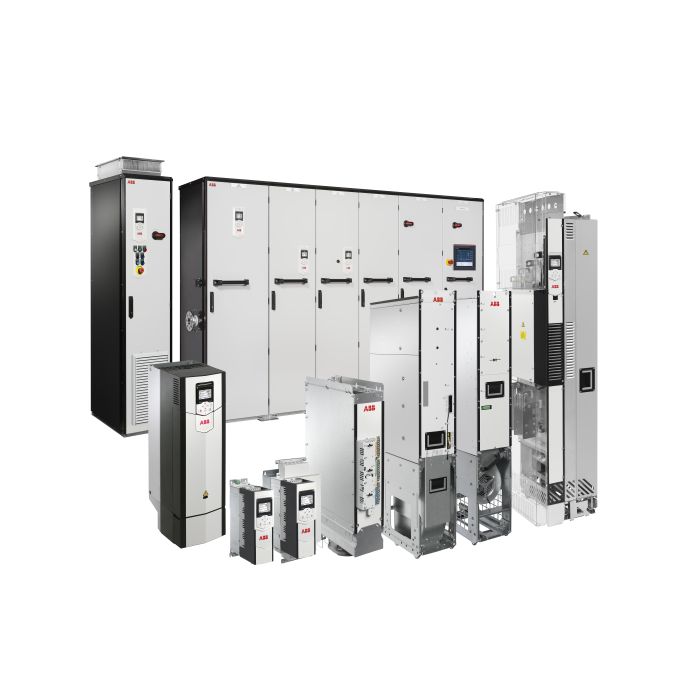
Chris Poynter, President of ABB Motion High Power, said: “A Variable Speed Drive cannot be installed on every motor in the world, but it is an indisputable fact that it should be installed on most of them. There is a perception that sustainability is unattainable in terms of cost. However, energy efficiency and carbon reduction in the industrial environment not only fulfill our responsibility towards our planet, but is also a commercially rational approach. The total cost of ownership of operating a motor with a Variable Speed Drive is much lower than operating it at overload and causing it to fail prematurely.”
Currently, low voltage VSDs save 41 TWh of electricity per year across the EU. According to independent research; If VSDs were used more widely in constant and variable flow applications such as pumps, fans and compressors, the European Union could save up to 140.7 TWh of additional energy each year. ABB predicts that up to 12 percent energy savings can be achieved in each installation by using VSDs in these scenarios.
Historical development of AG Variable Speed Drives
Low voltage VSD eliminated a long-standing limitation of the traditional squirrel cage induction motor, which had remained at constant speed since its invention by Nikola Tesla in 1888. Before the introduction of VSDs, adjusting engine performance for variable loads often relied on mechanical throttling methods such as dampers or valves. These solutions were not very effective in terms of energy efficiency.
The first commercial LV VSDs were developed in the early 1970s by the Finnish electrical engineering company Strömberg, which became part of ABB in the 1980s. In 1975, the company introduced the SAMI A (Strömberg Asynchronous Motor Inverter), the first low-voltage drive capable of precisely regulating the speed of an AC induction motor.
SAMI A’s first real plant installation took place later that year at the Karihaara sawmill in northern Finland, using three 350 kVA/500 V units. This demonstrated that variable speed control can provide measurable efficiency and reliability benefits in an industrial environment. The technology has rapidly spread into new sectors and applications, including the Helsinki metro system, supporting smoother, more energy-efficient public transport service.
Strömberg engineer Martti Harmoinen, known as the leader of the original development team, received the Finnish Engineering Prize in 1981 and the title of honorary professor in 1995.
Although Martti Harmoinen passed away in 2023, his work remains central to ABB’s mission to develop intelligent and efficient motor systems worldwide. Today, ABB remains the market leader in the design and production of VSDs and continually invests in the latest technologies to fully realize the energy efficiency potential of the global industry.
Automobile Magazine – English