





The first race of the year is always the most cryptic for updates, as teams are under no obligation to declare changes from testing. So there are those, like Ferrari, who limit themselves to listing the main differences of the 2026 cars and those who, instead, report some of the developments compared to the launch version. This is the case of Mercedes and McLarenwhich in Australia race with new features on the front and rear respectively.
McLaren news
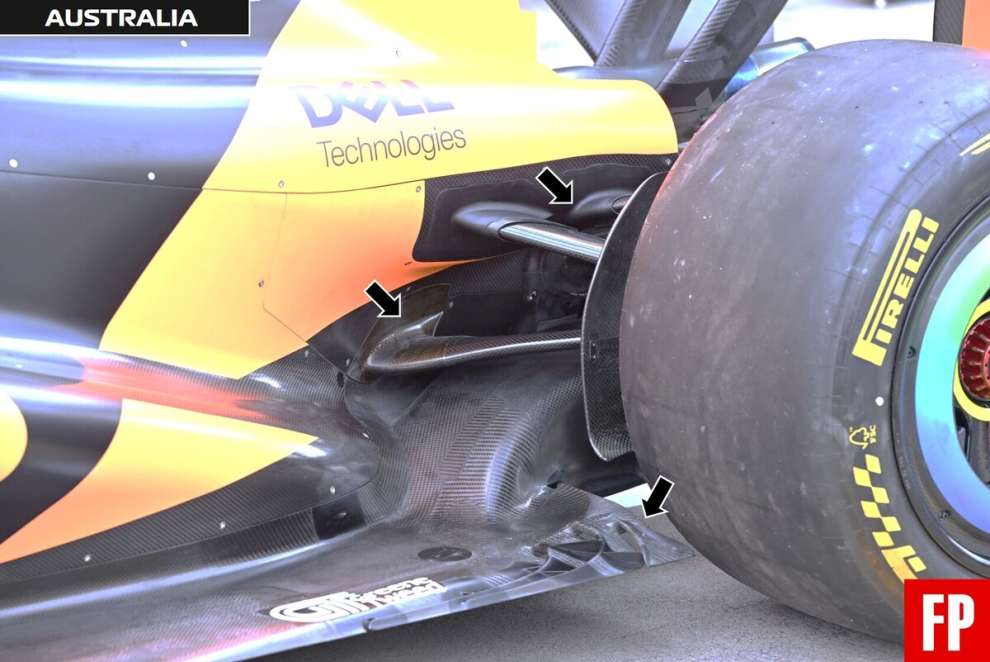
The world champions have declared some changes to the rear end of the MCL40, including the rear suspension arm fairings. This is an area already subject to developments in the previous regulatory cycle, given its importance for the trend of flows that vent into the environment behind the diffuser. Furthermore, McLaren says that it has also intervened along the edge of the bottom near the rear wheels, but from the outside it is not possible to appreciate significant changes compared to the tests.
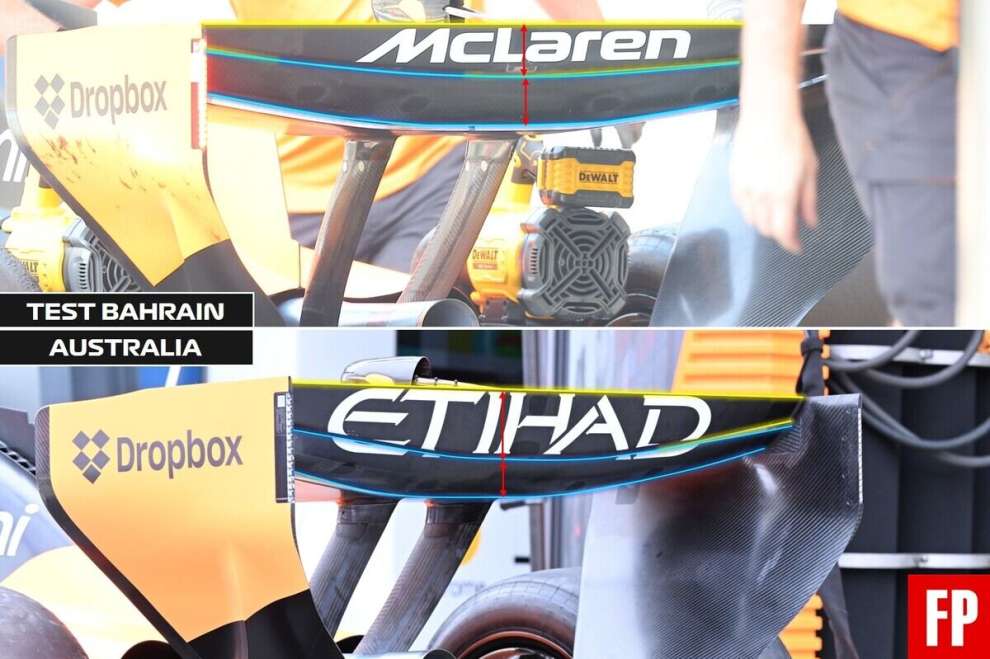
However, it is more evident the new rear wing. At Woking they redesigned the mobile profiles, increasing the chord of the upper element in relation to the intermediate one, with the declared aim of increasing the aerodynamic load with the wing closed without increasing the overall resistance. Aerodynamic efficiency is particularly important in Formula 1 2026, as it is closely linked to energy consumption and management. During Friday testing, McLaren evaluated the new wing with Lando Norris in the morning, who Oscar Piastri conformed to in the second session after initially offering a comparison with the test specification.
Mercedes: the Bahrain winger is back
The team led by Toto Wolff has listed the changes made to the W17 from its presentation until its arrival in Melbourne. The new bodywork introduced in Bahrain stands out above all, characterized by a more descending trend and a greater tapering at the rear. The background already seen in the second week of testing is also present, retouched along the external edge.
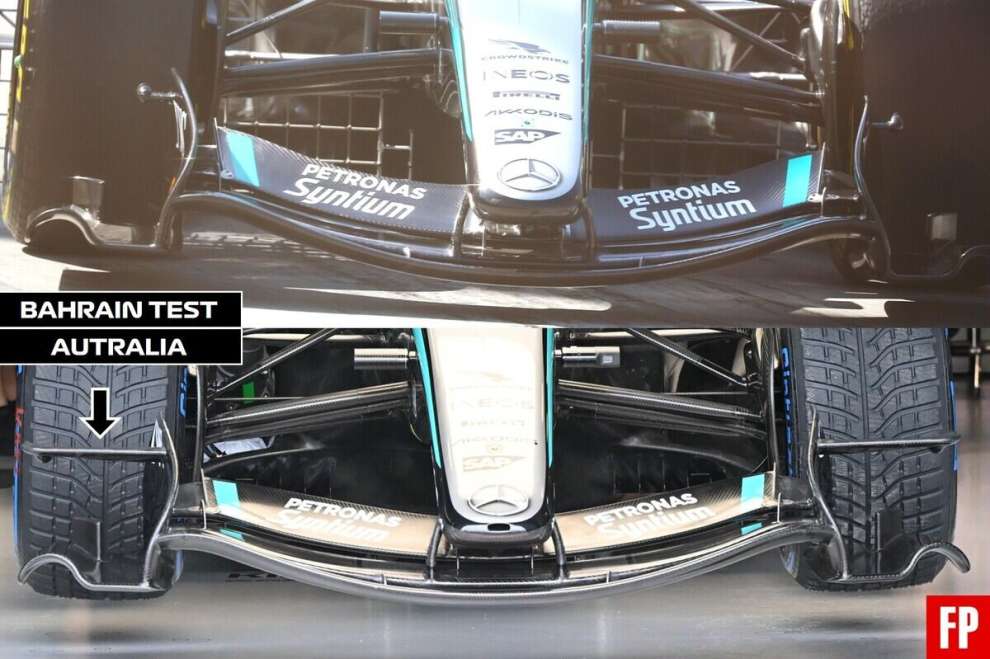
The main new feature on the W17, however, is the front wingwhich the team had already tested in Bahrain, alternating it with the launch version. What changes is the camber of the profiles, which is difficult to appreciate with the naked eye, while the two flaps mounted on the outside of the endplate strips are more evident, a now widely widespread solution to better manage turbulence from the front wheels. The exceptions, for the moment, are Red Bull and Ferrari, who on this front seem to prefer a different approach from those powered by Mercedes.