



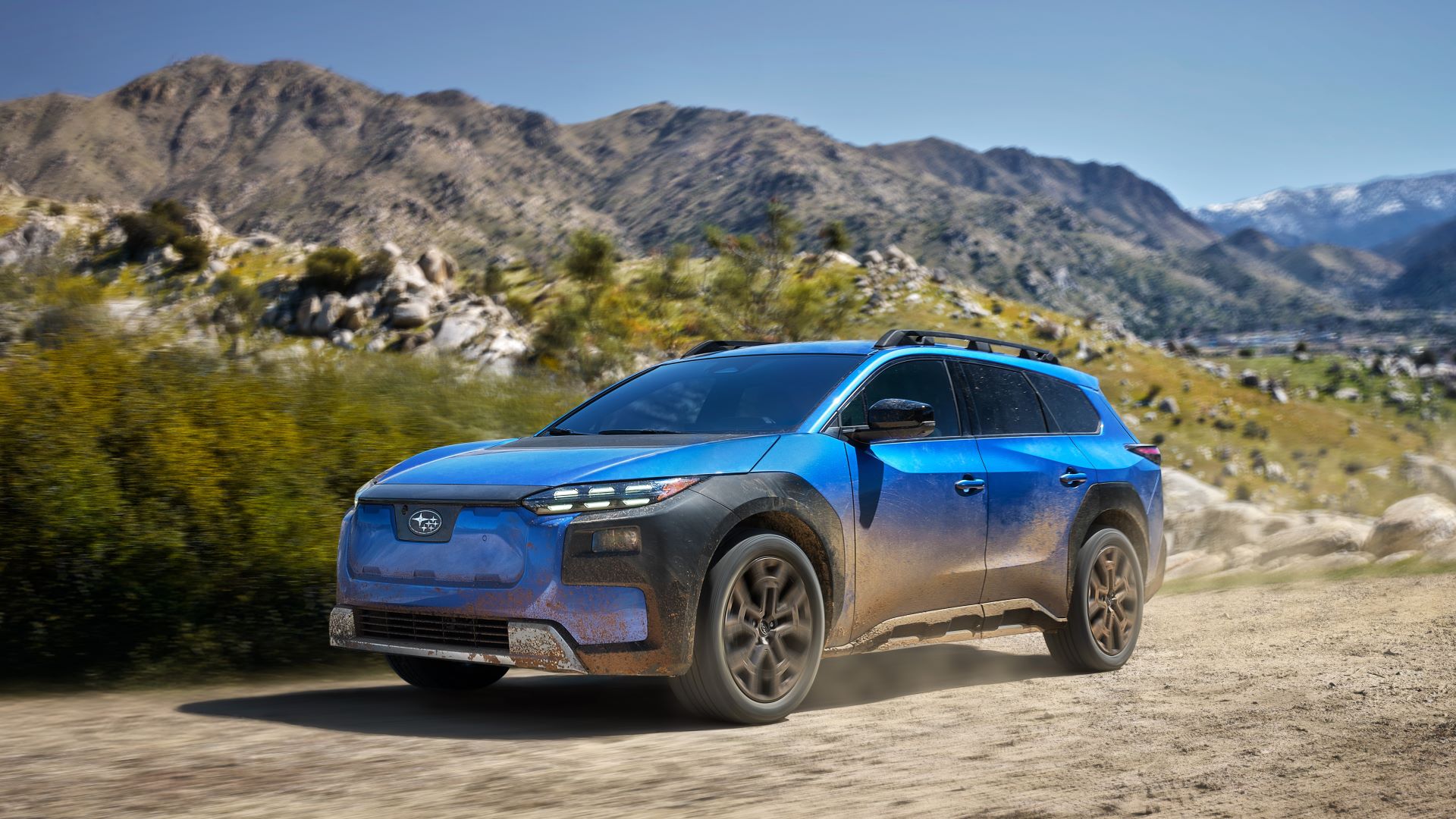
Subaru has crossed a decisive threshold in its electrification journey, beginning in-house production of Battery Electric Vehicles at its Gunma Yajima Plant in Japan. At the centre of this milestone is the all-new Subaru E-Outback, the brand’s latest step toward an electrified future that stays true to its engineering ethos.
Production commenced on 4 February 2026 following the completion of an extensive factory upgrade programme that began in August 2025. The work focused on transforming Gunma Yajima into a highly flexible mixed-model production facility, capable of building battery electric, petrol and hybrid vehicles on a single line. This approach reflects Subaru’s long-standing expertise in mixed production, now refined for the demands of an electrified era.
For Subaru, flexibility is not simply a manufacturing advantage, it is a strategic one. By enabling BEVs such as the E-Outback to be produced alongside existing powertrains, the company can respond more quickly to shifts in market demand while maintaining efficiency and quality. It also allows Subaru to scale electrification without sacrificing the robustness and consistency for which its production processes are known.
The E-Outback itself plays a central role in Subaru’s expanding global BEV portfolio, joining the Solterra and the recently announced Uncharted. Produced on the newly upgraded line, the E-Outback represents the second BEV in Subaru’s global range and signals the brand’s intent to electrify its most recognisable nameplates.
Development of the E-Outback forms part of Subaru’s long-standing collaboration with Toyota Motor Corporation. The partnership, which began in 2005, marked its 20th anniversary in 2025 and has steadily deepened across vehicle development, production and supply chains. In the case of electrification, cooperation between the two companies has been instrumental in accelerating progress, combining shared BEV architectures with each brand’s distinct engineering philosophies.
Subaru points to advances in its monozukuri manufacturing culture as a key enabler of this next phase. Traditionally associated with craftsmanship, continuous improvement and production discipline, monozukuri has evolved to incorporate electrified powertrains, new assembly processes and digital manufacturing techniques. The result is a production system designed to deliver efficiency without compromising Subaru’s core values of durability and safety.
Looking ahead, Subaru has confirmed it will continue to pursue greater flexibility in manufacturing techniques. The goal is to achieve highly efficient production and development systems that can adapt rapidly to changing customer expectations and regulatory requirements, while strengthening the company’s competitiveness in an increasingly crowded BEV market.
For UK customers, the E-Outback represents a significant moment. The model is scheduled to arrive on UK shores in summer 2026, expanding Subaru’s electrified offering and bringing the Outback name into the battery electric era. Further details on specifications and market positioning will be announced closer to launch.
With in-house BEV production now underway, Subaru’s electrification strategy moves from planning to execution. The start of E-Outback production at Gunma Yajima is more than a factory upgrade; it is a clear signal that Subaru intends to shape its electric future with the same focus on engineering integrity that has defined the brand for decades.