





Milan, Italy – Thirty years ago, Bosch marked a major milestone in the evolution of motorcycle rider safety by introducing the first mass-produced motorcycle ABS system. Since then, Bosch has continually advanced two-wheeler safety, developing sophisticated systems ranging from basic ABS units to Motorcycle Stability Control (MSC) and the latest generation of driver assistance technologies. “Our mission at Bosch over the last 30 years has been clear: to make driving safer through innovation, precision and smart technology,” said Geoff Liersch, Head of Bosch Two-Wheeler and Powersports Division, in his speech at EICMA 2025. he said. As part of the show, Bosch is celebrating three decades of continuous innovation by unveiling its latest developments in two-wheeler and powersports technologies and offering a preview of the connected and intelligent driving experience of the future.
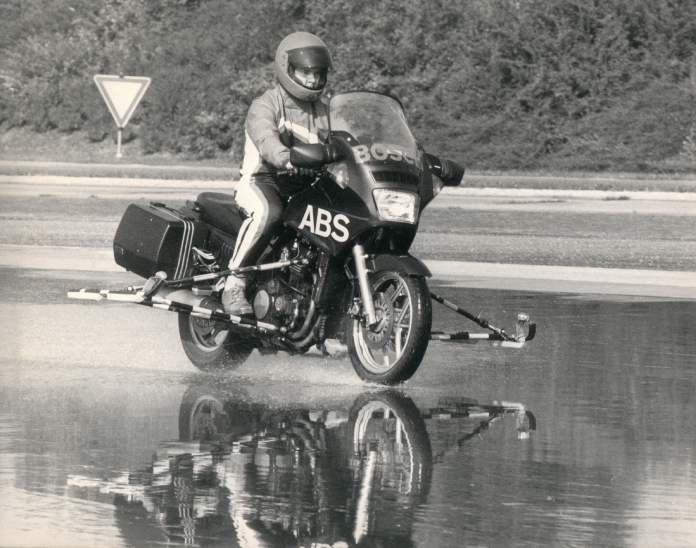
Bosch’s motorcycle ABS efforts began in 1986, building on technology introduced for automobiles in 1978, and culminated in 1995 with the launch of the Kawasaki GPZ1100 ABS, the first mass-production motorcycle equipped with Bosch ABS. The company’s commitment in this regard was materialized in 2007 with the establishment of a center of expertise for two-wheeler safety technologies in Japan. This center formed the basis of a global development base and expert engineering pool. Subsequent milestones included the introduction of the ABS 9 motorcycle in 2009, the introduction of the compact and lightweight ABS 10 Light and ABS 10 Base systems designed for emerging markets in 2016, and the launch of the ABS 10 advanced package dedicated to high-performance motorcycles in 2018. The development of the inertial measurement-based MSC (Motorcycle Stability Control) system in 2013 marked the beginning of Bosch’s entry into the field of advanced active safety systems for motorcycles.
Improving motorcycle safety beyond ABS
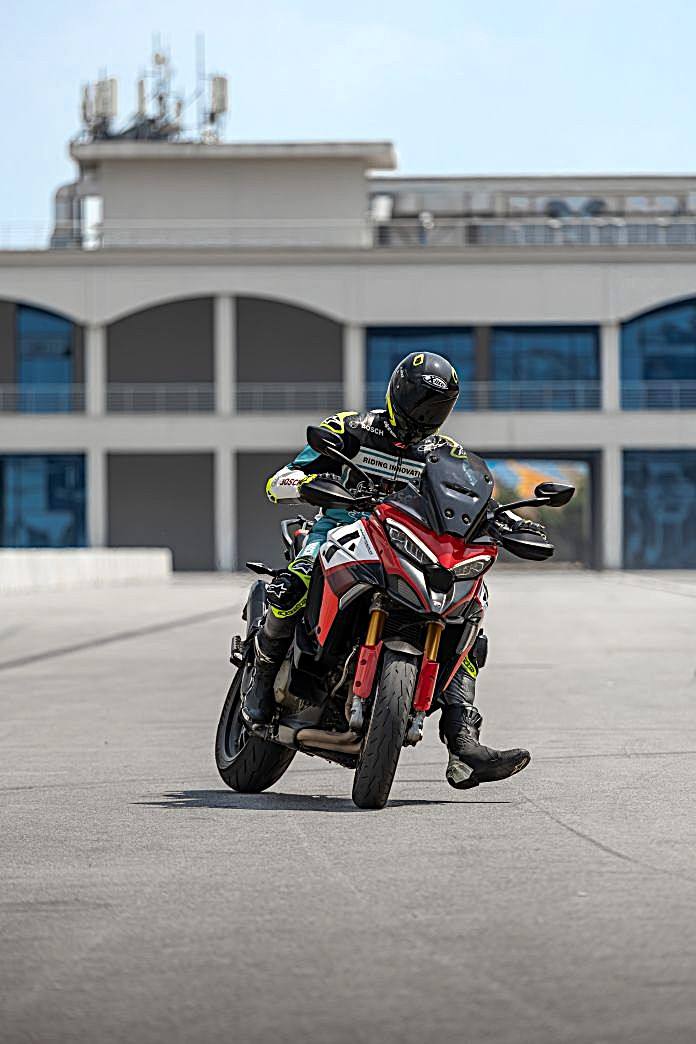
Bosch’s Motorcycle Stability Control System, or MSC, provides critical protection in situations where riders are particularly vulnerable, such as leaning into corners or dynamic manoeuvres. Combining wheel speed sensors and a high-frequency inertial measurement unit (IMU), MSC evaluates vehicle dynamics up to 100 times per second when the motorcycle is in a corner, taking into account lean and lean angles, and manages braking and acceleration control accordingly. Beyond cornering safety functions, Bosch continues to develop value-added features such as rear wheel launch control, hill vehicle holding function and rear wheel slip control for track performance, thanks to the capabilities provided by MSC. According to a study by Bosch Accident Research, if all motorcycles were equipped with MSC, more than 30% of motorcycle accidents involving personal injury in Germany alone could be prevented or reduced thanks to the combination of MSC and ABS. In order to offer these advantages to a wider user base on a global scale, Bosch introduced the MSC system for small-volume vehicles in 2023 and is ready to offer MSC solutions to markets where small-engine volume motorcycles predominate, including India, China and ASEAN countries.
Singapore becomes the first country to make ABS mandatory for motorcycles under 125 cc
Since introducing the first mass-production-ready motorcycle ABS system three decades ago, Bosch has continually advanced two-wheeler safety. Today ABS is not just a standard, it is the cornerstone of modern motorcycle safety systems. This development has also found its response in global regulations: The European Union made ABS mandatory for motorcycles over 125 cc in 2016. India followed in 2018. Taking this commitment one step further, Singapore will become the first country in the world to mandate ABS on all new motorcycles, including those under 125cc, as of April 1, 2027. This progressive step highlights the increasing focus on driver safety globally and sets a leading standard for other countries. Bosch continues its leadership in this field; While providing advanced solutions, it also continues to improve both safety and riding experience in all motorcycle segments by integrating connectivity features.
ABS is a must for traffic safety in Türkiye
Pointing out the place of motorcycles in the increasing traffic accidents in Türkiye, Bosch Turkey Mobility Original Equipment Sales Director Mehmet Altınbaş said, “In the last two years, the number of accidents involving motorcycles was 33 percent according to TÜİK data. As Bosch, we would like to emphasize once again the importance of ABS to minimize the effects of accidents.” Underlining that the number of accidents or their effects decreased by a significant 30 percent in motorcycles equipped with ABS and MSC, according to the analyzes carried out by the Bosch Accident Research department, Altınbaş said, “We started to bring these technologies to the Turkish market and share our global expertise and innovations with relevant institutions and organizations.” he said.
Automobile Magazine – English