





How tire technology keeps you safe through changing seasons
As the winter season approaches, tire technology is key to ensuring safety and control for drivers driving in difficult road conditions. Tire grip is especially vital when temperatures drop, and Goodyear’s extensive development process, including rigorous testing, reveals the characteristics that make winter tires superior for cold-weather driving.
Understanding tire grip in different seasons
Goodyear’s tire experts emphasize that roadholding is fundamentally determined by the tire’s material composition and tread design. Winter tires are made from softer compounds that remain flexible at low temperatures and maximize contact with the road even below 7°C. This is different from summer tires, which experience rubber hardening and less grip as the weather gets colder. This flexibility allows winter tires to provide superior traction on cold, damp or icy surfaces, which is crucial for both braking and cornering. In contrast, summer tires are optimized for hot conditions; Here, a harder compound improves performance and longevity, but as the weather cools, the necessary flexibility is lost. Using the right tire for the season allows your vehicle to “put its best footprint forward”, making driving safer with shorter braking distances and increased vehicle control.
Goodyear’s commitment to safety and innovation
Goodyear employs one of the industry’s largest teams of technicians, scientists and test drivers at its Innovation Center in Luxembourg. Each winter tire goes through a two-year development process that includes hundreds of real road and laboratory tests on snow, ice, wet and dry surfaces. The tests simulate the harshest conditions drivers may encounter, including the Arctic Circle and Alpine ski resorts. This is all done to verify real-world safety before the tires reach customers.
Goodyear’s UltraGrip tire series, bearing the 3 Peak Mountain Snowflake (3PMSF) symbol, is designed to meet the most demanding snow grip standards by providing high performance even in the harshest winter conditions. These tires are also tested for resistance to aquaplaning, helping drivers navigate the road on surfaces with heavy rain and standing water. This series also has optimized dry handling and grip performance in cold conditions.
Essential safety tips for winter driving
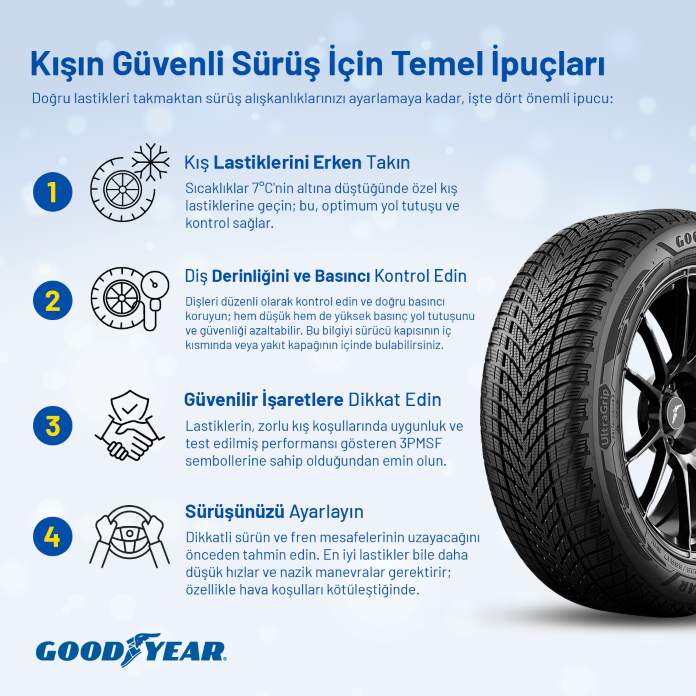
Whether you’re a first-time winter driver or a season’s pro, it’s important to know how to navigate challenging roads. Staying safe behind the wheel requires more than just caution, and it all starts with preparation. From using the right tires to adjusting your driving habits, here are four important tips:
Install winter tires early: Switch to winter tires when temperatures drop below 7°C to ensure optimum grip and control.
Check thread depth and pressure: Check treads regularly and maintain correct pressures, as both under- and over-inflation can reduce grip and safety, especially cold weather can reduce tire pressure. If you don’t have a Tire Pressure Gauge on hand, stop by your nearest tire dealer who can take a quick measurement for you. Correct tire pressures can usually be found either on the inside of the driver’s door or on the inside of your fuel cap.
Look for reliable signs: Make sure tires have the 3PMSF symbols, these symbols confirm their suitability and tested performance in harsh winter conditions.
Set up your ride: Drive carefully and expect longer braking distances. Even the best tires require lower speeds and gentle maneuvers for optimum safety, especially at temperatures below 3°C, aggravated by ice or snow.
Automobile Magazine – English