



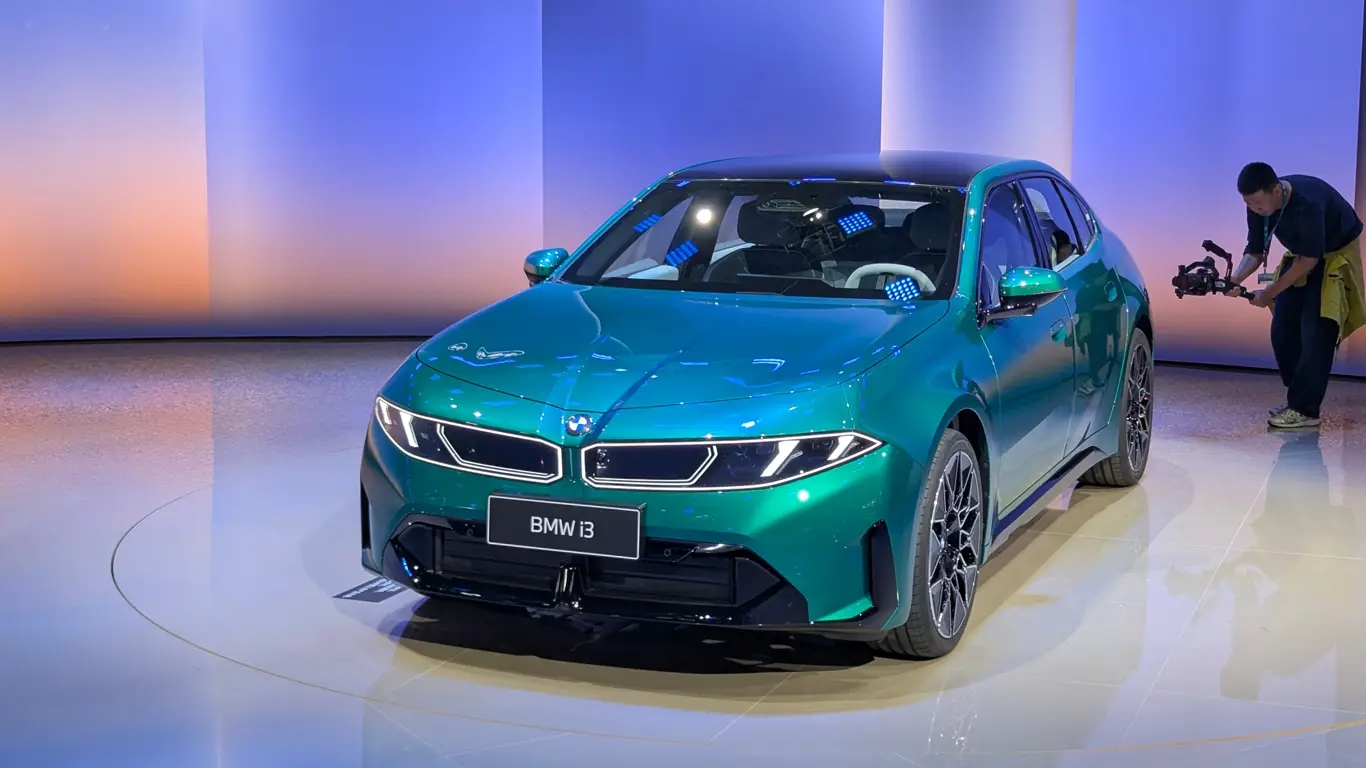
BMW unveils the new i3 in Beijing: electric sedan with 1000 km CLTC autonomy, ultra-fast charging and Neue Klasse design. It attracts attention with its large rear area and technology adapted to China.
BMW presented the new generation i3 as a model developed specifically for the demands of China. The images reveal a clearer, sharper design: a low-slung sedan silhouette, a nearly closed-off front end, a lighting rendition of the signature double-kidney grille, and a new digital angel wing-style lighting graphic. Electronics do not change the exterior design, as the radars and cameras are hidden in the headlight area.B. Naumkin for Tarantas.News An important feature of this version is the long wheelbase. BMW emphasizes that the wheelbase of the new i3 exceeds three meters, so it should offer significantly more rear space than the classic sedans of previous generations. This is very important for the Chinese market: buyers there tend to consider the electric car not only as a driver’s car, but also as a comfortable means of transportation for rear passengers. The main difference between the new BMW i3 and its predecessor of the same name lies in philosophy. While the old i3 was an experimental urban hatchback with an unusual body, the new version is a full-fledged electric sedan with Neue Klasse architecture. It is based on the sixth generation BMW eDrive technology, the new large cylindrical battery and the 800-volt global electric platform. According to BMW, the long-wheelbase i3 exceeds 1,000 km of autonomy in the CLTC cycle. The maximum charging power reaches 400 kW, and the vehicle can regain a range of approximately 400 km in ten minutes according to the same Chinese cycle. Particular attention is paid to regeneration: in most everyday scenarios, the car needs to brake through energy recovery, reducing the load on mechanical brakes and increasing efficiency.B. Naumkin for Tarantas.NewsThe interior of the new BMW i3 is part of the brand’s new digital strategy. The car features BMW Panoramic iDrive with a panoramic display in the driver’s direct field of vision, a central display and a 3D projection interface. The idea is that the driver is less distracted by the road, with key data remaining in the natural field of view. For China, the system is deeply localized. It includes BMW AutoNavi maps, digital key, integration with Huawei HarmonyOS and BMW Intelligent Personal Assistant using features from Alibaba and DeepSeek. An L2 driving assistance system, developed together with Momenta and adapted to Chinese roads, was also announced: urban traffic, highway and parking will operate with a unified point-to-point logic. The new BMW i3 LWB will be one of BMW’s most important electric vehicles for China. The model is expected to hit the market in the second half of 2026 and be in the premium mid-size electric sedan segment. Its most direct competitors can be considered the Tesla Model 3, Xiaomi SU7, Zeekr 007, Nio ET5 and Luxeed S7; All of them have already accustomed Chinese buyers to great autonomy, fast interfaces and advanced assistants.
Automobile Magazine – Spain
Automobile Magazine – English News
Source link 2026-06-27 13:05:00