



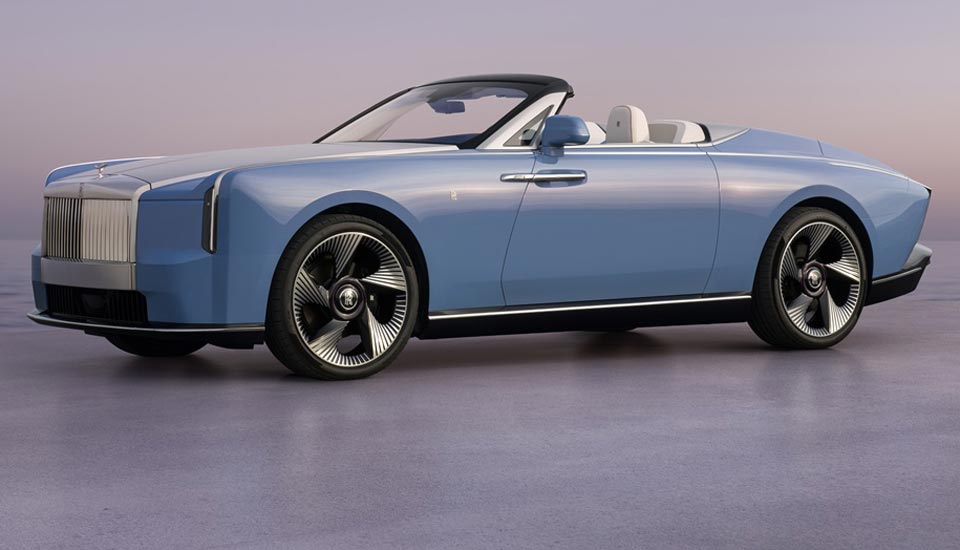
Rolls-Royce Motor Cars introduces Project Nightingale, its first Coachbuild collection. The collection was inspired by the high-speed experimental “EX” Rolls-Royce models of the 1920s. Only 100 cars will be built worldwide for this collection, with deliveries starting in 2028.
Rolls-Royce Motor Cars presents Project Nightingale, a Coachbuild Collection. While it takes its name from “Le Rossignol”, which means “nightingale” in French, this name is also the name of the designer’s home near Henry Royce’s winter residence on the Côte d’Azur. This extraordinary production concept is presented as a two-seater open-top car offering a striking new expression of Rolls-Royce design.
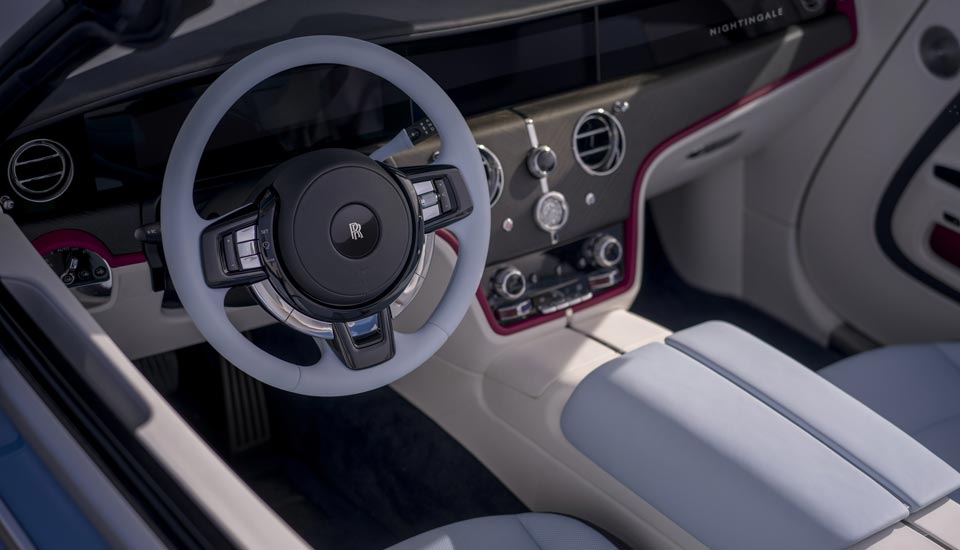
Shaped with powerful proportions and supported by a fully electric powertrain, Project Nightingale offers a uniquely quiet open-top driving experience. While it is inspired by the elegance and self-confidence of the 1920s and 1930s, it is positioned as a complete interpretation of its era. While his creative vision has fully taken shape, the few remaining design details require new production techniques being developed. Only 100 vehicles will be offered for sale, and will be handcrafted at Rolls-Royce headquarters in Goodwood as a personalized work of art, from design to production.
Stating that some of the world’s most discerning Rolls-Royce customers have demanded the brand’s most ambitious work, Chris Brownridge (Chief Executive, Rolls-Royce Motor Cars) continued: “We responded by bringing together three elements that come together for the first time in our brand’s history: the complete design freedom of coachbuilding, a powerful and virtually silent all-electric powertrain and a unique experience that offers both a powerful and serene interpretation of open-top driving – an approach only possible with this technology. This approach was inspired by our founding partner Sir Henry Royce.” “Project Nightingale shares the spirit of these historic projects and has become the most spectacular expression of what Rolls-Royce is today.”
Stating that Project Nightingale is based on the design principles that represent and define the brand in the strongest way, Domagoj Dukec (Director of Design, Rolls-Royce Motor Cars) said; “Project Nightingale has a sense of strong proportions, impeccable surface discipline and a clear sense of line that reveals itself upon close inspection. But it takes these principles to a completely new place. For me, this landmark car feels both inevitable and completely unexpected, and will shape everything that comes next.” he said.
Streamline Moderne design combines speed and the discipline of pure, monolithic beauty
Project Nightingale was designed for customers at the heart of the Coachbuild Collection programme, who are extremely knowledgeable and discerning about design, for whom a perfectly crafted surface makes an impact as powerful as the allure of driving a Rolls-Royce convertible. In this spirit, Rolls-Royce creators embraced lean and monolithic masses when designing Project Nightingale.
Another source of inspiration for Project Nightingale was Rolls-Royce’s experimental automobiles of the 1920s. Known as “EX” models and equipped with red badges, these cars – which Project Nightingale also has – are among the rarest and most desirable vehicles in the brand’s history, with the 16EX and 17EX particularly standing out from the prototypes.
These cars were created in 1928, at the height of the Jazz Age, just three years after the Art Deco movement was named. Henry Royce and his engineers encased two powerful Phantom chassis in lightweight aluminum bodies to achieve a new top speed for Rolls-Royce. The 16EX and 17EX reached speeds in excess of 90 miles per hour, and their torpedo-shaped designs powerfully reflected the boldness of Royce’s vision: impressive scale, long bonnet, low windshield and an immersive cabin with deeply positioned driver and passenger.
Building on these foundations, Coachbuild designers identified three key principles that directly shape Project Nightingale. “From upright form to flowing form”: The transformation of the strong vertical expression of the Pantheon grille into a long and elegant rear section; “Central body”, the structure defined by a single continuous line extending from front to back; and “Flying wings”, sculptural volumes that add tension to the overall form and direct the gaze towards the back. While Project Nightingale reflects these principles in a language familiar to those familiar with the Rolls-Royce story, it also presents a highly contemporary and unprecedented approach.
Automobile Magazine – English