






spot_img

Inside Nissan’s weather time machine: Engineering vehicles for a world of extremes

USA
The state-of-the-art corrosion chamber helps Nissan engineer vehicles that are built to last
The environments vehicles face are becoming more demanding and less predictable. As customers encounter a broader range of extreme conditions, Nissan is seeking faster and more sophisticated ways to engineer vehicles to withstand them.
Rain, sleet, snow, salt water and extreme heat can all take a toll on a vehicle. And as drivers encounter an increasingly wide range of severe weather and environmental conditions, engineers need to understand how vehicles will perform not just today, but after years of exposure.
From record summer heat and winter ice storms to coastal flooding and salt-water exposure, extreme conditions can put vehicle materials and components under enormous stress.


To help engineer vehicles for these demanding real-world environments, Nissan rigorously puts vehicles under development through a battery of brutal tests.
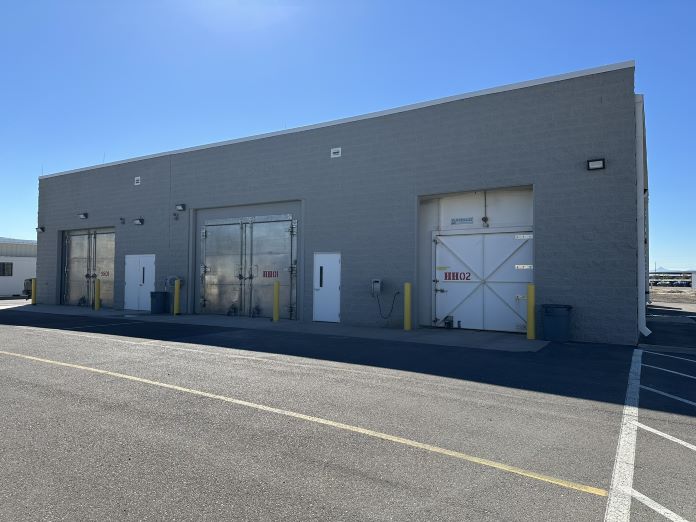
When fully complete, the new corrosion chamber at Nissan’s Arizona Testing Center (ATC) enhances that ability by accelerating how fast engineers can see the impacts of environmental factors on a vehicle.
Through an accelerated process the corrosion chambers, in less than 4 months, can simulate corrosion which correlates to 10 to 15 years of real-world corrosion, which covers 99.5% of the North American market.
“By simulating a decade of environmental exposure in a controlled setting, engineers can identify improvements early and deliver vehicles that are built to last,” said Ryan Regehr, an engineer who helps lead operations at ATC.
What is an automotive corrosion chamber?
The corrosion chambers aim to create the perfect conditions to accelerate corrosion caused by de-icing road salts, humid environments and coastal environments. This corrosion can then be correlated to what is experienced in the real world.
“We can’t control the weather our customers encounter, but we can engineer vehicles, components, coatings and materials to withstand an extraordinary range of conditions,” said Regehr. “This chamber allows us to compress years of environmental exposure into months and learn how a vehicle will stand up to heat, humidity, salt and moisture over the long term, identifying and addressing any potential durability issues before vehicles reach customers.”
The testing takes on added relevance as extreme weather and changing climate conditions expose vehicles to increasingly demanding environments. A strengthening El Niño, for example, can contribute to higher coastal water levels, flooding and shifting weather patterns across parts of the U.S.
For vehicles, those conditions can mean exposure to salt water and salt-laden air in coastal areas, prolonged heat and humidity, heavy rainfall and flooding, as well as road salts and de-icing chemicals during severe winter weather.
While Nissan engineers aren’t trying to predict the weather of the future, the corrosion chamber allows them to test vehicles against an exceptionally broad range of environmental stresses and understand how repeated exposure could affect components over many years.
From a winter highway in Michigan to an oceanfront road in Florida, salt is one of a vehicle’s toughest environmental adversaries.
In northern states, sodium chloride, magnesium chloride and calcium chloride used to treat icy roads can cling to vehicle surfaces and accelerate corrosion. In coastal regions, salt-laden air, ocean spray and salt-water exposure can present a similar challenge.
That means a vehicle experiencing a Northeast winter and one exposed to coastal conditions thousands of miles away may face surprisingly similar durability challenges.
Inside the corrosion chambers, a vehicle is sprayed from all angles with a saltwater solution. Then, the chamber essentially turns into an oven, baking the vehicle at high temperatures and humidity. This creates specific conditions which accelerate the process which leads to the corrosion of metals.
Precision is critical in ensuring that each test produces consistent data. The new chamber enhances the team’s ability to accurately replicate tests, largely thanks to improved automation and monitoring capabilities.
“The new chamber creates more consistent and repeatable test conditions while reducing environmental impact and operating costs,” said Yosmany Lopez, the lead corrosion engineer on Nissan’s Durability and Reliability team at ATC. “The chamber can more accurately simulate the diverse corrosion environments found across North America, resulting in higher-quality durability data.”
At ATC, the corrosion chamber is just one part of a large system designed to put vehicles through extreme conditions before they go on sale. In addition to the corrosion chamber, vehicles are subjected to a durability course that includes a variety of rough road surfaces, undulating frame twists, an automotive mud bath and water fording.
“The battery of tests helps engineers identify and resolve potential issues long before vehicles reach production,” Lopez said.
The new chamber also features an advanced water filtration system imported from Italy. It allows the team to achieve the precise salinity level in each test, recycle more water and reduce the facility’s environmental impact.
spot_img

Hyundai Palisade Named 2027 Hispanic Motor Press Family Car of the Year

The Hyundai Palisade has been named 2027 Family Car of the Year by the Hispanic Motor Press. The award...
TÜRKİYE GP 2027
00
00
00
00