By: Puneet Sinha, Senior Director, Battery Industry for Siemens Digital Industries Software
The battery industry is likely to see massive shifts over the next 5 years, driven by diversified demand beyond EVs such as battery energy storage systems (BESS) and defense applications. However, strong headwinds continue to exist for many companies due to continued overcapacity which is driving cost down and affecting companies profit margin. There is also the impending enaction of battery passport regulations in some of the largest markets for battery products. But there is also tremendous opportunity in the battery sector. With over $150 billion expected investment in new battery tech in the next five years and a five-time growth in demand of BESS by 2030, now is the time for battery manufacturers unleash digital transformation to capitalize on this growth.
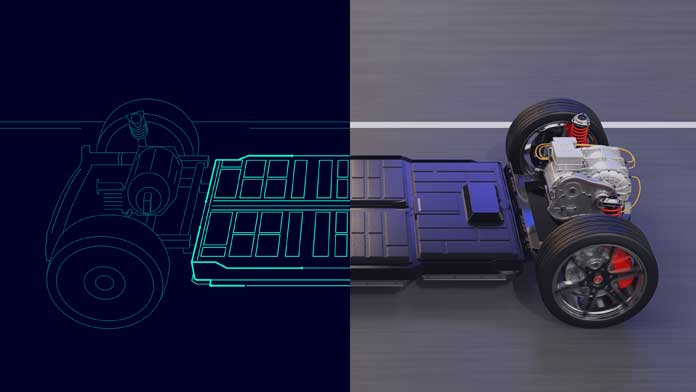
The strong collaboration required across the many disciplines of battery development and manufacturing make it ideally suited for digital transformation powered by generative artificial intelligence (Gen AI). Traditional engineering and manufacturing methods developed for the internal combustion engine are inadequate for battery development. Meeting the growth expectations while continuously making iterative improvements to cell chemistry and manufacturing, battery manufacturers need end-to-end solutions that connect digital twin frameworks, automation technologies, and industrial IoT. The comprehensive Digital Twin (cDT) brings the real and digital worlds together, and the right AI applications set businesses on the path to success from even the earliest point of battery production.
Accelerate product development
To accelerate high energy density battery development, companies must address a variety of different factors. For example, a new chemistry needs to be understood in relation to cell performance and safety, in addition to the factors that could impact larger integrated systems – such as thermal management, charge control, and battery health reporting. But the same can be said for most every improvement a manufacturer may want to make to their product. The challenge is that the traditional physical testing approach to battery engineering is both sluggish and costly. The solution lays in performing virtual verification and validation earlier with the cDT and focused AI tools. This widens the possible design exploration space with chemical compositions while enabling engineering to flag possible engineering problems sooner, based on the expected material properties of a new formulation.
To illustrate the power of cDT in remaking battery operations, a leading European automotive OEM was facing all the issues mentioned above with their product development. Through adopting the cDT for its battery development, the company was able to seamlessly connect chemistry, electrical, mechanical, software and system engineering domains. This completely revolutionized the battery engineering processes. Having a single source of truth and ready access to data meant the team could navigate complex tradeoffs in design and reduce the need for extensive prototyping. This shift helped the company reduce pack development time by more than 50 percent.
Maximize production
Saving engineering time is very valuable, but unleashing the digital transformation also means tackling the production side of development. As manufacturers build out greater capacity and reach a wider global market, production efficiency becomes an even greater driver of success and profitability. The dilemma is that much of the expertise in operating battery manufacturing plants is highly localized and businesses need a way to augment the available resources as they grow. Here, AI can help with getting new employees up to speed and trained on the processes through capturing the institutional knowledge of existing plants. Access to AI-assisted tools can also help employees on the floor spot and resolve issues faster.
For example, a leading battery manufacturer had to meet both high capacity and quality expectations from global OEM customers alongside complex changeover times on their shopfloor for the small batch production of specialized batteries. By implementing the cDT to digitally validate manufacturing line mechanics, robotics, and automation, they lowered their financial risk and shortened deployment times by 30 percent. Additionally, the manufacturer simulated the end-to-end production system to ensure maximum throughput, while optimizing resource allocation, and guaranteeing on-time delivery to their customers. Combined with a path to standardize for efficient launches of similar products in the future, they were able to cut costs by 20 percent by implementing the cDT into their workflow. Reduce scrap rate and improve manufacturing quality
On top of the many challenges to profitability in the battery business is the ability to deliver a quality product at higher yields and lower margins. As batteries go into more products with greater requirements for longevity, such as battery energy storage systems, quality is a major business driver. And there is a correlation between quality cells and scrap rates. A tier one battery supplier in Asia would periodically see production periods with high scrap rates at the end of qualification, 20 days after the cells were made. Additionally, there were high rates for return merchandise authorizations (RMAs) of presumed ‘good’ cells. These errors accounted for over 2 percent of production and nearly $100 million annually.
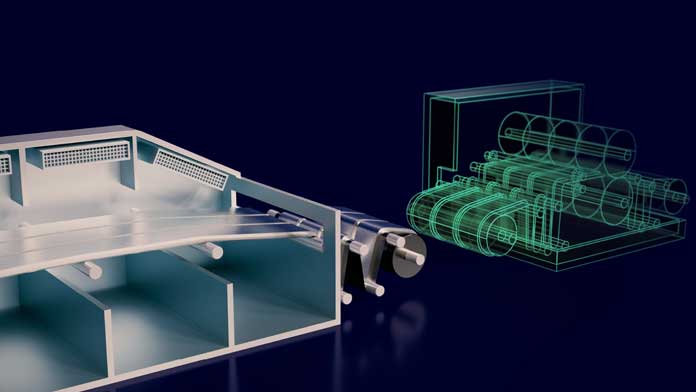
The problem boiled down to quality prediction during manufacturing. Leveraging Siemens battery manufacturing solutions coupled with battery intelligence software provider, Voltaiq, the customer was able to identify early signals of failure within the first hours of formation. By automating this validation process, informed by upstream data from process and measurement data, a causal link was found between the failed cells and the slitting blade replacement during production. AI in the form of machine learning was used as well, to set up predictive maintenance procedures for blade replacement. By giving context to the data with the cDT and AI, this manufacturer was able to avoid the 2 percent capacity reduction and apply the same methodology across other critical-to-quality issues for over a 10 percent aggregate yield improvement.
Collaborate across the value chain
These three example cases demonstrate the power of establishing data transparency and creating context for the information. Using the cDT in the virtual world to provide a greater understanding of behavior for design and manufacturing, companies can optimize battery production for any possibility and reap the rewards more effectively. Moreover, AI increasingly facilitates the discovery of new solutions to improve both the quality and production of batteries. Just as the battery industry is constantly evolving, so too are the AI solutions built on top of the cDT.
For more information on how Siemens is accelerating battery design and manufacturing, be sure to check out our website siemens.com/battery. Or subscribe to The Battery Podcast on your favorite podcast platform.
About the Author:
Puneet Sinha is Senior Director of the Battery Industry for Siemens Digital Industries Software. In this role, he heads company’s strategy and cross-functional growth focus for batteries. Sinha has 15 years of industrial experience in battery and electric vehicles go to market strategy, product development and taking pre-revenue startup to successful exit. Prior to joining Siemens, he worked at General Motors where he led global R&D teams to solve a wide range of issues with fuel cells and battery electric vehicles and at Saft, a Li-ion battery manufacturer. He also served as VP of Business Development for EC Power, a Li-ion battery software and technology development startup. Sinha has a PhD in Mechanical Engineering from The Pennsylvania State University. He has authored more than 20 highly-cited journal articles and been awarded seven patents on battery and fuel cells system design and operational strategies.
Petrol Ofisi Grubu'nun ana sponsorluğunu üstlendiği Dynamic Racing Team, Türkiye Karting Şampiyonası'nın beşinci ayağını da başarıyla tamamladı. Uşak'ta gerçekleştirilen...