



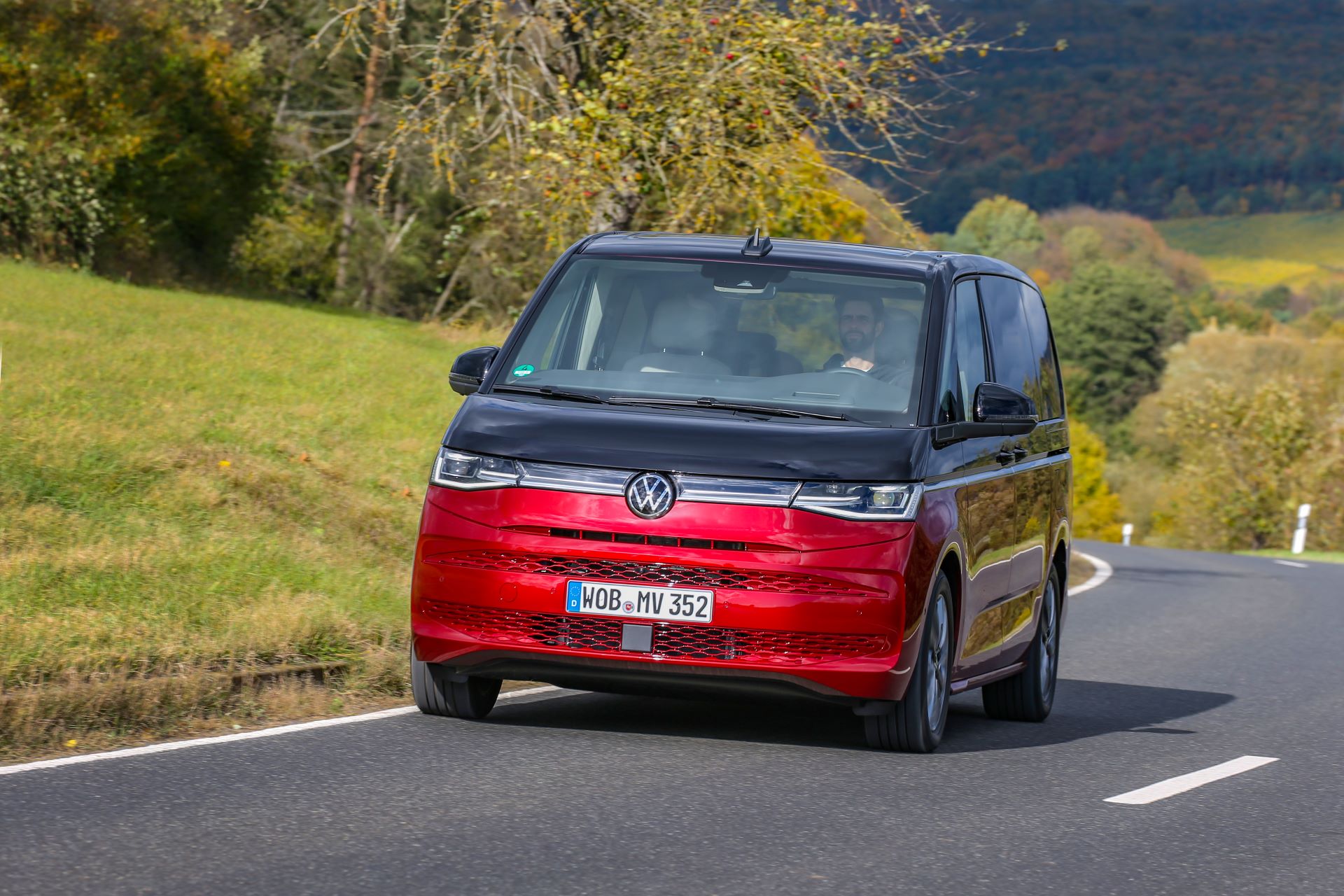
Volkswagen Commercial Vehicles is preparing to write the next chapter in one of South Africa’s most enduring mobility stories with the launch of the all-new Caravelle eHybrid 4MOTION, scheduled to arrive locally around mid-2026. It is a vehicle that looks firmly to the future while carrying more than seven decades of heritage in its wheel tracks.
That journey began in Kariega, where a simple Volkswagen bus first rolled off the production line and into the daily lives of South Africans. From the original T1 to the technologically advanced T6.1, the Bus became a constant presence across generations, trusted by families, entrepreneurs and adventurers alike. With the T7 Caravelle, Volkswagen reinterprets that legacy through the lens of electrification, comfort and intelligent engineering, signalling a decisive move toward cleaner, more versatile mobility without losing the character that made the nameplate iconic.
At the heart of the new Caravelle eHybrid 4MOTION is an advanced plug-in hybrid system that combines efficiency, performance and genuine all-wheel-drive capability. The vehicle starts every journey electrically when the battery has sufficient charge, operating as a plug-in hybrid with electric motors driving both the front and rear axles. This dual-motor setup ensures confident drive-off performance and impressive traction across a wide range of conditions, from urban streets to gravel roads and wet camping grounds.
Energy is supplied by a new 19.7 kWh high-voltage lithium-ion battery, almost doubling the usable capacity compared with earlier front-wheel-drive hybrid variants. With fast AC charging up to 11 kW and DC rapid charging up to 50 kW, the Caravelle can replenish its battery from 10 to 80 percent in around 26 minutes. A fully charged battery enables purely electric driving for up to 91 kilometres, with Volkswagen targeting up to 95 kilometres in certain conditions, making emission-free daily commuting a realistic proposition for many users.
Electric driving extends well beyond motion. As standard, the Caravelle eHybrid 4MOTION introduces electric stationary air conditioning, a comfort feature rarely seen outside larger camper vans. This system allows the vehicle to cool, ventilate or heat the interior while charging, parked or camping, without burning fuel or producing emissions. Pre-conditioning the cabin while charging not only improves comfort but also preserves electric range once driving begins. When parked in cold conditions, the system functions as an auxiliary heater, and in summer it offers welcome cooling, all powered by electricity. Depending on the power source, stationary air conditioning can operate for up to 30 minutes when connected to an external supply, or for 10 minutes using the vehicle’s own battery, controlled via the infotainment system or smartphone app.
On the road, the hybrid strategy is designed to prioritise electric driving wherever possible. Up to 130 km/h, the Caravelle can operate purely on electric power using the front motor, with the rear motor engaging as needed depending on traction demands and the selected driving profile. Above 130 km/h, the rear axle is automatically disengaged to optimise efficiency, and the high-tech 1.5 TSI evo2 petrol engine steps in when required, such as during kickdown acceleration or when battery charge is depleted. The transition between electric and hybrid operation is largely seamless, with the electric motors also acting as boosters during hard acceleration.
Efficiency remains a defining theme. Even with a depleted battery, the Caravelle eHybrid 4MOTION records WLTP fuel consumption figures between 7.5 and 8.1 l/100 km, with real-world results often improving through anticipatory driving and effective energy recuperation. The system continually harvests braking energy to recharge the battery, allowing electric assistance to be reintroduced whenever conditions permit.
Drivers can tailor the vehicle’s character through four selectable driving profiles: Eco, Comfort, Sport and Individual. Eco mode softens throttle response and reduces output to encourage economical driving, while Comfort prioritises smoothness and refinement. Sport mode unleashes maximum system performance, sharpens accelerator response and keeps all-wheel drive permanently engaged up to 130 km/h. Individual mode allows drivers to customise drivetrain behaviour, steering feel and optional systems such as adaptive chassis control and stop-and-go adaptive cruise control.
The electric all-wheel-drive system itself represents a significant departure from conventional mechanical setups. Instead of a propshaft linking the axles, the Caravelle uses a fully controllable electric rear axle managed by the Electronic Stability Control system. Power distribution is infinitely variable, with up to 100 percent of drive force directed to either axle as conditions demand. Even when the battery is empty, the rear electric motor remains available, with power generated on the fly by the petrol engine and front electric motor acting as a generator. The result is enhanced traction, faster torque response and greater control on uneven or low-grip surfaces, supported by a balanced weight distribution achieved through careful placement of the battery, fuel tank and rear motor.
Under the skin, the technology is equally sophisticated. The 1.5 TSI evo2 petrol engine produces 130 kW and 250 Nm, employing advanced features such as variable turbine geometry turbocharging, high-pressure injection at 350 bar and the highly efficient Miller-cycle combustion process. Paired with an 85 kW front electric motor integrated into a six-speed dual-clutch gearbox, and a 100 kW rear electric motor with a dedicated one-speed transmission, the system delivers a combined torque output of 350 Nm, available almost from standstill. Two separate power electronics modules manage energy flow to the front and rear motors, ensuring precise control and efficiency across all driving scenarios.
For South Africa, the arrival of the Caravelle eHybrid 4MOTION represents more than just a new model introduction. It is a clear statement that Volkswagen Commercial Vehicles is ready for the next phase of mobility, one that balances electrification with practicality, comfort with capability, and innovation with a deep respect for heritage. From its roots in Kariega to its future on roads, campsites and worksites across the country, the Caravelle continues to evolve, carrying the spirit of the original Bus into a cleaner, smarter era.